For some time now, the idea of expanding the space of this community to Lusophone or Spanish-speaking African countries has been circulating in the context of the Ibero-American Summits. The pioneer of the initiative, Equatorial Guinea, began requesting its admission more than 10 years ago, with little success and few explanations.
However, in these times, it makes sense to talk about a much broader community, which would give access to representatives from four continents, considering that the expansion would include East Timor (Asia) and the Lusophone African states —Angola, Cape Verde, Guinea-Bissau, Mozambique, and São Tomé—, in addition to Equatorial Guinea.
Many of these African countries are proposing to request membership, according to what DiplomacyNews has learned from diplomatic sources. They do not understand what reason there could be for the Ibero-American Community of Nations not to consider their admission, since all seven clearly meet the fundamental requirement to be members of the club: having Spanish or Portuguese as their mother tongue.
There is a second requirement, in this case geographical, that specifies that member states must be European or American. But that shouldn’t be a problem if we consider that since 2007 (San Salvador Summit), the presence of associated observers has been admitted who “are States that maintain linguistic or cultural affinities with Ibero-America, or that can make significant contributions to the region.”
Among those associated members, there are four countries —Puerto Rico, Equatorial Guinea, the Philippines, and East Timor— with a past linked to Spain or Portugal, but none can participate in the debates.
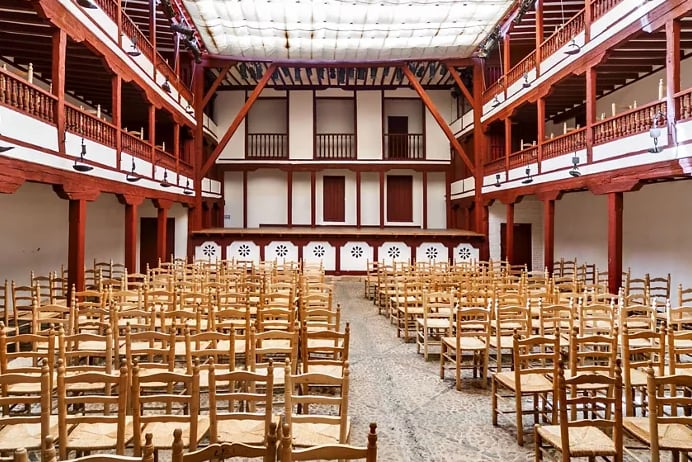
However, there are other more shocking cases for my African interlocutors. For example, they find it surprising that Japan, Luxembourg, the Netherlands, or Hungary, to name just 4 of the 12 observers, meet the “linguistic or cultural affinities with Ibero-America.” “It must be that Hungarian or Dutch comes from Latin and that kabuki originated in Spain,” they joke. “It actually started in the Corral de Comedias de Almagro,” I confirm.