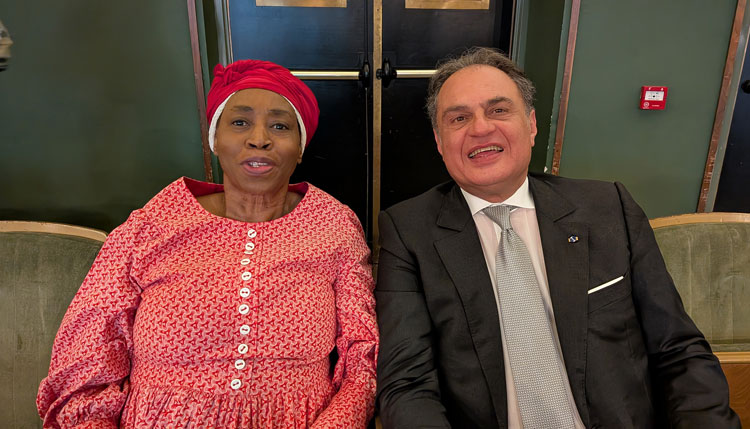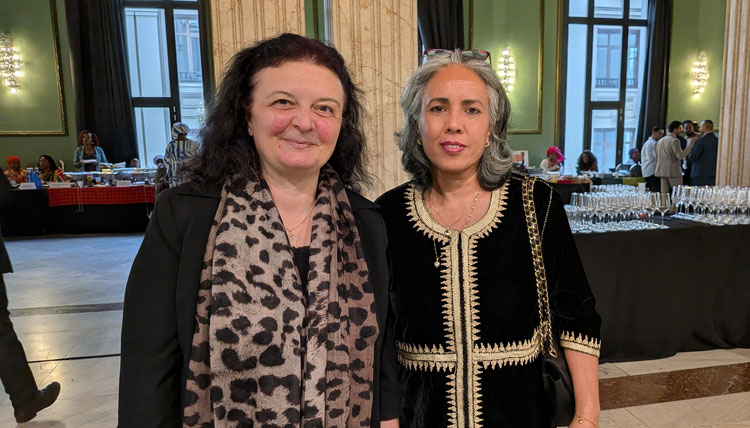
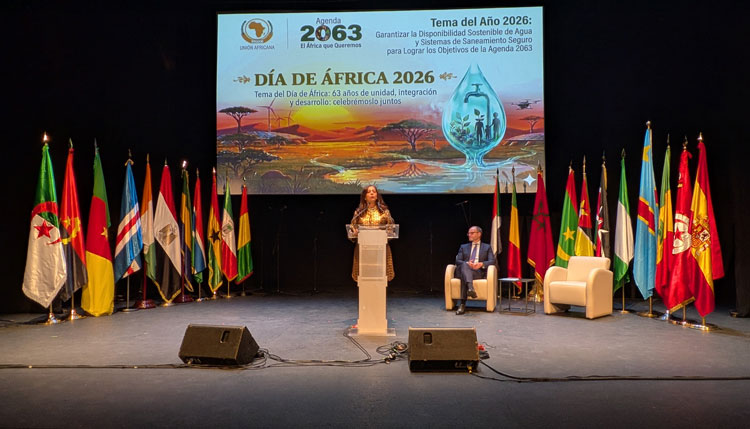
Last Monday, the celebration of the 63rd Anniversary of the Organization for African Unity (OAU) took place at the Círculo de Bellas Artes in Madrid, and as the event presenter said, it was experienced “not only as a historical date but as a living memory, a shared energy, and a promise for the future.”
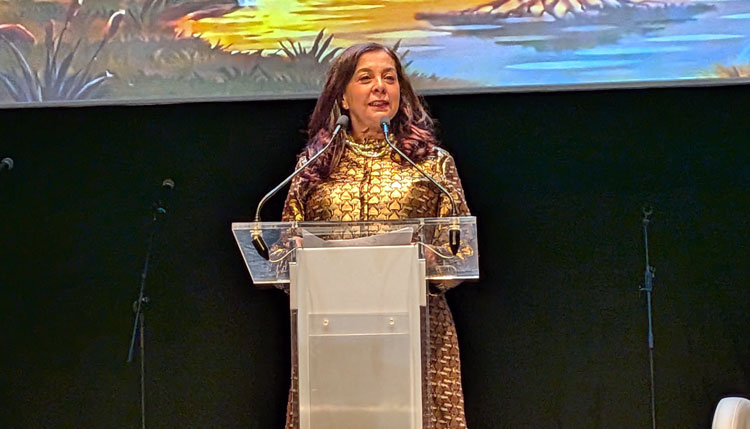
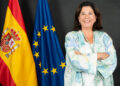
Under the slogan of this celebration, 63 years of unity, integration, and development, the Dean of the African Diplomatic Corps in Madrid, the ambassador of the Kingdom of Morocco, Karima Benyaich welcomed the guests.
“Let us celebrate together a special occasion to pay tribute to unity, diversity, and the spirit of solidarity,” highlighted the Moroccan ambassador, after emphasizing the attendance of the Secretary of State for Foreign and Global Affairs, Diego Martínez Belío, “because your participation today is a clear demonstration of Spain’s commitment to Africa and the priority place our continent occupies in Spanish foreign policy. We deeply value this closeness based on mutual respect, dialogue, and the common will to build a shared future of peace, prosperity, and sustainable development.”
Subsequently, Karima Benyaich emphasized “the spirit of work, solidarity, and relationship of the African Diplomatic Corps in our different actions and creating sources of understanding that continue to strengthen the relationships between our peoples, the people of Spain and the different African countries.”
“This is for us an occasion to reiterate our deep recognition to Spain for its commitment to the development and stability of Africa, reflected in its African policy and in active cooperation in key areas such as political dialogue, security, education, health, migration and change, as well as gender equality, etc., in several other areas, contributing to strengthening a balanced, mutually beneficial partnership for Spain and the African continent,” stated the ambassador.
After emphasizing that Spain and Africa “share a geopolitical space and cultural, economic, social, and human bond, thus offering us the opportunity to jointly build a promising future,” the Moroccan ambassador highlighted the Spain-Africa Strategy 2025-2028, presented by President Pedro Sánchez and Foreign Affairs Minister José Manuel Albares, which “will undoubtedly significantly boost relations between Spain and Africa in the coming years, although they are already yielding positive results through continuous coordination with our different countries and the implementation of multiple projects, significantly enhancing our cooperation in various areas.”
Karima Benyaich highlighted the institutional visits that Spanish authorities and companies have been making to different African countries and also took the opportunity “to express on behalf of all my ambassador and ambassador colleagues our sincere gratitude to all Spanish institutions, to the institutions and friends who year after year provide us with their solidarity and initiative to help us undertake new missions. This solidarity is the foundation upon which we build lasting sources of friendship, cooperation, and shared development.”
The Moroccan ambassador concluded by referring to the theme adopted this year by the African Union, “which is of great importance for the growth and future of our continent, namely, the realization of a sustainable community of water and safe sanitation systems to achieve the goals of the Agenda 2063. Access to safe drinking water and sanitation is not only a basic need for Africa but also constitutes a fundamental human right. This priority opens a strategic opportunity to promote transformative and resilient investments in the water sector through the new African vision of Water 2063, which expresses our increasingly integrated, prosperous vision.”
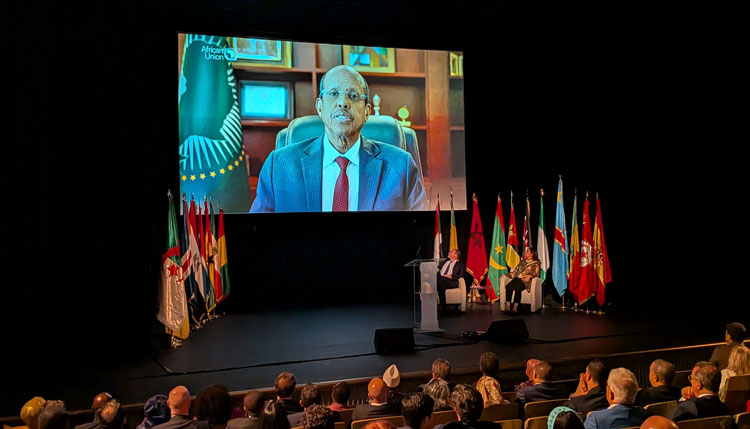
After a brief message from Mahmoud Ali Youssouf, president of the African Union Commission (AU) in favor of unity and achieving the goals set by the countries of the continent, the Secretary of State for Foreign and Global Affairs, Diego Martínez Belío, took the floor and stated: “There are Africans and Afro-descendants in this room, people who carry Africa in their biography and people who simply look at it and feel close to it. We all have some bond, something that unites us to this continent.”
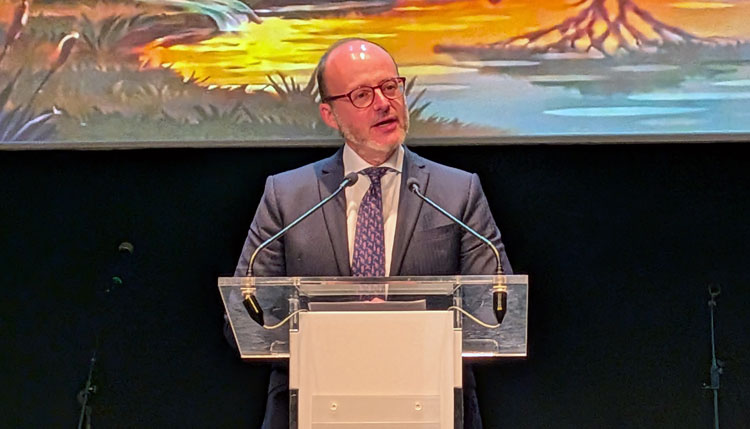
The Secretary of State commented on a previous conversation with the ambassador of Cape Verde, Eduardo Jorge Silva, in which the latter said that “Spain is closer to Africa. It is a closeness that is not only physical but explains by itself the depth of what unites us. And what unites us are decades of cooperation, universities sharing Spain-Africa projects, the future of Europe and that of Africa. And I would say beyond eighty of which we are already launching in just one year. What I believe is probably almost a record in administrative terms.”
In the water sector, “which figures prominently this year,” the Secretary of State noted that cooperation is already taking place “with great depth and in which Spain has particularly relevant added value. Africa is also the youngest continent in the world and is one of the axes, one of the two transversal axes of the strategy, beyond the five objectives we have generated. And I believe that in the coming decades Spain has the total will to accompany in its achievement. That is why our strategy focuses on training, talent, and creating economic functions for the new African generations. A prosperous Africa starts, of course, with the youth.
Finally, Diego Martínez Belío emphasized that “the strategy comes to life in concrete activities. In recent months, we have established the Spain-Africa Foundation, which includes public and private actors with the aim of promoting mutual growth and cooperation in both areas.”
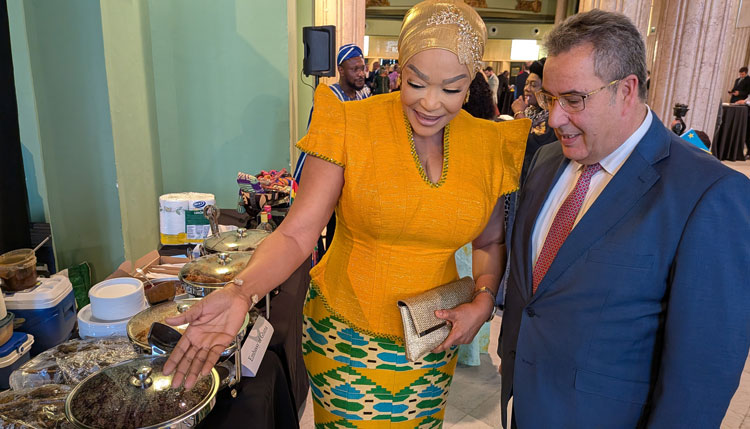
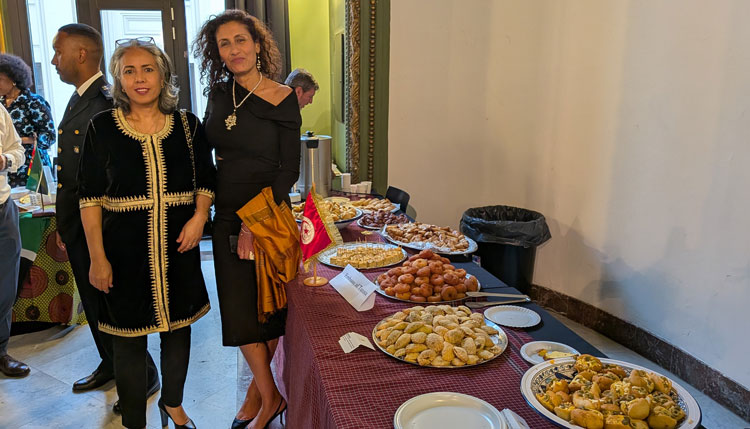
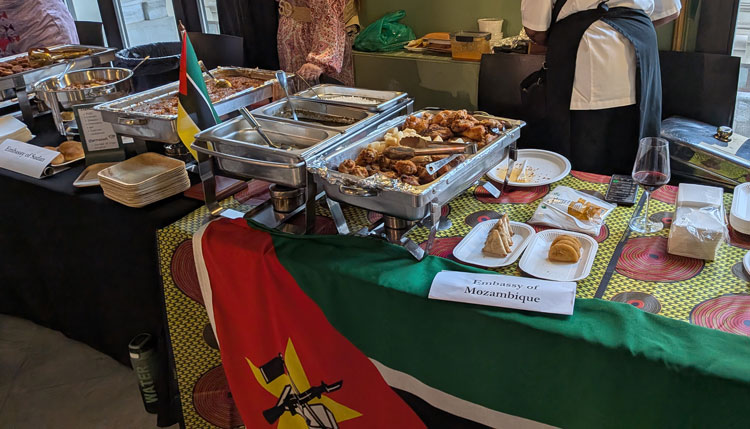
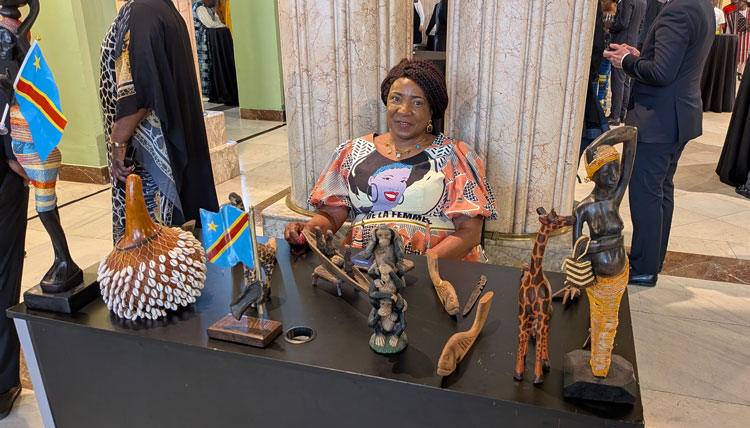
As with every celebration of Africa Day, the gastronomy and traditional clothing of each African country were the protagonists of the celebration. Countries such as Tunisia, Ghana, Mozambique, Angola, Cameroon, the Democratic Republic of the Congo, Egypt, or Morocco offered their traditional cuisine that the guests at the celebration could taste.