


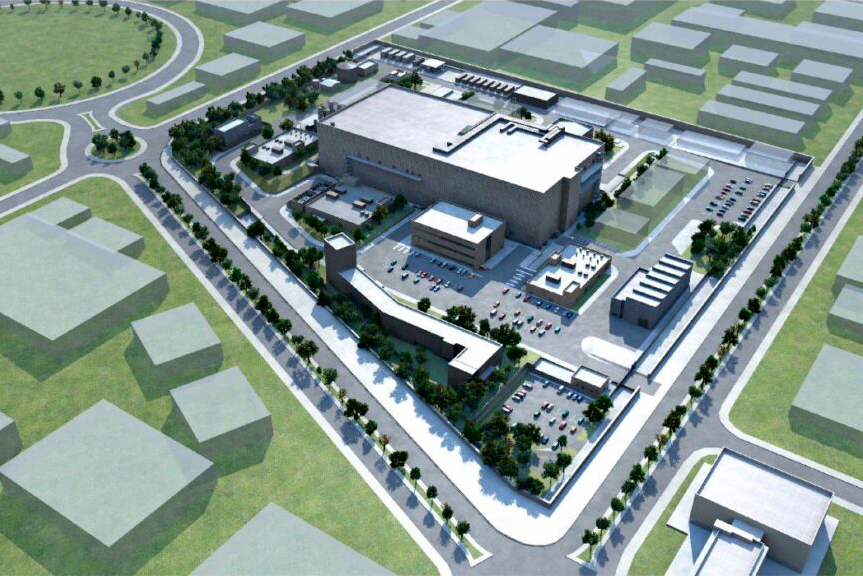
Spain and Croatia have strengthened their collaboration in recent years in one of the most strategic scientific fields globally: the development of fusion energy. This cooperation is particularly relevant in the IFMIF-DONES project, a large international infrastructure under construction in Escúzar (Granada) that places both countries in a prominent position within the European roadmap towards this energy source.
This cooperation dates back to 2017, when both countries presented a joint candidacy to host the facility in Granada. This agreement was consolidated with the signing of a Memorandum of Understanding in Zagreb in November 2022, signed by Science Ministers Radovan Fuchs and Diana Morant, in the presence of King Felipe VI and Croatian President Zoran Milanović.
Since then, Croatia has joined as a partner in the project, with stable financial contributions—both in construction and in the future operational phase—and the participation of research centers, such as the Ruđer Bošković Institute, the main public scientific research center in Croatia.
On April 28, 2026, the Croatian Embassy in Madrid awarded Spanish scientist Ángel Ibarra the Order of Danica Hrvatska, one of the country’s main decorations, granted by the President of the Republic to prominent individuals for their contributions in fields such as science, culture, or international cooperation.
Ibarra, a physicist, professor, and researcher specialized in materials science applied to nuclear fusion and linked to CIEMAT, as well as a former director of the IFMIF-DONES consortium and one of its main promoters, has played a key role in the development of the project.
The project is part of the European roadmap towards fusion, driven by the EUROfusion consortium and integrated into the framework of international cooperation around ITER, an experimental fusion reactor installed in Cadarache, France.
Fusion energy has been one of the great global technological horizons for decades: a clean, virtually inexhaustible source with the potential to transform the global energy system. Turning that promise into reality requires addressing scientific and engineering challenges of enormous complexity, only manageable through sustained international cooperation.
The goal of ITER is to demonstrate that plasma—the extremely hot and unstable gas where fusion occurs—can be maintained under control for long enough for the reaction to be viable as an energy source.
IFMIF-DONES, for its part, focuses on one of the main obstacles to fusion: the resistance of materials. In a fusion reactor, the walls are subjected to intense bombardment by high-energy neutrons that, over time, degrade their structure.
To study this effect, the facility reproduces those conditions using a neutron source generated by a particle accelerator impacting on liquid lithium. In that environment, small samples of materials—special steels and alloys designed for reactors—are introduced and irradiated for long periods to observe how they deform, deteriorate, and lose their properties, allowing for the evaluation of which materials can withstand years of use.
The impact of this work is better understood when placed in the temporal framework of fusion. ITER will mark this decade and the next with its experiments. On the horizon of the mid-century are the DEMOs, reactors conceived as a precursor to the first commercial plants.
The DEMOs are designed to operate under conditions close to a real power plant, integrating plasma control, energy generation, and maintenance of its components. For this to be possible, they must operate for long periods and withstand intense exposure to neutrons, hence the need to have the data generated by IFMIF-DONES beforehand.
This process thus marks the transition from research to application, in a path where science, technology, and international cooperation continue to advance inseparably.