Diplomacy News
es Español en English
24 de May, 2026
No Result
View All Result
  • Current Affairs
    • Business
    • Diplomacy
    • Geopolitics
  • In Depth
    • Interviews
    • Reports
    • Research
  • Life
    • Culture
    • Gastronomy
    • Tourism
  • Opinion
  • Confidential
  • Agenda
  • Who is Who
NEWSLETTER
Diplomacy News
NEWSLETTER
Diplomacy News
No Result
View All Result

The Baltic-Nordic scientific-energy cooperation as strategic response to Russia

Since 2022, Nordic Energy Research and the Nordic Council of Ministers have promoted projects for the desynchronization of the electrical systems of the post-Soviet space

Natalia Martorell by Natalia Martorell
21 de May de 2026
in In Depth, Reports
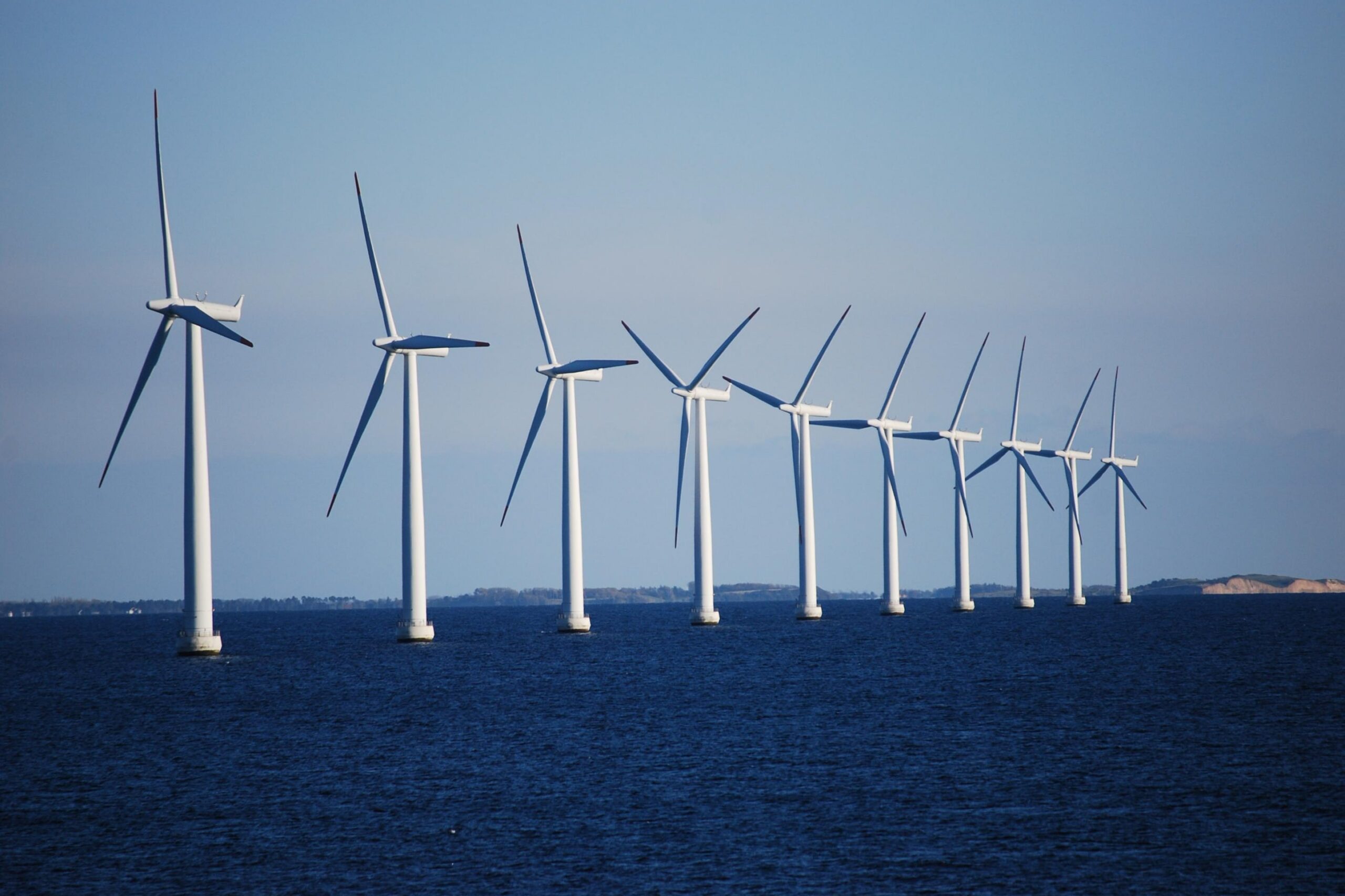
Anne Sofie Bender/norden.org / Licensed under Creative Commons (CC BY-NC-SA 4.0)

Anne Sofie Bender/norden.org / Licensed under Creative Commons (CC BY-NC-SA 4.0)

After the Russian invasion of Ukraine, the Baltic countries (Estonia, Latvia, and Lithuania) and Nordic countries (Denmark, Finland, Sweden, Norway, and Iceland) faced an immediate and shared problem: how to strengthen their energy security in an environment marked by supply disruptions, pressure on critical infrastructure, and increasing vulnerability to external interference.

The response was not limited to political decisions or emergency measures, but explicitly incorporated scientific cooperation as a tool to reduce risks and coordinate strategic decisions.

Since 2022, consortia funded by Nordic Energy Research and the Nordic Council of Ministers have articulated joint projects focused on very specific areas: the stability of electrical networks, energy storage, hydrogen, the integration of renewables, and, in a particularly sensitive manner, the desynchronization of electrical systems in the post-Soviet space. These programs combine technical modeling, scenario analysis, and ongoing collaboration among researchers, network operators, and national authorities.

One of the central axes of this cooperation has been precisely the management of highly interdependent electrical systems. For decades, the Baltic countries operated synchronized with the Russian grid, a technical dependency that, after 2022, began to be interpreted as a strategic risk. Applied research allowed for the simulation of disconnection scenarios, assessment of impacts on supply stability, and more precise definition of timelines and technical conditions for a safe transition to synchronization with the continental European grid.

Unlike traditional academic research, these projects are designed to produce usable results within timelines compatible with political decision-making. Teams work with real operational data, shared models, and common methodologies, enabling governments to rely on agreed technical evidence rather than isolated estimates. Science acts here as a coordination mechanism, not as an occasional external advisor.

This approach has also had a preventive effect. Sharing sensitive technical information, analysis standards, and risk scenarios reduces the likelihood of uncoordinated responses to energy crises or episodes of external pressure. At the same time, institutionalizing this cooperation within stable frameworks prevents each new tension from forcing a complete rebuild of the necessary knowledge base.

The initiative has received support both within the European Union and in dialogue with the International Energy Agency, which has highlighted these programs as examples of regional cooperation aimed at strategic objectives. The interoperability of data, model compatibility, and the formation of transnational teams thus reinforce regional autonomy without solely relying on defensive or regulatory measures.

The Baltic-Nordic case shows how research can be directly integrated into the architecture of energy security. It is not about politicizing science, but recognizing that, in a high-uncertainty environment, producing shared and operationally useful knowledge becomes a tool for stability. In this framework, scientific cooperation does not accompany the strategy: it is part of it.


Sources: Nordic Energy Research, official programs and projects; Nordic Council of Ministers, institutional communications; International Energy Agency, fact sheet of the Joint Baltic-Nordic Energy Research Programme; Nordic and Baltic governments, communications on energy security (2024–2026).


Tags: BalticdestacadaEnergyfeaturedRussiaUkraineWar
Natalia Martorell

Natalia Martorell

Related Posts

An IAEA member analyzes material at the organization's plutonium laboratory in Austria. / Photo: IAEA
In Depth

The IAEA in the face of verification collapse: when diplomacy runs out of facts

by Natalia Martorell
20 de May de 2026

Since 2015, the most intrusive verification system applied to a non-nuclear state has been deployed in Iran, which Tehran suspended...

Read moreDetails
Main entrance to the SESAME headquarters./ Photo: By Erkcan - Own work, CC BY-SA 4.0, https://commons.wikimedia.org/w/index.php?curid=126424294

SESAME: how to cooperate in a estable way while geopolitical environment fragments

17 de May de 2026
Bajo licencia https://creativecommons.org/licenses/by-sa/3.0/

Spain in Central Asia: Tajikistan and Turkmenistan, stability and connectivity

16 de May de 2026
Tunnel of the Large Hadron Collider (LHC) at the European Organization for Nuclear Research (CERN) on the Franco-Swiss border./ Photo: CERN

Helium and invisible science geopolitics also pass through the Strait of Hormuz

13 de May de 2026
Foto: Alberto Rubio

How does the conflict in Iran affect the Spanish economy?

14 de May de 2026

Lo más leído de esta semana

  • Family photo of the artists of the exhibition Gráfica Coral. /Photo: Courtesy of the Embassy of Ecuador

    Ecuador and Spain dialogue through the exhibition ‘Coral Graphics’

    156 shares
    Share 62 Tweet 39
  • Spain expresses its solidarity with the Baltic countries in the face of Russia’s intimidation

    152 shares
    Share 61 Tweet 38
  • Spain expresses its solidarity with the Baltic countries in the face of Russia’s intimidation

    152 shares
    Share 61 Tweet 38
  • The Dominican Republic strengthens its appeal as a real estate investment destination

    153 shares
    Share 61 Tweet 38
  • The Dominican Republic strengthens its appeal as a real estate investment destination

    153 shares
    Share 61 Tweet 38

Newsletter Diplomacy News

NEWSLETTER

Lo último en Diplomacy News

Heydar Aliyev

Heydar Aliyev: the architect who designed the foundations of modern Azerbaijan

24 de May de 2026
Spanish F-18s at Siauliai Air Base (Lithuania)./ Photo: Ministry of Defense

Spain expresses its solidarity with the Baltic countries in the face of Russia’s intimidation

24 de May de 2026

Sections

  • Business
  • Confidential
  • Culture
  • Current Affairs
  • Diplomacy
  • Gastronomy
  • Geopolitics
  • In Depth
  • Interviews
  • Life
  • Opinion
  • Reports
  • Research
  • Tourism

About Diplomacy News

  • Nosotros
  • Aviso Legal
  • Política de Privacidad
  • Política de Cookies
  • Contactar
Diplomacy News

© 2026 Diplomacy News.

No Result
View All Result
  • Current Affairs
    • Business
    • Diplomacy
    • Geopolitics
  • In Depth
    • Interviews
    • Reports
    • Research
  • Life
    • Culture
    • Gastronomy
    • Tourism
  • Opinion
  • Confidential
  • Agenda
  • Who is Who
  • Español

© 2026 Diplomacy News.