In the first months of 2026, the relationship between Spain and South Africa has clearly advanced in scientific cooperation. This momentum is framed within the Spain Africa Strategy 2025-2028, which places the continent as a priority of Spanish foreign action and promotes the strengthening of scientific cooperation, academic exchanges, and the development of joint innovation projects.
In this context, both countries are consolidating a more stable collaboration, based on a previous foundation of academic and scientific cooperation developed over the last decade, in which science connects research, business activity, and public action.
South Africa is one of the most industrialized economies on the African continent and has a consolidated scientific and technological base. At the same time, it faces significant challenges, especially in the energy sector, where dependence on coal remains high. Spain, for its part, has a solid track record in the development of renewable energies and their integration into the productive system. From there, cooperation between both countries responds to a shared interest: to advance in the energy transition, develop new technological capabilities, and strengthen their position in international projects in which European partners also participate.
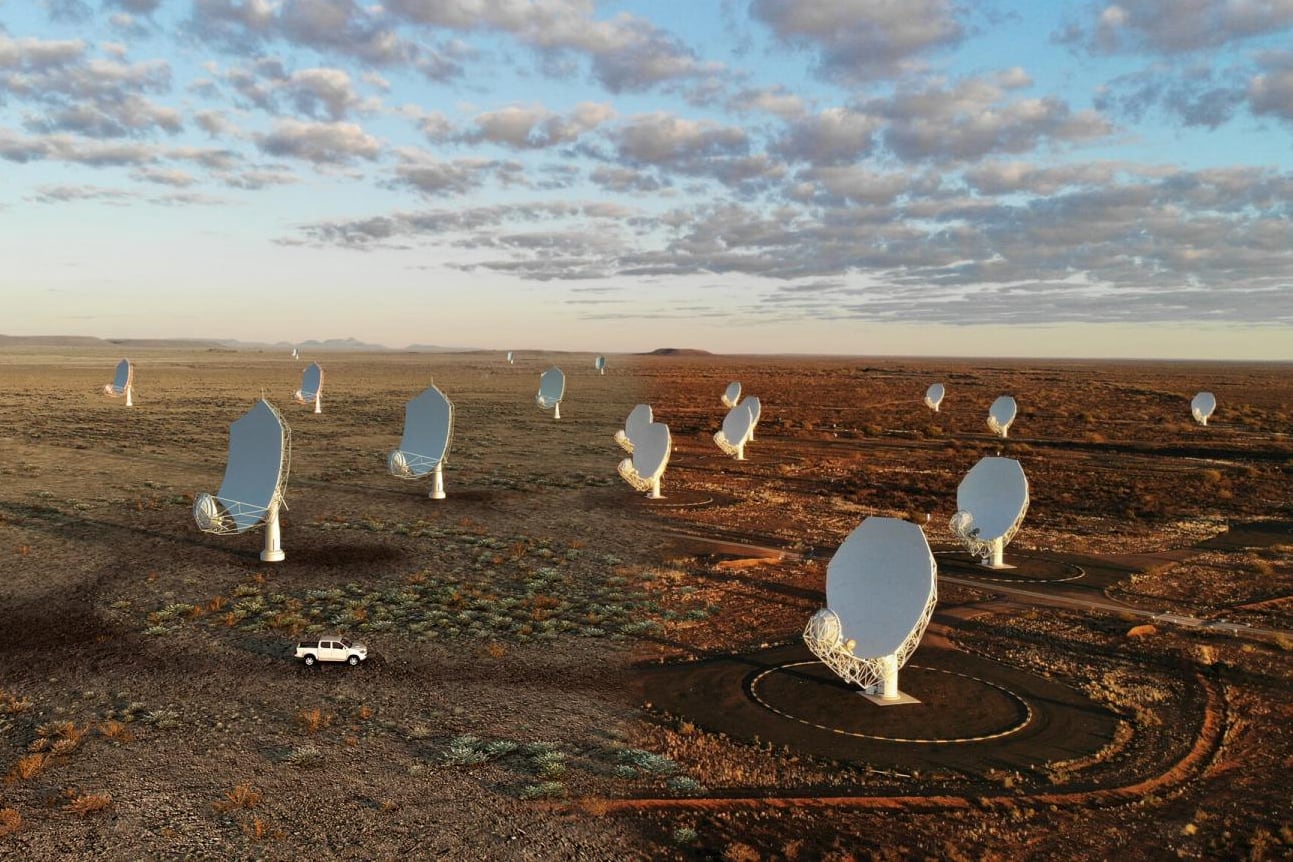
A visible example of this collaboration can be found in the semi-desert of Karoo, where the SKA radio telescope —one of the most ambitious scientific infrastructures in the world— generates data that is processed within the framework of international scientific collaborations involving Spanish research centers, such as the Institute of Astrophysics of Andalusia (IAACSIC) or the Barcelona Supercomputing Center, involved in the development of data infrastructures and in the scientific analysis associated with the project.
This scientific dimension is complemented by the participation of Spanish companies in energy projects in South Africa. Spain is one of the main investors in the country, with a significant presence in strategic sectors such as renewable energies, which has contributed to the development of the South African energy sector. In this context, companies like Acciona Energía or Abengoa have participated in the development of large-scale wind and solar projects.
Collaboration is also advancing in the field of green hydrogen, a key energy vector for decarbonizing sectors where electrification is limited. South Africa aims to position itself as a supplier for Europe thanks to its abundant renewable resources and its role as a producer of platinum group metals, essential for hydrogen production. These are scarce and geographically concentrated metals, which often appear together in nature, explaining the relevance of countries like South Africa in their supply. Initiatives like the so-called “Hydrogen Valley,” driven by public and private actors in the country, seek to structure this potential in the form of an integrated industrial ecosystem that connects production, transport, and end uses of hydrogen. In this context, the European Union promotes investment and collaboration agreements to ensure future supply, in which Spain participates by providing technical knowledge and funding.
In parallel, the academic dimension reinforces this relationship. Spanish universities such as the Universidad Autónoma de Madrid, Universidad Carlos III, Universitat Pompeu Fabra, or Universitat Autònoma de Barcelona participate in international networks of scientific cooperation in which South African institutions such as Stellenbosch, Cape Town, Pretoria, or Witwatersrand are also present, through mobility programs, joint projects, and seminars in areas such as global health or sustainability. These initiatives allow for the consolidation of work teams and the formation of specialized profiles in sectors with high demand, in a context marked by the growth of the qualified young population in Africa.
The consolidation of this relationship still presents some challenges. An important part of the cooperation depends on European programs or multilateral initiatives (with limited funding over time and subject to competitive calls), which complicates the continuity of projects. Additionally, there are differences in scientific systems and access frameworks, which require more constant coordination. Nevertheless, the trend points towards a more stable collaboration, with initiatives aimed at strengthening joint funding and improving connections between universities, research centers, and companies.
Sources: Ministry of Foreign Affairs, European Union and Cooperation, Spain Africa Strategy 20252028; International Energy Agency (IEA), Global Hydrogen Review; Hydrogen Europe and World Platinum Investment Council, reports on platinum group metals and their role in hydrogen technologies; SKA Observatory and SKA Spain network, institutional documentation on Spanish participation in the project; European academic cooperation programs (Erasmus+ and Horizon Europe); corporate information and energy projects developed by Spanish companies in South Africa.