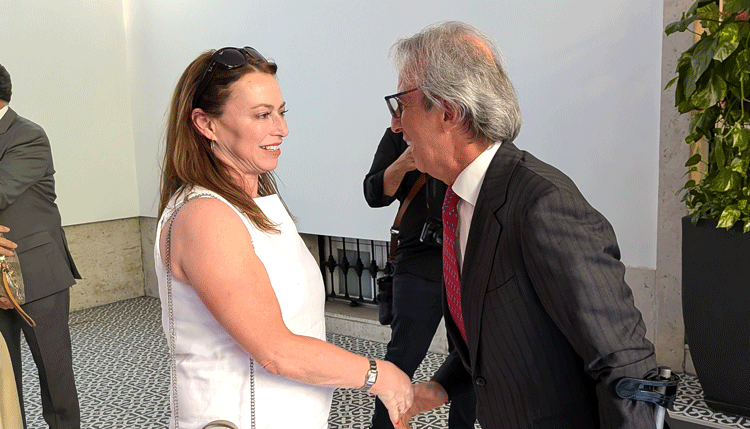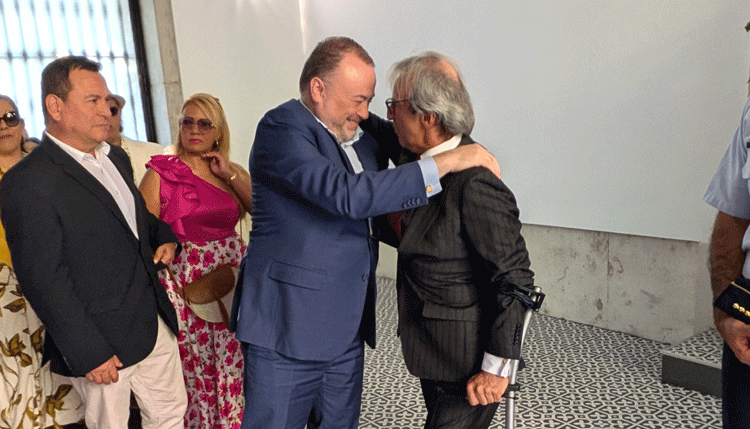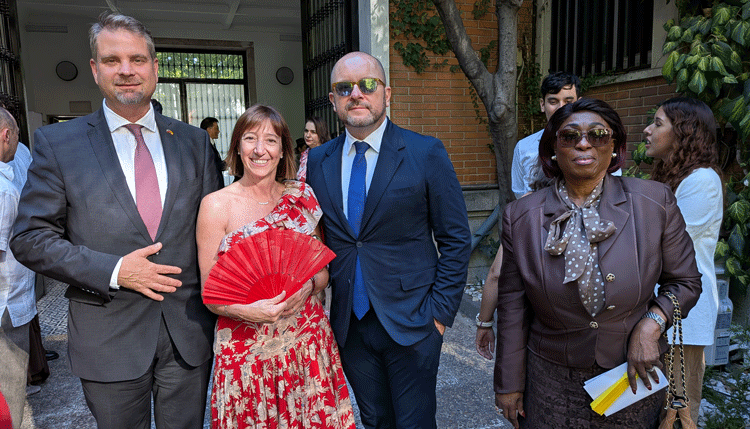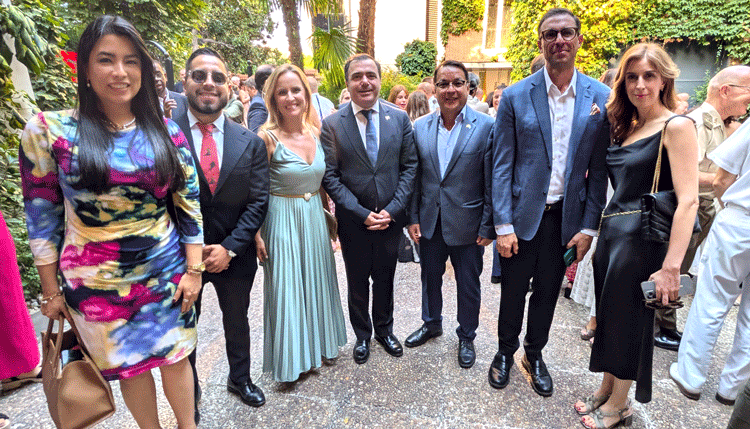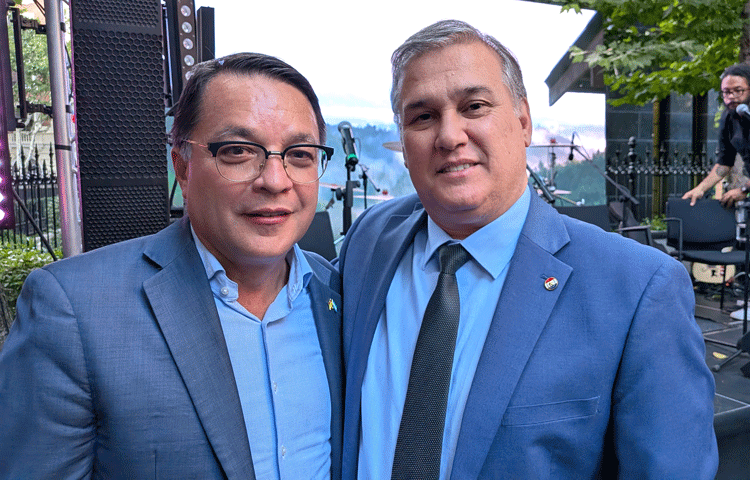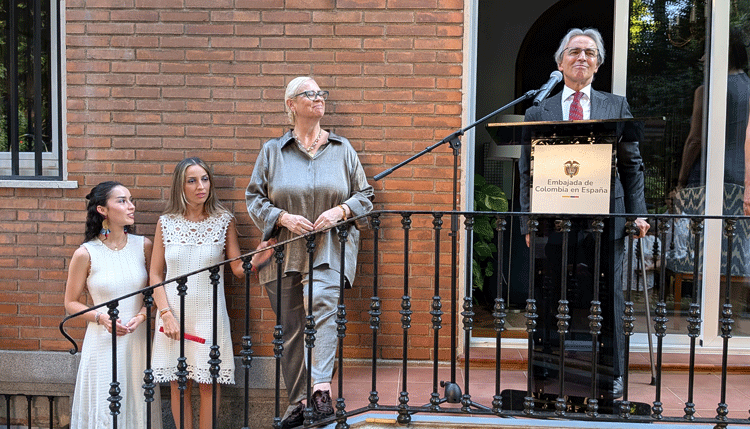
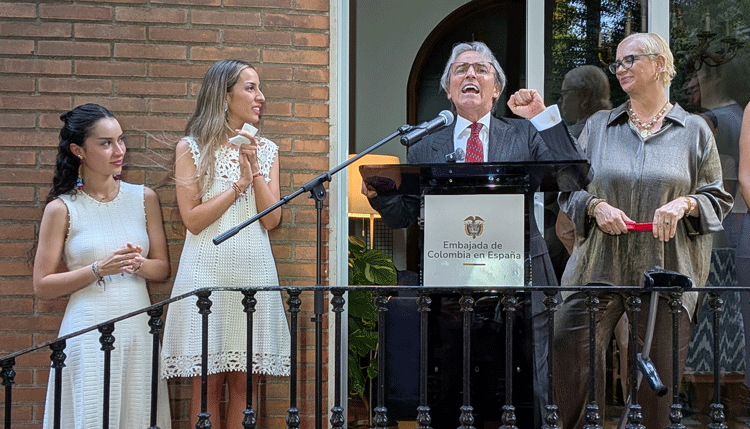
Highlighting at all times that his main objective during the last four years has been the “millions of Colombians who have built their lives outside our borders and continue to be an essential part of the nation,” Ambassador Eduardo Ávila bid farewell to his Mission in Spain during the celebration of the national holiday on July 20, which commemorates Colombian independence.
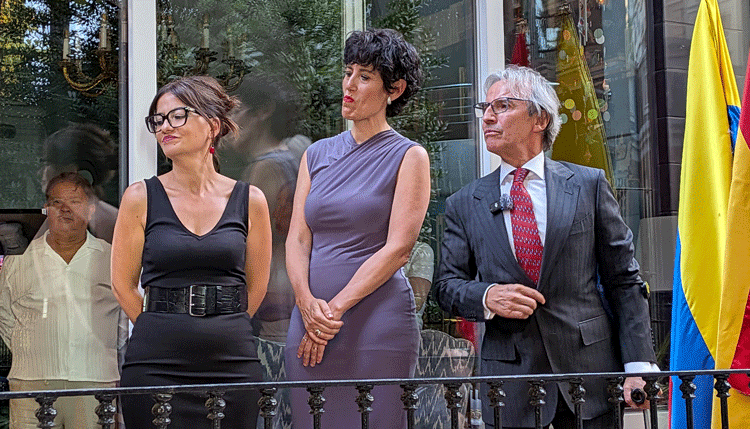
Before the ministers of Inclusion, Social Security and Migrations of Spain, Elma Saiz, and of Youth and Childhood, Sira Rego, and the Secretary of State for Ibero-America, Susana Sumelzo, the ambassador expressed his gratitude to the Government of Spain “for its commitment to the rights and dignity of migrant people, and particularly for having advanced in the extraordinary regularization process”, he stated. “A measure of enormous importance,” he added, “for the people who have made Spain their home and among whose main beneficiaries is the Colombian community.”
Ávila defended without hesitation the management of the Government of Gustavo Petro —“the Government of change, as he called it”— because “it has placed peace, social justice, the defense of life, and the fight against inequality at the center of our political project,” he assured before emphasizing that “the proposal to make Colombia a world power of life expresses a vision of the country and also of our place in the world.”
The ambassador expressed his recognition of the support he has found in Spain in particular and in Europe in general to “heal the wounds” caused by “decades of conflict that has left “millions of victims inside and outside our borders” and for “having contributed to the recognition of victims of the Colombian state, including those illegally persecuted by the defunct DAS in the so-called operation Europe, which “constitutes one of the most significant moments during these years at the head of this mission”.
Eduardo Ávila emphasized, in the realm of cultural diplomacy, “having opened this house to writers, artists, musicians, filmmakers, artisans, and indigenous peoples,” in addition to strengthening Colombia’s presence in some of the main cultural venues and consolidating the cultural center Gabriel García Márquez.
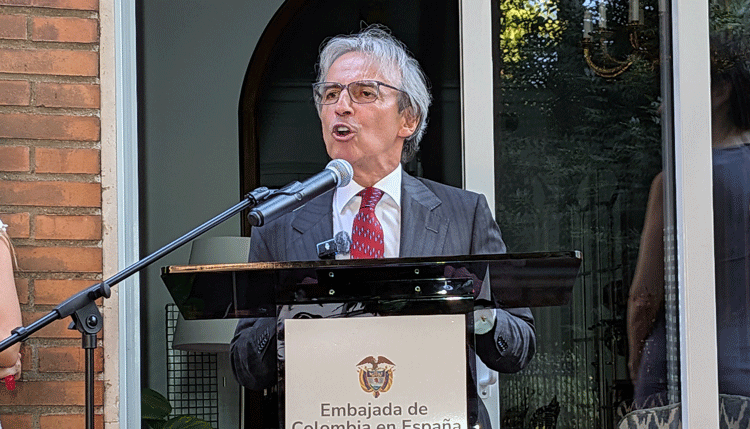
Economic relations also grew during this stage, there were advances in cooperation, education, social security, culture, and institutional relations. “These are important results and the fruit of the work of many people,” Ávila said. However, he insisted that “what I carry most deeply with me are the people who gave meaning to this mission. The Colombians who found an open door here, the victims who were able to be heard.”
“I leave convinced that our relationship is today broader, more diverse, and closer and that we share a future agenda around peace, social justice, ecological transition, human mobility with rights, culture, and the defense of multilateralism,” he concluded his speech.
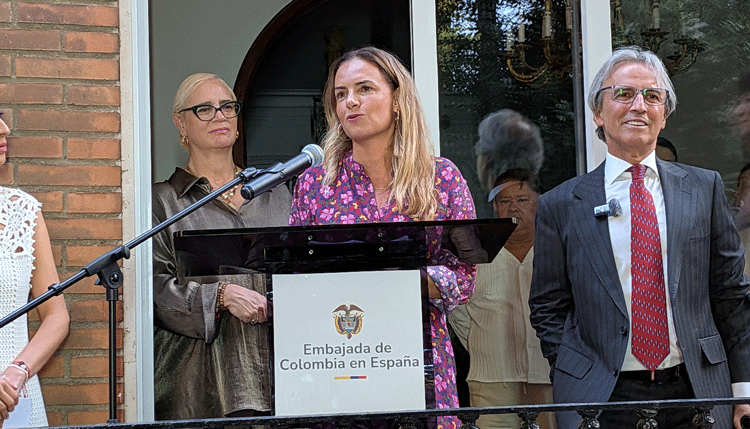
For her part, the Secretary of State for Ibero-America intervened on behalf of the Spanish Government to emphasize that the friendship between Spain and Colombia “is an exceptional relationship forged by so many shared bonds, especially fruitful” and, among them, she referred to “the magnificent contribution of the million Colombians who live in our streets and squares.”
After pointing out that “Colombia is a unique country, with extraordinary geographical and cultural wealth, capable of embracing diversity and creativity,” Sumelzo recalled that “we are on the eve of celebrating the centenary of the most universal Colombian author, the most translated and best-selling alongside Cervantes: Gabriel García Márquez, who represents like no one else the Ibero-American spirit of integration of diversity and collective identification. Because if you allow me, we feel Colombian García Márquez as our own, just as it happens with many other Spanish-speaking countries.
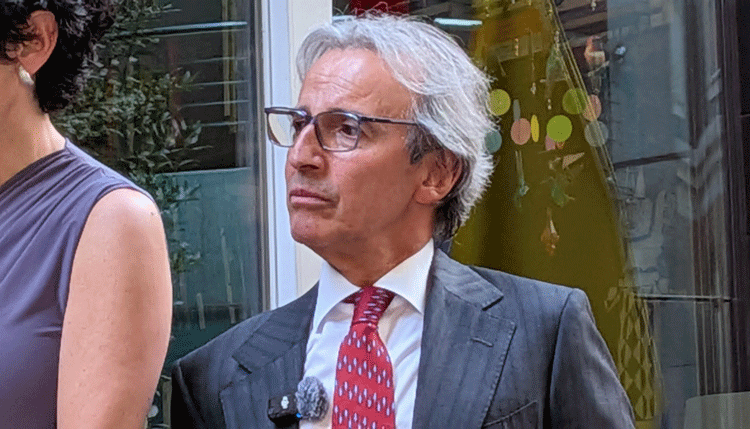
The Spanish Secretary of State ended by recalling that in November the Ibero-American Summit will be held in Madrid, “from which we want Ibero-America to emerge strengthened” and for that “we are working hand in hand with Colombia, an essential partner for Spain.”