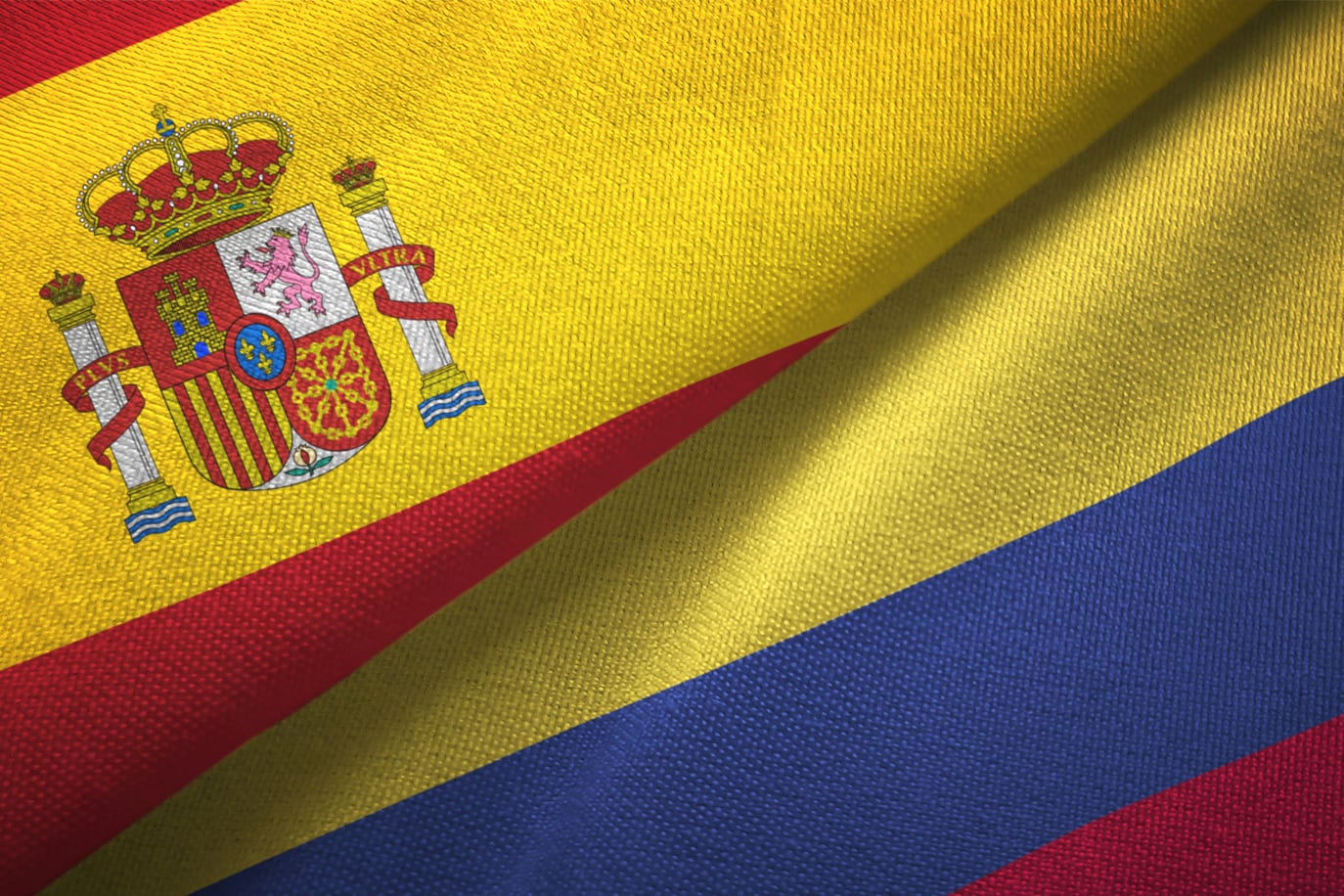
The tight victory and arrival of the radical right to the presidency, led by Abelardo De La Espriella, has opened an institutional rift due to the non-acceptance of the results by the leftist forces. But how will the election results affect relations between Colombia and Spain?
Two centuries after the colonial break, this 2026 the ties between Madrid and Bogotá are no longer measured by the common history, but by their resilience in the face of notable political polarization and a drastic shift in Colombia’s international alliances.
The Omar Bula Escobar factor
One of the analytical axes of the new scenario is the appointment of Omar Bula Escobar to lead Colombia’s foreign policy. His strategy marks a frontal break with the outgoing executive’s agenda, aligning Bogotá explicitly with the positions of Donald Trump’s administration in the United States and tightening strategic ties with Israel.
For Spain, this shift introduces evident diplomatic frictions. While Madrid seeks to maintain a balanced stance and promote the bi-regional agenda of the European Union-Latin America through frameworks like Global Gateway, the new Colombian foreign ministry prioritizes an approach of ideological pragmatism and alignment with the North American axis. This disconnection of institutional priorities threatens to cool the fluid political dialogue that has historically characterized the bilateral relationship.
Economic interests and Spanish business presence
Despite the political noise, economic data shows that the trade relationship between Spain and Colombia has a structural cushion that is difficult to dismantle.
Thus, according to official data from Colombian authorities collected in the latest country report from ICEX, Spain consolidates itself as the second largest emitter of Foreign Direct Investment (FDI) in Colombia, contributing a flow of 2.429,5 million dollars in the last year, only behind the United States. The accumulated stock of Spanish investments already exceeds 35.700 million dollars.
Regarding the trade balance of goods, measured by the Spanish Secretary of State for Trade, the exchange favored Spanish companies. Spain’s exports to Colombia reached 1.191,68 million euros (an increase of 7.01% year-on-year), while imports from the country of origin totaled 673,34 million euros, highlighting the component of mineral fuels and agri-food products.
Thus, more than 800 Spanish companies operate actively and are established in the country (with a shareholding participation of over 10%), generating more than 150,000 direct and indirect jobs. Their reach encompasses critical sectors for Colombian development, serving as engines of infrastructure, energy, and connectivity. Examples include companies like Sacyr, Grupo Ortiz, and OHLA, which lead the road and rail modernization of the country through large-scale infrastructure and civil works projects, to cite a strategic sector.
And now, what?
With the new government, everything indicates that the impact on Spanish interests could come, more than from a direct commercial boycott, through two other avenues. One would be legal security and arbitration as Colombia carries previous tensions from international litigations before the ICSID with Spanish companies (such as Telefónica for ColTel, Keralty/Sanitas after the intervention of the EPS, or the Canal de Isabel II for Triple A). Although the political announcement to withdraw Colombia from the international arbitration system raised alarms in March 2026, the real risk under the new administration lies in how it will manage the country’s international credibility and whether the ratification of the “new generation” APPRI signed with Spain in 2021, which remains frozen, will be reactivated.
The second avenue that may affect trade relations is based on investment priorities. With a Colombian foreign policy focused on the Washington-Tel Aviv axis, major multimodal infrastructure projects or digital connectivity could preferentially look towards North American contractors and investors, reducing some competitive advantage for European tenders aligned with EU funds.
In short, after 216 years of independence, the depth of Spanish capital on Colombian soil and the vigor of bilateral trade act as an anchor. Governments come and go, but infrastructure, telecommunications networks, and trade flows remain. The challenge for Spanish diplomacy will be, indeed, to manage Bogotá’s new alignment with Trump without compromising the security of its companies or access to the Andean market.