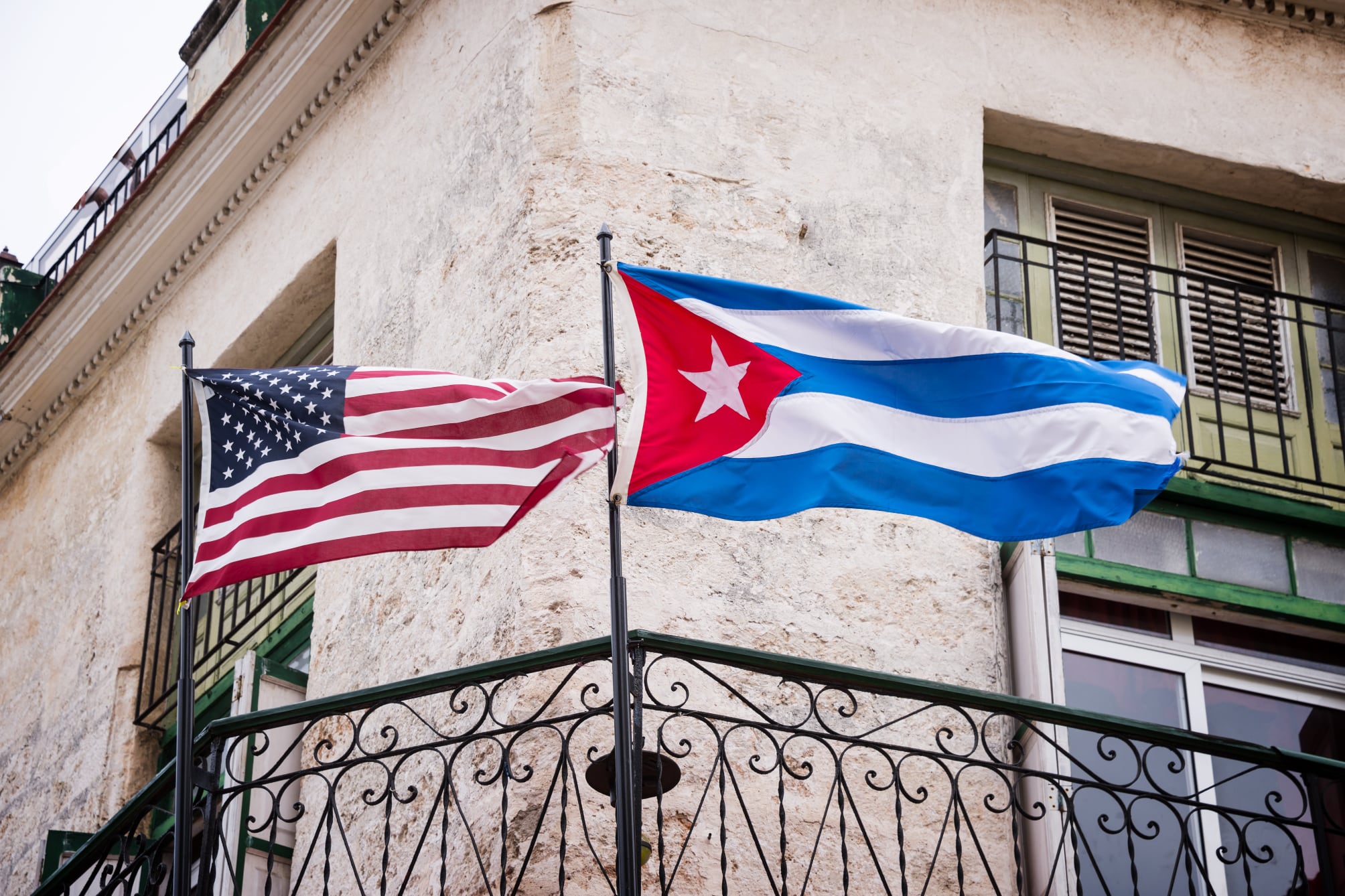
That amidst so much bombing, selective attacks, breaches of memorandums, threats of invasion, reprisals, and starting over —I’m talking about Iran, I suppose you’ve noticed— it seemed that perhaps Trump was going to forget about Cuba. That would be underestimating him. Let’s not be naive.
No, Trump did not forget and will not forget about Cuba. The American president knows that the pressure he started to apply on the Castro regime months ago is working —by the way, much better than the war against Iran— and he is not going to ease up. This implied problems —we already discussed it in DiplomacyNews: “Forget Iran: it is in Cuba where we are going to make a lot of money”—, for the Spanish hotel chains, with more than 30 years of presence on the island.
And so it has been. Meliá announced at the beginning of June that it was ceasing operations of 15 of its hotels in Cuba, those belonging to the Cuban military conglomerate Gaesa. And last week it confirmed that it was completely abandoning its operations with other Cuban companies, in this case dependent on the Ministry of Tourism, such as Cubanacan.
The Escarrer family company has not been the only one to announce its exit from the island. In fact, all tourist companies, Spanish or not, that had any kind of business relationship with Gaesa or with other official companies of the regime have been announcing the cessation of their operations, with very few exceptions. So along with Meliá, Iberostar, Hotusa, H10, and most of the dozen Spanish companies that were operating until now on the island have left.
In Spain, we are experiencing these movements as “just another one from Trump”, but if we analyze the cold data we will see that it is completely logical that the American president and the Cuban lobby in Miami have seen the opportunity to end the Castro problem once and for all. This time the occupant of the White House is not going against Spain or the Spanish. He is going against a regime whose fall guarantees him a good handful of votes in Florida, among other things.
The fall of Maduro in Venezuela —more for the effect on the resistance that other regime bigwigs could present than for the former president himself— definitely cut off energy aid to the island and ended up sinking the Cuban tourist market. Obviously, no tourist goes on vacation where they can find problems. And Cuba is now a huge problem, no matter where you look, with tourism in absolute ruin.
A couple of data points: in 2025, five-star hotels in Varadero had to ration fruit, bread, and all the food they offered to their clients, if they had any left. The arrival of a taxi at these hotels could provoke riots, as gasoline restrictions made it almost impossible to ensure transportation to José Martí airport. In return, the kindness of the staff knew no bounds, that must be acknowledged. But a tourist, besides being treated kindly, spends money for much more. Something that Cuba cannot offer now.
I am not making up the previous data. They are testimonies from people who were in Cuba and did not expect the shortages I describe. It is not surprising, therefore, that foreign tourism (there is no local tourism) to the island has fallen by almost 60% since January. A collapse that adds to that of 2025, when Cuba only received 1.8 million tourists, when just before the pandemic it was setting records and was close to 5 million.
In that situation, what is left for the Spanish hotel chains in Cuba? Very little. They are caught between two fires: on one side, the American sanctions that can affect all their interests related to, or in, the United States; on the other, the more than foreseeable lawsuit from the Cuban authorities, citing a breach of contract.
This last point, the possible lawsuit from the Cuban regime, I am convinced worries Meliá less than the American sanctions under the Helms-Burton Act. And not only Meliá, it also does not worry its investors as evidenced by the fact that the stock price of the Balearic company rose on the stock market as soon as it announced its exit from the island.
Even more. According to the annual results presented in February, in 2025 Meliá still made a profit of 23.6%, when the tourism crisis in Cuba was already a fact, fuel was starting to run low, and hotels were facing a severe shortage of supplies. In summary, it is leaving just in time to avoid incurring serious losses.
And the same goes for the other Spanish companies.
It is true that the field is open for American hotel chains that, like the oil companies in Venezuela, will find a territory available, almost “virgin” and without competition. But who said that in the not-so-distant future and under different conditions Spanish companies cannot negotiate new agreements?
If anything, Spanish hotel companies have demonstrated —and not only in Cuba, but worldwide— that they are among the best. My personal bet is that they will return to a different Cuba and under different conditions. The only question is whether the regime will also be different. We saw that in Venezuela.