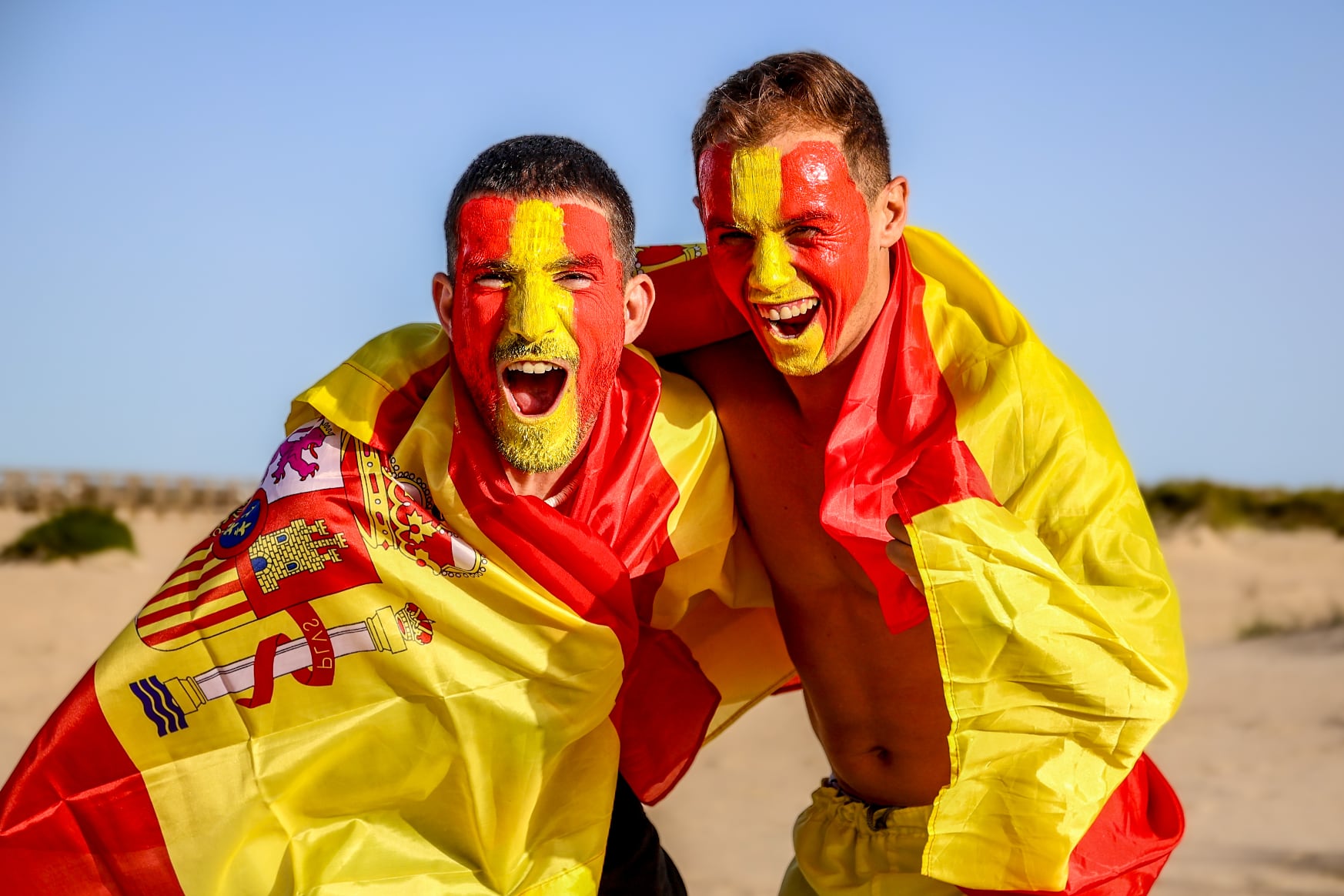
There are few things that unite all Spaniards. So few that we could say there is only one. Yes, you guessed it. It was easy for you. If after more than a month of the World Cup you haven’t realized it, it’s because you haven’t gone out on the street. We’re talking about the often disparaged football. By the way, in the case of Spain, besides being the best political balm, it is our best public diplomacy.
Incomprehensible for some. Irreplaceable for others. What is indisputable is that, in recent years, when the national team plays, all Spaniards become fans of “La Roja”. That’s life. It must be that we are always attracted to winners. And since 2008, we have been good at lifting trophies. Well, the metal ones, because we already had accumulated mastery in the others.
The point is that in a country where we have traditionally been followers of teams —Real Madrid, Barcelona, Atlético, Sevilla (so my friend David knows I’m considering him)…— and we still are, now, when the national team plays, we forget our political, social, and even regional-nationalist likes and dislikes to embrace whoever is closest to us without asking if they “are one of us.”
And we don’t ask because we don’t need to. We know for sure that, as long as the national team continues to compete in the corresponding tournament, that citizen we have never seen in our life, of whom we know absolutely nothing and whom we may never see again, is indeed one of us. They are a brother with whom we will go to any war. Without any doubt… at least until the tournament is over.
In 2010, I was on vacation in Costa Rica. We arrived from an excursion just in time to see Iniesta score the most famous goal in our football history. Suddenly the hotel bar turned into a sea of hugs, uncontrolled jumps, unconfessable tears, shouts in at least three languages. Galicians, Basques, Castilians, Catalans, Andalusians… we were all one thanks to a kid from Albacete who was a bit dull, it’s true, but played like an angel.
Here is where I wonder what football has to achieve what rationality of already adult human beings cannot. And what it has is tribalism. Football makes us feel part of a strong, proud tribe that goes to war (sporting) and defeats its adversaries. Well, better this way than going to a real war. By the way, it would be a good idea to solve the war between the United States and Iran with a football match. Or not. Remember: Trump and Infantino… There are high chances of a fix.
Let’s leave the jokes aside. That tribalism I refer to is a deeply rooted characteristic in our DNA and, in the case of football, it surpasses any other feeling of belonging. The tribe guarantees us security, protection, food, collaboration, behavior norms… It is part of us, just like other basic instincts from our animal stage that remain essential for our survival, even if we don’t realize it.
Why football and not basketball, for example? You’ll see. Here operate the epic, the glory of the impossible. If we are going to a battle, it has to be in open field, with mud, rain and cold, or heat, all extreme, that’s for sure. In a war, moreover, we don’t need the precision of a basket from 7 meters but the emotion of the superhuman effort of running 100 meters with a pack of adversaries behind. All of that is given to us by football.
And notice something that goes unnoticed: the rhythm of a football match is more similar to a battle. A match is an epic and glorious combat from the fans’ point of view. A struggle that proclaims heroes, and if they are ours, even better. It is a fact worthy of being celebrated every four years in a new Odyssey that we will remember to our children whenever we can.
Add one even more important characteristic. Anyone can identify with football because we have all kicked a ball at some point. How many have tried to score a basket twice in a row on a basketball court? Few. This is one of the important keys. We feel that we could be part of that army of 11 warriors, even if we have no major training. But, without a doubt, we are part of that army of ours… from the stands.
Putting aside the fans, the shouts, the masses and the epic, there is a football effect on international relations. This sport opens doors, allows conversation with 90% of humans anywhere in the world. It is the most effective form of public diplomacy that exists. We don’t have to plan it, nor invest in it, and we also don’t need to hire staff. In any country, the conversation about football flows naturally with the foreign visitor. Someone quickly remembers a player, a team, a match or we return a child’s ball that they are playing with. That’s enough.
There is no need to do anything else for the “ball diplomacy” to work. Although, just in case, I would suggest explaining to Trump why you can’t stab the opponent, even outside the area. Maybe we can get him to understand. If Infantino is not nearby.