Diplomacy News
es Español en English
20 de Jul, 2026
No Result
View All Result
  • Current Affairs
    • Business
    • Diplomacy
    • Geopolitics
  • In Depth
    • Interviews
    • Reports
    • Research
  • Life
    • Culture
    • Gastronomy
    • Tourism
  • Opinion
  • Agenda
  • Who is Who
NEWSLETTER
Diplomacy News
NEWSLETTER
Diplomacy News
No Result
View All Result

Fujairah: Emirates bets on reducing its dependence on the Strait of Hormuz

The project combines actions in the energy, port, and logistics sectors aimed at receiving goods and transporting them inland

Natalia Martorell by Natalia Martorell
20 de July de 2026
in Geopolitics
Fujairah: Emirates bets on reducing its dependence on the Strait of Hormuz

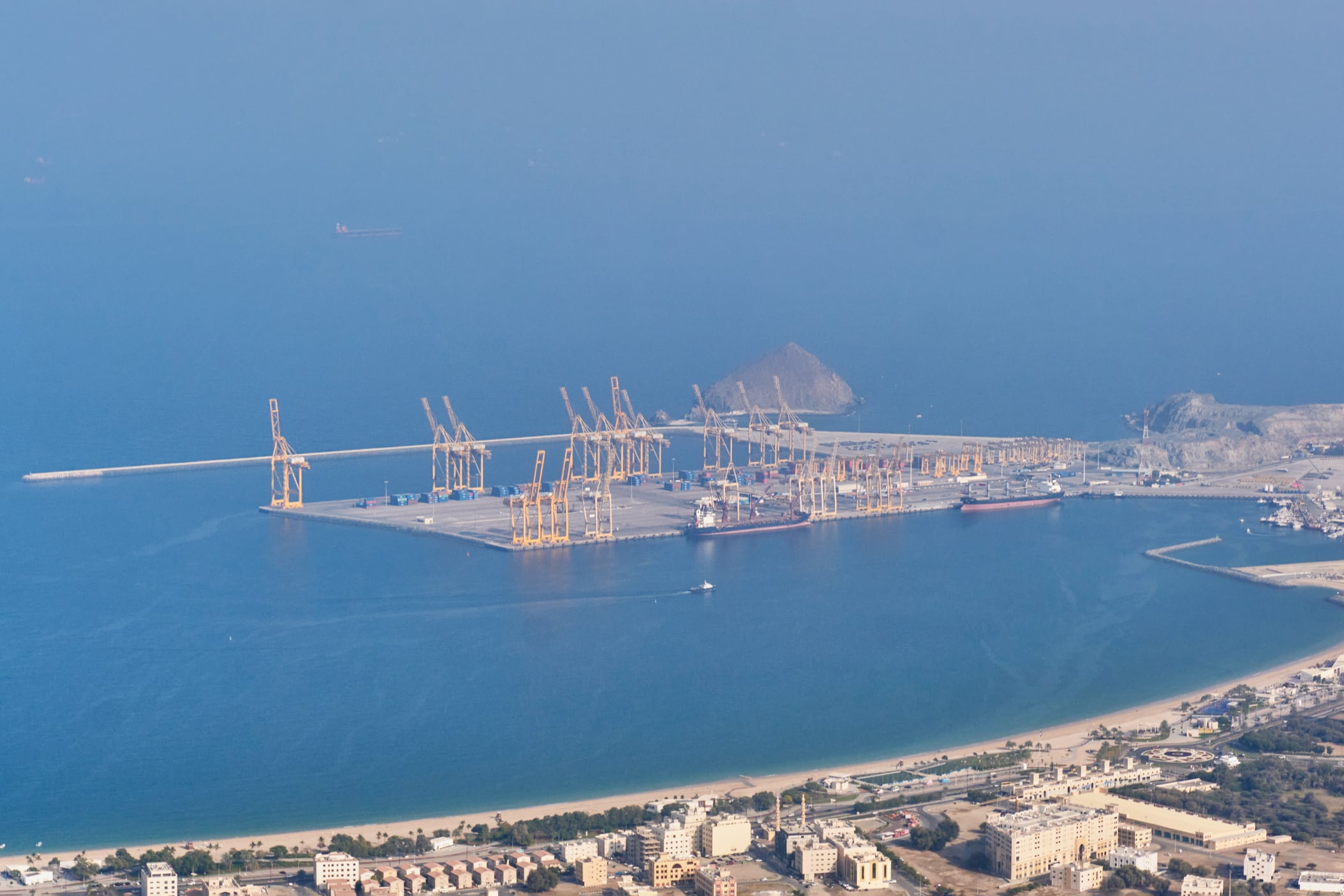
Fujairah industrial port./ Photo: Irina Kononova

The recorded disruptions in maritime traffic in the Strait of Hormuz have led the Emirates to accelerate the search for alternative routes for their exports and supply chains. The concern particularly affects Jebel Ali, the country’s main port, whose activity depends on the connection between the Persian Gulf and the Indian Ocean.

In light of this vulnerability, DP World (Dubai Ports World) and various organizations and institutions in the Emirates are promoting a strategy to strengthen the role of Fujairah as a logistical alternative. Located on the eastern coast of the country, on the Gulf of Oman, it is the only Emirati logistical node that allows direct access to the Indian Ocean without crossing the Strait of Hormuz.

The project combines actions in the energy, port, and logistics sectors aimed at creating a chain capable of receiving goods and energy in Fujairah, transporting them inland, and redistributing them to the main Emirati economic centers.

The first of these actions consists of  strengthening energy infrastructure. Fujairah already hosts oil terminals connected to the Habshan-Fujairah pipeline (ADCOP), which links the oil fields of Abu Dhabi with the eastern coast via a pipeline of about 380-400 kilometers. Currently, this infrastructure can transport around 1.5 million barrels per day, more than half of the Emirates’ oil exports. The pipeline came into service in 2012 precisely to allow a significant portion of the country’s crude oil exports to reach the Indian Ocean directly without crossing the Strait of Hormuz. Additionally, the emirate hosts one of the largest oil storage areas in the Middle East and has established itself as one of the main international fuel supply centers for ships. To strengthen this infrastructure, the Emirates have accelerated the construction of a second pipeline aimed at increasing the volume of crude oil that can be exported through Fujairah. The technical details of the project have not yet been made public.

The second element involves expanding the port capacity of Fujairah. The emirate already has relevant maritime infrastructures, including Fujairah Terminals, one of the main container terminals on the eastern Emirati coast. DP World is studying the expansion of existing facilities and, simultaneously, developing a new multipurpose port capable of absorbing part of the traffic that currently depends on Jebel Ali, increasing container movement and creating new logistical and industrial areas associated. The initiative represents one of the most ambitious projects within the Fujairah strategy, as it seeks to provide the emirate with logistical capacity capable of taking on part of the commercial operations that are currently concentrated in Dubai. 

Finally, the strategy incorporates a customs and logistical dimension aimed at streamlining the movement of goods once they arrive in the country. In 2025, an integrated customs railway corridor between Fujairah and other port centers in the Emirates began to be implemented. The system allows for the coordination of inspection and clearance processes for goods between different ports and logistical areas, reducing paperwork and transit times.

All these actions respond to a classic risk management logic: diversifying transport and export corridors by creating alternative infrastructures capable of absorbing a potential disruption of maritime traffic in the region. In an environment marked by geopolitical uncertainty, the Emirates seek to reduce the exposure of their economy to one of the main bottlenecks in global trade.


Tags: destacadafeaturedFujairahnewsletterStrait of Hormuz
Natalia Martorell

Natalia Martorell

Related Posts

Geopolitics

Spain reaffirms its commitment to NATO in the Middle East and Turkey

by Natalia Martorell
15 de July de 2026

The Minister of Defense reaffirms Spain's commitment to the security of the eastern flank and the Middle East during a...

Read moreDetails
Foto de familia de los líderes de la OTAN, ayer en Ankara./ Foto: Pool Moncloa/Borja Puig de la Bellacasa y Pool OTAN

Greenland: the island that dominates the Arctic and Trump’s desire to provoke his allies

9 de July de 2026
Photo: JackF / iStock

Brussels approves its Livestock Strategy for a more sustainable and competitive sector

8 de July de 2026
Minister Margarita Robles during her visit to Belgrade.

Spain and Serbia, widen their alliance for peace in Lebanon to military cooperation

7 de July de 2026
Imagen: btgbtg / iStock

Spain and the U.S. before July 4: from the historical alliance to the new global order

4 de July de 2026

Lo más leído de esta semana

  • Egypt’s ambassador, Ehab Badawy, welcomed the attendees at the reception. /Photos: Juan D. Latorre

    Egypt hopes that Sánchez will visit Cairo to consolidate the strategic partnership

    154 shares
    Share 62 Tweet 39
  • Fujairah: Emirates bets on reducing its dependence on the Strait of Hormuz

    154 shares
    Share 62 Tweet 39
  • The Chambers of Spain and Ukraine promote their bilateral economic relations

    153 shares
    Share 61 Tweet 38
  • CentroCentro presents the exhibition ‘Albino, of all terrors, the terrible whiteness’

    153 shares
    Share 61 Tweet 38
  • Chinese investors strengthen their bet on the electric sector in Spain

    153 shares
    Share 61 Tweet 38

Newsletter Diplomacy News

NEWSLETTER

Lo último en Diplomacy News

Fujairah: Emirates bets on reducing its dependence on the Strait of Hormuz

Fujairah: Emirates bets on reducing its dependence on the Strait of Hormuz

20 de July de 2026
Egypt’s ambassador, Ehab Badawy, welcomed the attendees at the reception. /Photos: Juan D. Latorre

Egypt hopes that Sánchez will visit Cairo to consolidate the strategic partnership

20 de July de 2026

Sections

  • Business
  • Culture
  • Current Affairs
  • Diplomacy
  • Gastronomy
  • Geopolitics
  • In Depth
  • Interviews
  • Life
  • Opinion
  • Reports
  • Research
  • Tourism

About Diplomacy News

  • Nosotros
  • Aviso Legal
  • Política de Privacidad
  • Política de Cookies
  • Contactar
Diplomacy News

© 2026 Diplomacy News.

No Result
View All Result
  • Current Affairs
    • Business
    • Diplomacy
    • Geopolitics
  • In Depth
    • Interviews
    • Reports
    • Research
  • Life
    • Culture
    • Gastronomy
    • Tourism
  • Opinion
  • Agenda
  • Who is Who
  • Español

© 2026 Diplomacy News.