The mythological comedy Echo and Narcissus (1661), which Calderón wrote towards the end of his career, constantly addresses the essential dialectic of deception and disillusionment. That is to say, in the oratory game between illusion and reality, appearance and truth, mockery and sincerity that notably mark the Baroque vision of the world. I would even dare to say more: a kind of allegorical fable that materializes what would be ethical spiritual. All of which serves me to talk about climate change (hereinafter CC) and its various theatricalizations.
These important dilemmas or controversies are present in our daily lives; like the weather and the climate. Specialists say that in Echo and Narcissus a highly ambiguous universe is perceived. They claim it gives the impression of celebrating the charms of an idyllic and bucolic Arcadia; at the same time, it seems to hint at the always ephemeral and fragile harmony of a specific place dreamed/captured by someone. From what I read, the work suggests the threat of a tragedy that gradually emerges, presumably with an unstoppable determination, not always perceived. Could that be the CC? Thus, the tangled events almost always lead to a sad ending. Often myth, tragedy, and dramatic art are subsumed under the idea of deception; and are subjected to a critical gaze that unmasks them as pure and vain fiction. This ambiguous process is carried out through an aesthetic language deeply soaked in tragic rhetoric and scenic ostentation.
According to the traditional binary structure of the allegorical mode, this conception is essentially “schismatic” in the sense that it encompasses two opposing trends. One belongs to day-to-day life; the other is transcendental as it focuses on the collective. In summary, we would call it my particular times and climates versus what is called global climate. The result of this double or allegorical reading of the myth is an intensely complex theatrical work. Lucian of Samosata (2nd century AD), in True History or Veridical Tales, already presented us with the idea of the world as a great theater. How to qualify those tales: science fiction, fantasy, autofiction, satire, or parody. Each interprets it depending on the importance attributed to the subject matter in relation to the intention of the one reviewing or reading it.
When I set out to write The Theatricalization of Climate Change, published by Tébar-Flores in 2026, I kept in mind what I had read. I took refuge in a fundamental ambiguity to write a different book about the CC; given the many already published. I told myself that I should rely on a dialectical game that I had observed in Calderón’s work, while looking for something to say about Narcissus in an ecorrelate I was preparing. That is why, in this book I present each section with a surprising title for someone who wants to alert about what we have on top of us. I imagine that deception and disillusionment will cause that, when analyzing the text, we can never trust fixed determinations. That is why I intend for those who read to immerse themselves in it, not to be mere spectators of something that happens around them and determines their lives.
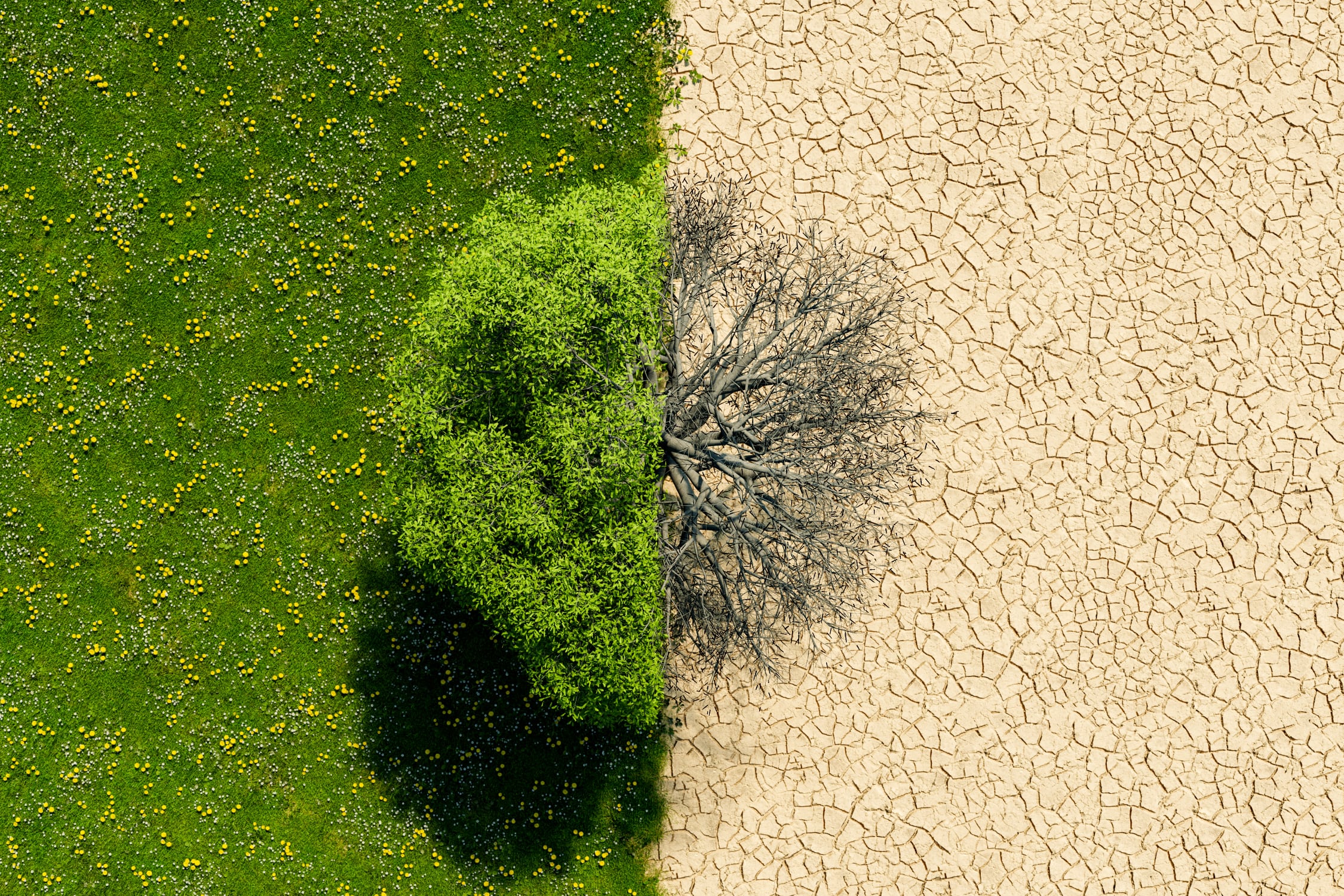
I reaffirm: climate change is the realm of ambiguity between what is perceived by people and what really happens in energy and spatial exchanges. What is presented at the beginning of each section of The Theatricalization tries to denounce itself immediately. This fundamental confusion has to do with the current perception, filled with myths exposed both by the companies and administrations that should manage the issue, as well as by the citizenry. I dare to conjecture that a schismatic conception – what is versus what I am interested in it being – is maintained, which was already present in Calderón’s Baroque allegory, and before.
I read an article in which it is said that the myth of CC is a tale, which conceals a universal philosophical-moral sense that is uncertain. In summary, like a series of flimsy allegories in the broadest and most fundamental sense of the term. The examples mentioned are countless: global climate, pollution and health, non-polluting energies, human impact on the climate, climate of the rich and poor, etc. Here deception and disillusionment emerge. Because news about CC brings us mixed illusion and reality, displayed appearance and scientific truth, mockery from deniers and sincerity from the IPCC. Even at the risk of being wrong, I would say that all this approaches a new Baroque vision of the world.
In short, the great mess of CC can be truth or fiction. It is so large that it is not advisable to attack it head-on; it is better to confront it from the flanks. It seems that in the mentioned text this happens. Several scenes attest to it: it states that the global climate is static and ends up talking about the variable climatic ecosystem; praises the high ecosocial awareness of wealthy countries to reproach them for their various pollutions, which the poor bear much more; recalls that electoral messages forgot to mention CC; qualifies the persistent stubbornness of science to immediately recognize its essential follow-up; criticizes the unjust climate justice; stops at the power of “fake news” to criticize that they have us “manipulated”; praises the posturing of large companies and administrations about the climate to conclude that it is a false adornment; proposes the urgency of climate alliances but doubts whether they are possible in this world of patriotisms; and a long etcetera. In the end, deception in the title that ends in disillusionment in each explanation.
Thus, as I feel it, I write it. In climate change, experiential myths coincide with possible physical tragedies and denials of thought. This entire passage is a kind of dramatic art. It will have to be subjected to a critical gaze that unmasks it/us.
P.S.: All this did not arise for no reason. When I was documenting myself to write about the myth of Narcissus for my Unfinished Ecorrelates, with no expiration date, I came across the work of Sofie Kluge, from the Department of Arts and Cultural Studies University of Copenhagen, on Echo and Narcissus. So she has been the inspiration. I hope I have not spoiled her theses.