Your Majesty, a foreign friend asked me this week what is going to happen with Ceuta and Melilla. I saw his expression turn to a certain astonishment when I replied: “Nothing.” Perhaps I went too far, because one can never say “I will not drink from this water,” you know. But if there is one thing I am sure of, it is that Rabat does not benefit from having a real armed conflict with Spain. And neither does Europe.
After the “invasion” of Ceuta, we already have Moroccan ministers —this time it was the Minister of Justice, a perfect stranger, by the way— sending the usual messages: both cities have always been Moroccan, with “historical and geographical” rights and blah blah blah. That will be all. We will return to being “friends,” so to speak, until the next time we get angry.
Those who will also stay, no matter what Albares says, will be a few hundred, perhaps a thousand illegal “invaders” whom we will admit into Spain and whose destination, in many cases, will be other European countries, mainly France and Belgium. It is what is called releasing the gas valve so that the boiler does not explode. In any case, it will be the least important.
Do you think it is too simplistic? Probably, but it has happened before. Each previous invasion has seemed like the definitive one, the last straw, the end of our cities in North Africa. But here we are. And this will not be the last. It will all depend on the mental maturity or the imaginative laziness of those who govern a country in which, believe it or not, we Spaniards always feel very well treated.
Now we find ourselves in the ‘aftershocks’ of this last assault. True, 70,000 people is a lot, especially all at once. But the problem must be sought more deeply. And this time it has been about, in the absence of a disagreement over Western Sahara, the new friendship reestablished between Spain and Algeria. If there is something that Rabat cannot stand, it is that Algiers and Madrid get along.
Before, we had more reasons to organize a good bilateral row, but since the European Union is negotiating fishing rights in Moroccan waters, Sánchez’s government has yielded to Moroccan theses regarding the Western Sahara and the discovery of a “large oil field” in Canary-Moroccan waters has come to nothing, we have to settle for Algeria. Which, by the way, is not little.
But let’s return to what concerns us. The minister Abdellatif Ouahbi —the Justice minister we mentioned at the beginning— has only returned to the old idea of Hassan II that we must talk about the status of Ceuta and Melilla (by the way, he forgot about Chafarinas, Vélez de la Gomera, Alhucemas… and Peregil!). In summary, Ouahbi has been told to ‘cut the melon,’ to see the weaknesses and strengths of Madrid.
If we analyze the “historical and geographical rights,” the argument falls under its own weight. First, there are no historical rights because when both cities were already under full Spanish sovereignty (15th century), the Sultanate (not to mention the Kingdom) of Morocco did not even exist, although they insist otherwise in Rabat.
With the calendar in hand, the Alaouite dynasty —the one currently embodied by Mohamed VI— only began to have some power —after arriving in southern Morocco in the 13th century— after the disappearance of the Saadi dynasty, of Berber origin. And we are talking about 1659, when Sultan Ahmad al-Abbas was assassinated. From 1668, the first Alaouite sultan, Moulay al-Rashid, took power.
Probably there will be those who think that this also happened in the Christian kingdoms of Europe at that time. The struggles for power were constant, it is true. But there is a notable difference: in the Iberian Peninsula, León, Castilla, Asturias, Navarra, Aragón or Zaragoza (to also mention a Muslim kingdom) have always been called the same. Then they were unified, but we still find those references in our days. In summary, in the Spain of then, dynasties could change, but not kingdoms.
If we compare, in the Maghreb in 1515, we find the Watasid Sultanate, the Viceroyalty of Debdú and the Saadi Emirate, but the name of Morocco does not appear anywhere. What does appear is the name of the city of Ceuta reconquered by Portugal in 1415 and that of Melilla incorporated into the Kingdom of Castile in 1497. In both cases, the dates are much earlier than what is considered the unifier of the Alaouite state, Ismail of Morocco, who ruled from 1672 to 1727.
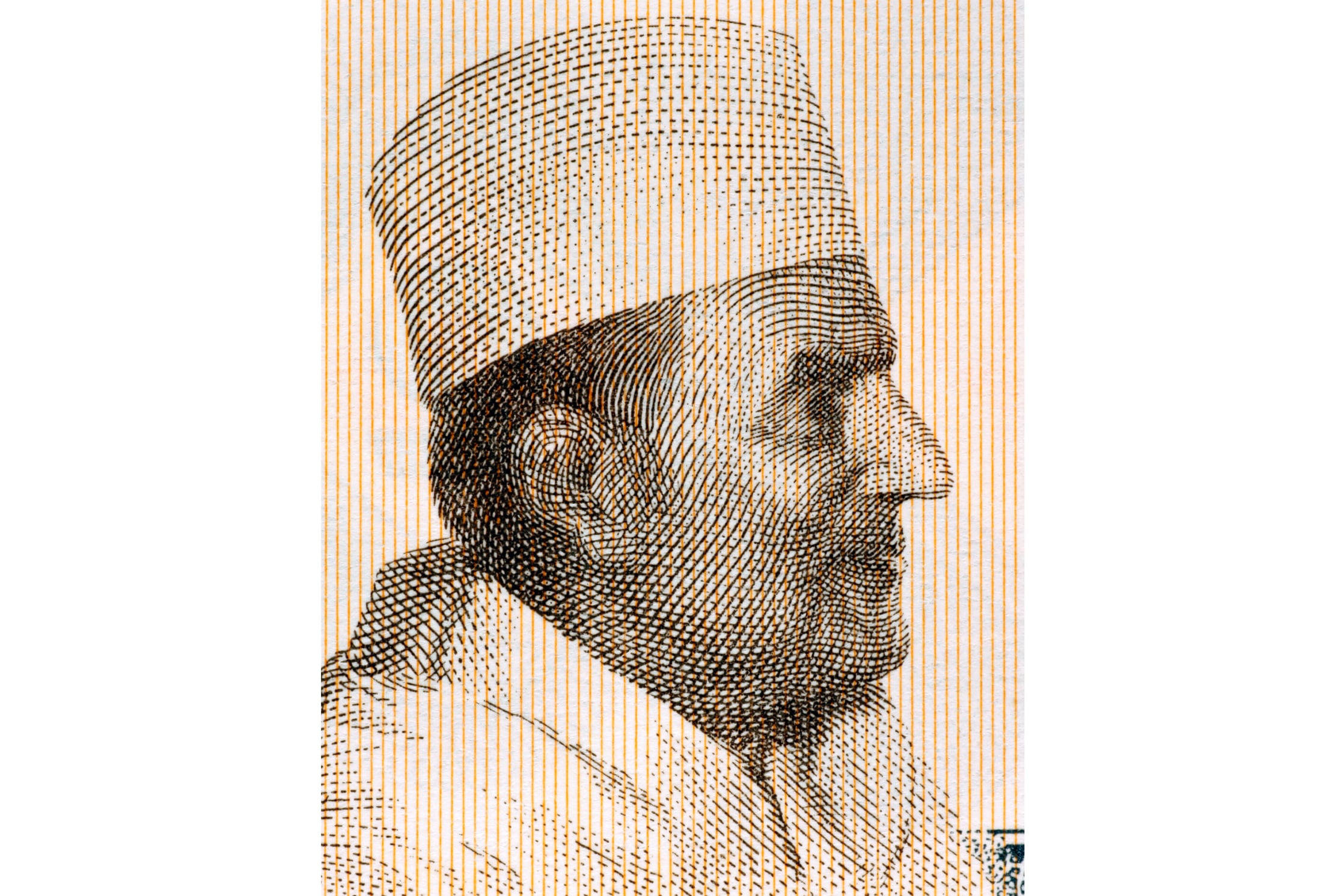
One more detail: Morocco, and in particular Hassan II, only began to claim sovereignty over Ceuta and Melilla in the 1960s of the last century and in a low voice. His father, Mohamed V, after obtaining independence from the French protectorate, traveled to Madrid on April 7, 1956, to sign with General Franco the Hispano-Moroccan Declaration by which Spain recognized its independence. But at no time was the status of Ceuta and Melilla mentioned in that treaty. As it had not been mentioned in many other previous bilateral agreements and treaties.
The second argument, the “geographical rights”, does not hold from any point of view by itself. If we are going to apply a geographical logic, we would have to review the cases of the Falklands, Guam and even Easter Island, not to extend too much. We would even have to agree with Donald Trump in his claim over Greenland. None of these territories are located on the continent of the country that administers them. So the geographical component also makes no sense in this dream of the most rancid Moroccan nationalism.
Another thing is that both governments sit down to talk seriously about forms of cooperation, especially economic, between both sides of the border. Applying some measures of bilateral cooperation to both enclaves, not a shared sovereignty because it is not possible, could be very positive for all. And as we have already reported in DiplomacyNews a few days ago, both countries have many more common interests than reasons to enter into a conflict that would not benefit anyone, starting with Morocco itself.
And I have left out half of what I wanted to tell you. It will have to be another day.