The Ibero-American Academy of Gastronomy (AIBG) organized last Tuesday, June 9, in collaboration with the Pro Tempore Secretariat, a Conversation about gastronomy in Ibero-American countries, in which the Raíz Ecuador seal was present.
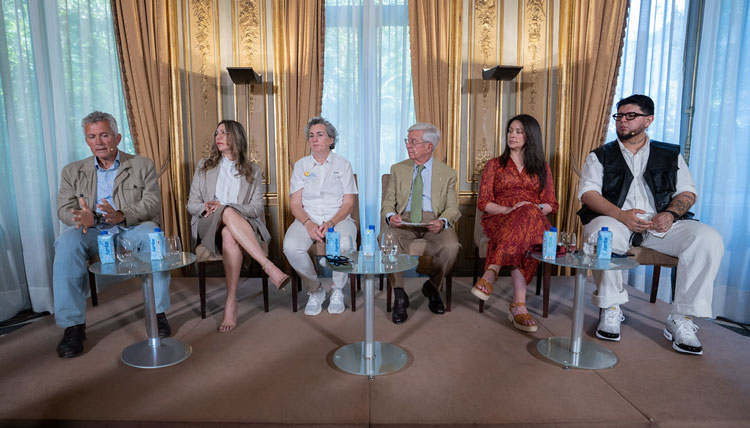
Under the title The new Ibero-American gastronomy of the 21st century on the way to the Madrid Summit, different experts participated in the meeting, held within the framework of the Ibero-American Summit of heads of state and government, which will take place next November in Madrid, to discuss five fundamental aspects: satisfaction, health, sociability, solidarity, and sustainability.
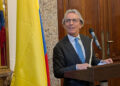
The event took place in the Cervantes Room of Casa de América. Its director, León de la Torre, was in charge of inaugurating the event with a welcome speech. The Ibero-American deputy secretary, Frederico Ludovice, also presided over the event, highlighting that Ibero-American gastronomy is currently the most important in the world: “It is a mix of cultures,” he noted, “that has allowed for the fusion of raw materials from different continents. The gastronomy of the 21st century is essential for forming a more prosperous Ibero-America, not only economically but also culturally.”
“This conversation aims to visualize that the new Ibero-American gastronomy of the 21st century is not limited to satisfaction, but must also be healthy and sociable on one hand, and solidary and sustainable on the other,” emphasized Rafael Ansón, president of AIBG, who moderated the panel of experts.
As a representative of Ecuador, the CEO and Chef of Ayawaskha Gastro and one of the founders of the quality gastronomic, cultural, and tourist seal Raíz Ecuador, Miguel Ángel Méndez, spoke about satisfaction. “We are ambassadors of our countries in the world and are a fundamental part of the economic and social fabric. We need to understand the origin of what we eat and convey credibility. For me, Madrid is currently the largest Ibero-American gastronomic laboratory in the world.”
José Manuel Ávila, general director of the Spanish Foundation for Nutrition, addressed the importance of food in health. The great diversity of foods and a unique recipe book have made Ibero-America home to some of the healthiest diets in the world. Among them, the Mediterranean diet, which stands out for its scientific approach in defining its benefits.
In reference to the social aspect of gastronomy, Cléo Costa, Brazilian journalist and consultant specialized in tourism and gastronomy, explained how the table functions as a space for socialization, where bonds are created and ideas, emotions, and affection are exchanged. “In many Mediterranean cultures, ‘having something before or after eating’ has an almost ceremonial value: it is an excuse to gather, socialize, and strengthen relationships,” she noted.
The owner and chef of Qüenco de Pepa, Pepa Muñoz, who is also at the forefront of the NGO World Central Kitchen in Spain, shared her vision of solidarity gastronomy. “Food is the most important thing for human beings. At World Central Kitchen, it is important that each dish is balanced and made with quality products. Wherever we go, we work with local products. We cook their cuisine; their gastronomic culture matters a lot to us,” she explained.
Regarding sustainability, Venezuelan Andrea García, marketing and sales director at Infinito Delicias, shared her experience in promoting sustainable gastronomic projects. “Our great challenge is to understand that gastronomy does not go from the kitchen to the plate: to be sustainable, attention must be paid to all sectors of the value chain, from production, transformation, and logistics to the kitchen and the diner,” she noted.