


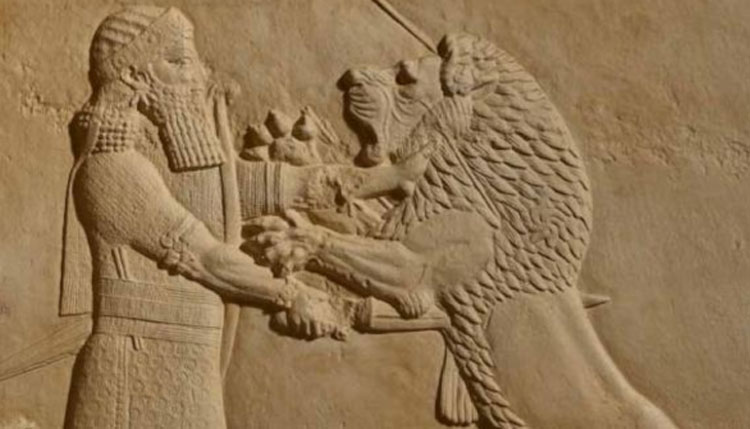
This king ruled from Nineveh (in present-day Iraq) a gigantic empire that extended from the shores of the Mediterranean to the mountains of Iran.
CaixaForum Madrid premieres the exhibition I am Asurbanipal, king of the world, king of Assyria, a display of 158 objects from the British Museum collection that, through seven areas, explores the life and legacy of Asurbanipal (669 – c. 631 BC), the last great sovereign of the Assyrian Empire.
This king ruled from Nineveh (in present-day Iraq) a gigantic empire that extended from the shores of the Mediterranean to the mountains of Iran. The exhibition features a unique universe of activities to bring this theme closer to the public.
This is the tenth collaboration of the ”laCaixa” Foundation with the British Museum, the result of the strategic alliance that both institutions maintain and that has allowed the public in our country to experience a great variety of exhibitions.
This exhibition is dedicated to the historical figure of Asurbanipal, king of Assyria. The display places visitors in the geographical area of present-day Iraq over 2,600 years ago, in the 7th century BC. Asurbanipal ruled between 669 and 631 BC the then largest empire in the world from the city of Nineveh, in present-day Mosul, in northern Iraq. His reign marked the peak of the Assyrian Empire, which extended from the shores of the eastern Mediterranean to the mountains of western Iran. Under his rule, the economy flourished, artistic styles expanded, and new currents of thought emerged. The human movement throughout the Mediterranean and the Middle East was frantic.
Asurbanipal even housed in his palace a library of cuneiform tablets with the ambition of gathering all existing knowledge. However, he maintained a tight control over his territories and vassals, and did not hesitate to employ, in addition to strategy and diplomacy, also violence and terror.
The exhibition, which can be visited until October 4 of this year, features seven thematic areas that portray the profile of a complex ruler, full of contrasts, a mix of warrior violence and passionate erudition, creator of the first great library of humanity.
The public will learn about his military training, such as driving chariots, horseback riding, or archery, and his demonstrations of bravery as a lion hunter. They will be able to contemplate the opulence of the palaces in which he lived and the royal gardens of Nineveh, an oasis where all kinds of flora from anywhere in the empire grew. It also proposes to delve into the library of cuneiform manuscripts that allowed knowledge of medicine, religion, or history of the time.
The exhibition reveals his displays of strength and the humiliation he subjected to his defeated enemies (even if the enemy was his own brother), and his equally relevant capacity for strategy and diplomacy. Finally, it explains the role that the British Museum played in the rediscovery of remains of ancient Assyria and in introducing the world of Asurbanipal into the European imagination of the 19th century.