The Fundación Alternativas and the Embassies of Turkey and Palestine seek future strategies for Gaza and the West Bank.
Spain and Turkey: together for Gaza, Palestine, and regional peace. How to move forward? was the title of the event organized last Friday, April 10, by the Fundación Alternativas and the Embassies of Turkey and Palestine at the Círculo de Bellas Artes in Madrid.
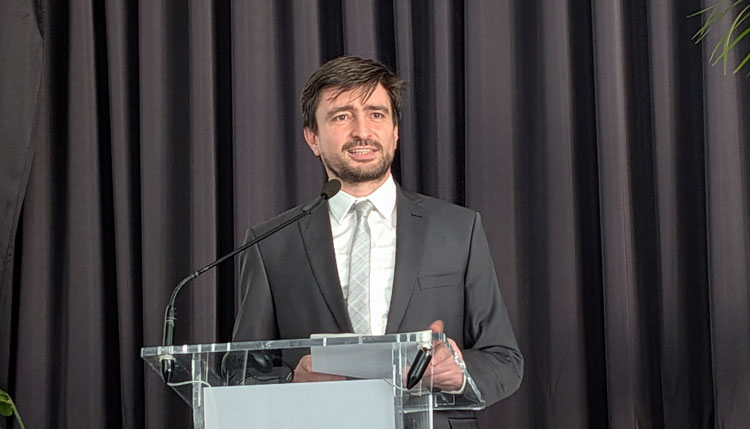
In his introduction, Vicente Palacio, director of the Foundación Alternativas’s Foreign Policy Observatory, referring to the conflicts currently taking place, called for “the civic awareness that affects our lives.” More specifically referring to the issue of Gaza and Palestine and their future, he pointed out that “we need to think and bring the issue to a strategic level,” asking “where do we want to go?” “We must not forget Gaza or Palestine, and we must not renounce what is just, international law, and diplomacy.” Referring to diplomacy, he noted: “It is the best of the old order that is crumbling.”
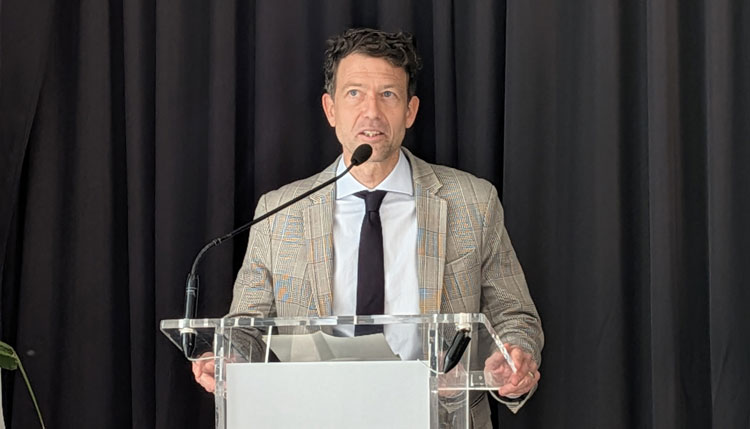
Next, Mehmet Güllüoğlu, ambassador, head of the Disaster and Emergency Management Department of the Ministry of Interior in Turkey, spoke on behalf of the Turkish ambassador, Nüket Küçükel Ezberci, who could not attend the event for personal reasons.
Ambassador Mehmet Güllüoğlu described what is happening in Gaza and the West Bank as a “global problem and not regional” and as “an open wound.” “We must protect Human Rights and the international order, and to do so, we must establish the two states, Palestine and Israel.”
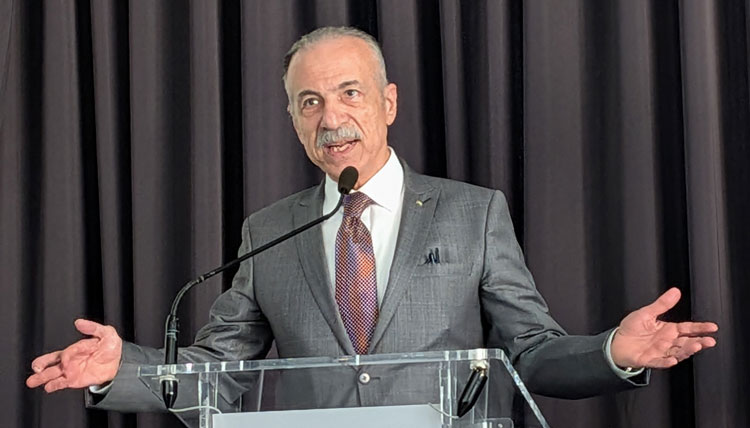
The ambassador of the State of Palestine, Husni Abdel Wahed, had a lengthy intervention in which he took the opportunity to “thank Spain as a whole, both at the popular and institutional level, for the clarity, confidence, and principles they maintain, not only in the case of Palestine but in different cases. It is no secret that today Spain enjoys a privileged position internationally and has demonstrated great management capacity, initiative, and embrace.”
“That Spain and Turkey come together for Palestine speaks volumes and speaks well of both,” emphasized the Palestinian ambassador. “We Palestinians are infinitely grateful to them for this principled position, principles that unfortunately are scarce today, because those principles that have governed our world for a long time are now being replaced by a new doctrine of international politics based solely on force and public power.”
“What is happening in Palestine is practically a kind of laboratory experiment and depending on the results of those experiments in Palestine, this is being experimented with in other places. Look, the occupation has been normalized in Palestine, then in Syria, Lebanon, and who knows where else. The expulsion and forced displacement of the population is no news in Palestine because for the last 80 years it has been a systematic policy of the Zionist state of Israel. Genocide is also not news; destruction has been a systematic policy, and now it is being built with the Gaza model in Lebanon. All this has been experimented in Palestine, and then when it is normalized, it is implemented in other places. That is why it is important to pay attention to what is happening in Palestine because this will have consequences and will be required in other places,” said Husni Abdel Wahed.
The Palestinian ambassador continued emphasizing that “Israel not only occupies Palestine, Israel occupies part of Iraq, Israel occupies part of Syria. And its claim, which it has already announced repeatedly, is the great Israel. And its leaders speak very clearly that they are imposing a new reality in the Middle East.”
Regarding the peace plan for Gaza promoted by Donald Trump, often referred to as Gaza Peace Plan of 2025, the ambassador lamented to say that “that plan has not been fulfilled even in the slightest because not even humanitarian aid is entering the Gaza Strip. And people continue to die of hunger, due to lack of medicines and healthcare to this day, after months of the so-called ceasefire in the Gaza Strip. And while this is happening in the Gaza Strip, in the West Bank there is another chapter of genocide that goes unnoticed, as the Israeli government, with its Knesset parliament, has approved the occupation of the West Bank and is implementing it without any problem. The destruction in the West Bank is also at the forefront.”
The Palestinian ambassador concluded by referring to the life and health of refugees, and recalled that he was born in a refugee camp, and pointed out that “with so much that has happened in Palestine, the disorders, traumas, accompany us for the rest of our lives. And, logically, not many are aware of the need, in addition to material reconstruction, for human reconstruction. The Palestinian population needs psychological attention.“
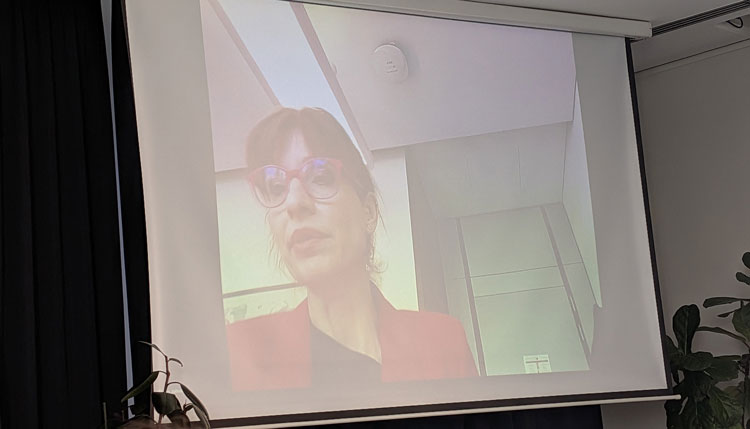
Next, the round table titled Perspectives: The Gaza Peace Plan and the regional war, took place, in which participated Ramazan Erdag, president of the Strategic Research Center of the Ministry of Foreign Affairs of the Republic of Turkey; Eduard Soler, professor of International Relations at the Universitat Autònoma de Barcelona and Senior Associate Researcher at IBEI; Isaías Barreñada, professor of International Relations at the Complutense University of Madrid (UCM), and Hana Jalloul (online), Member of the European Parliament, from the Progressive Alliance of Socialists and Democrats Group, and vice president of the Socialist International. The table was moderated by Ángeles Espinosa, former correspondent for El País in the Middle East.
After a coffee break, the event continued with the table titled Turkey and Spain: the economic and humanitarian reconstruction of Gaza and Palestine, in which intervened Mehmet Güllüoğlu, coordinator of Humanitarian Aid for Palestine, Government of Turkey; Muhammed Huseyin Mercan, associate professor of International Relations, Yıldırım Beyazıt University in Ankara, and Raquel Martí, Executive Director of UNWRA Spain.