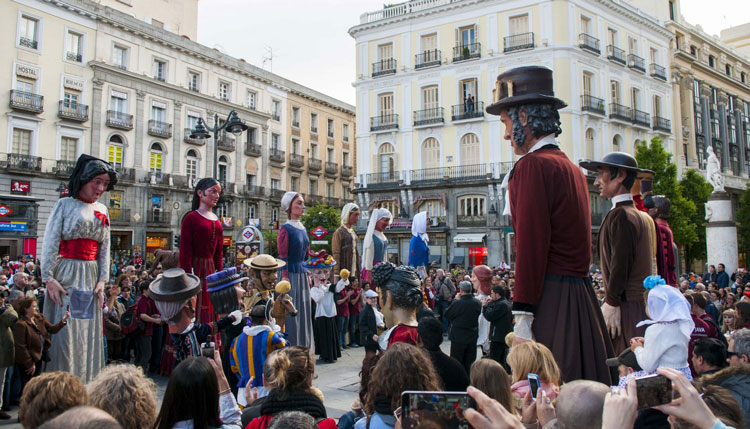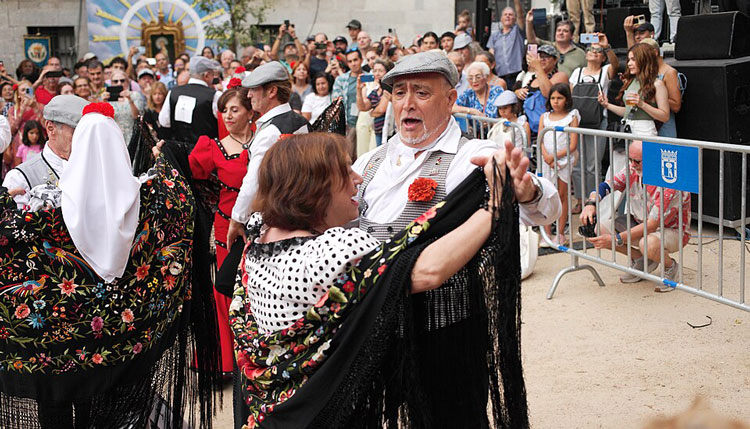
In mid-May, the people of Madrid celebrate our patron, Saint Isidro Labrador (his day is May 15), showcasing our main hallmark: hospitality, and displaying our most festive side.
The Fiestas de San Isidro will kick off once again with the traditional proclamation from the Plaza de la Villa, an event that every year is led by a personality linked to Madrid. In 2026, this honor falls to journalist and writer Sonsoles Ónega, who will be in charge of delivering the proclamation on May 7. An event that marks the beginning of a week of festivities and activities throughout the city for all audiences.
During these days, the nerve centers of the festivities will be the Plaza Mayor, the Jardín de Las Vistilla, Matadero, and the Pradera de San Isidro. Additionally, various parades of Giants and Bigheads will enliven the most emblematic streets of Madrid.
These patronal festivities are held in honor of Saint Isidro Labrador (1080-1130), a Mozarab saint attributed with several miracles, the first layman married to be elevated to the altars, married, with a son (named Illán) and a biography full of works and miracles.
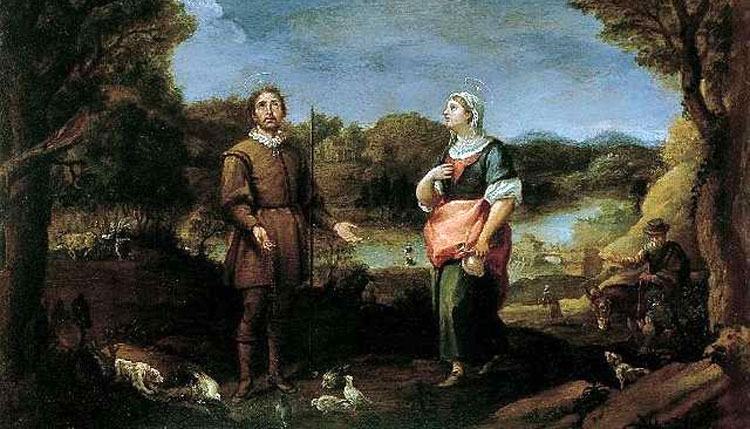
He married Saint María de la Cabeza (named Toribia), dedicated his life to prayer and work, standing out for his generosity towards the needy, which earned him the devotion of the people of Madrid. His beatification, pronounced by Pope Paul V on June 14, 1619, at the request of King Philip III, was a long-awaited event for the people of Madrid; to commemorate the event, great festivities were held, during which the Plaza Mayor was inaugurated. On June 19, 1622, Isidro was canonized by Pope Gregory XV, alongside Saint Teresa of Jesus, Saint Ignatius of Loyola, Saint Francis Xavier, and Saint Philip Neri. His incorrupt body is preserved in the Collegiate Church of San Isidro in Madrid, and the chest where it was secularly deposited can be visited in the Cathedral of Our Lady of Almudena.
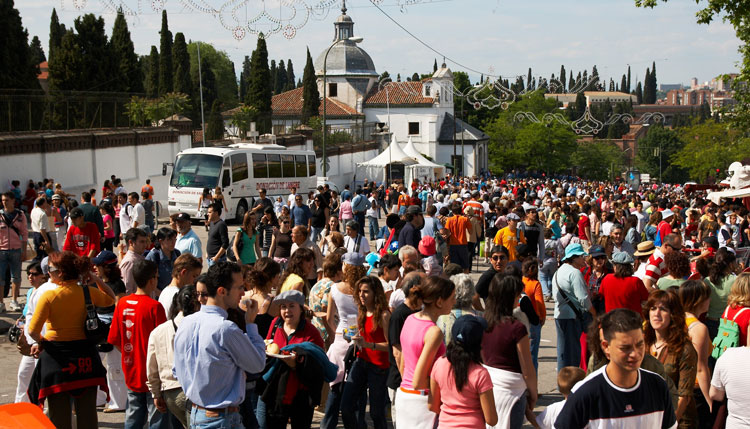
Almost all the miracles attributed to Saint Isidro Labrador are related to water and cultivation, which is why farmers turn to him in times of drought and he is taken in procession around the Church of San Isidro to bring about rain. His most well-known miracle is that he raised the waters of a well where his son Illán fell. Saint Isidro made the water rise so that the boy could reach the edge and thus be rescued. This well is currently located in the Museum of Origins. It is said that the water from his spring, located 450 meters from the current Hermitage of the Saint (Hermitage of San Isidro), has healing powers since the 12th century.
In essence, the festivities are concentrated in the San Isidro neighborhood in Carabanchel, with the Pradera de San Isidro as the epicenter, where it was tradition for the people of Madrid to have a picnic every May 15 after going to drink the holy water that springs from a spring next to the hermitage of San Isidro.
From the first days of May until the 15th, the festival program combines musical avant-garde with a look back at the past, nostalgic sounds, rock, pop, electronic music, indie, fusion, urban proposals, flamenco, and that Castilian touch that can never be missing in San Isidro so that all of Madrid can celebrate its patronal festivities. Traditional celebrations, such as the pilgrimage in the Pradera de San Isidro or the San Isidro bullfighting fair, and typical gastronomy – such as lemonade and rosquillas listas (with egg and covered in powdered sugar), tontas (with egg), las de Santa Clara (with a layer of white meringue), las francesas (with almonds), and las jubilares, from the Holy Year (covered in chocolate) – coexist with an attractive musical and performance program spread throughout Madrid. The entire varied program of the festivities can be consulted at this link.