


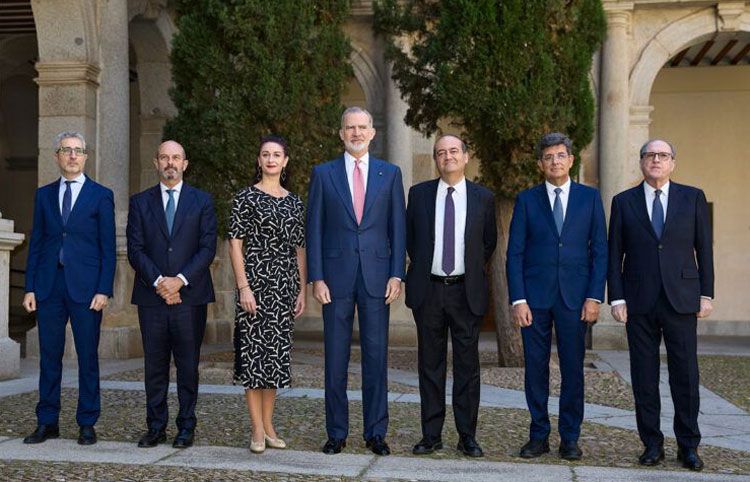
The King of Spain, Felipe VI, presented the King of Spain Human Rights Award in its 10th edition to the Museum of Memory and Human Rights of Chile, recognizing this institution as a global reference in the defense of democratic values and the construction of collective memory.
This award, which honors the tireless work of the museum in the defense and promotion of Human Rights, was granted by the Ombudsman and the University of Alcalá de Henares. The award ceremony took place last Wednesday, May 6, at the auditorium of the historic Madrid university.
“The value of the Museum of Memory and Human Rights does not lie in removing the shadows of the past, but in contributing to building the present and the future, through personal stories, family ties, names and surnames: circumstances where it is possible to recognize oneself. The great achievement of the museum lies in that generation of empathy,” commented the King of Spain during the ceremony.
The event also included the participation of King Felipe VI, the president of the Senate, Pedro Rollán; the Minister of Finance, Arcadi España García; the rector of the University of Alcalá, Carmelo García Pérez, and the Ombudsman, Ángel Gabilondo. The recognition was received by the executive director of the museum, María Fernanda García, along with the president of the board of the MMDH, Patricio Zapata Larraín.
From its headquarters in Santiago, the Museum of Memory and Human Rights of Chile has established itself as an international reference, using art, technology, and education to promote critical and civic reflection on human dignity and democratic coexistence.
The Embassy of Chile expresses in a statement its celebration of this award “that not only recognizes the work of the museum with researchers, teachers, and students, but also reinforces the bonds of shared values that unite us with Spain.”