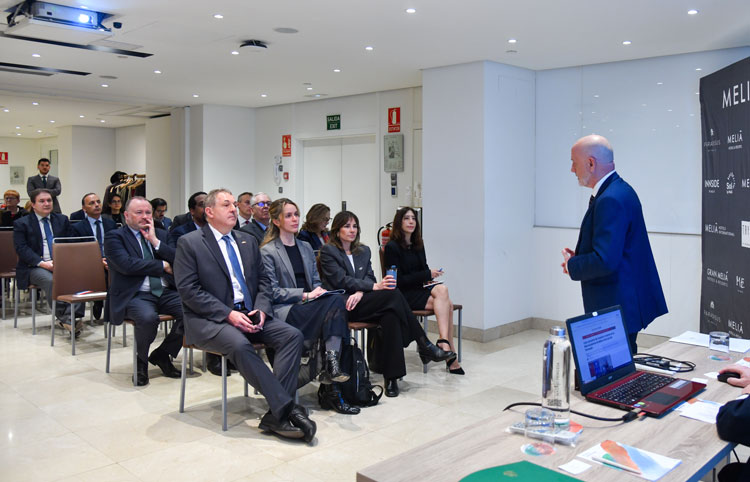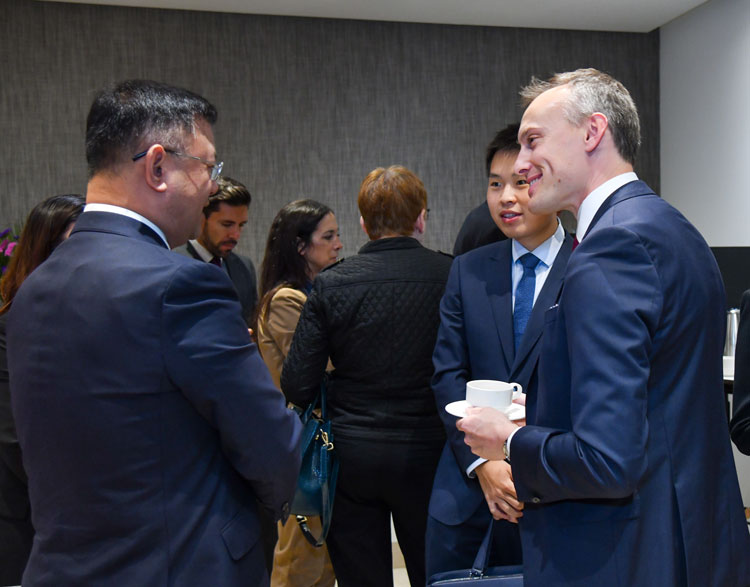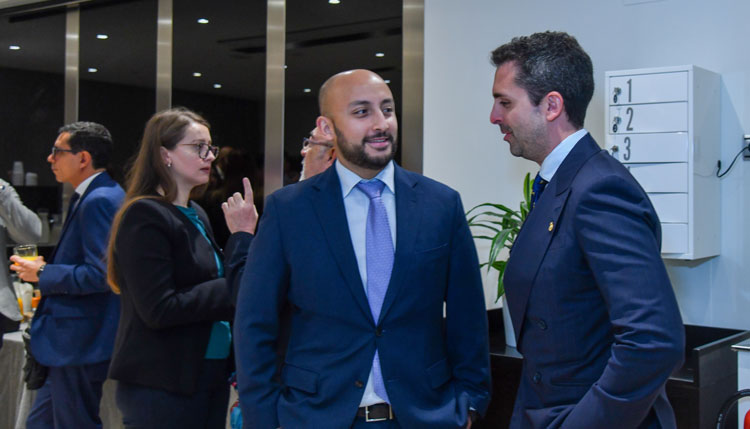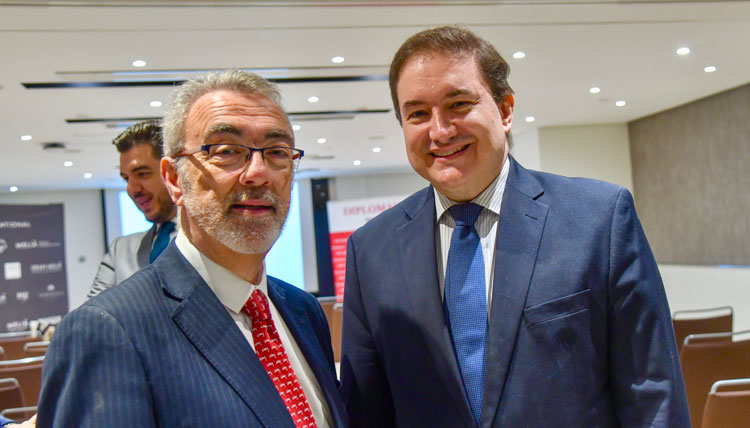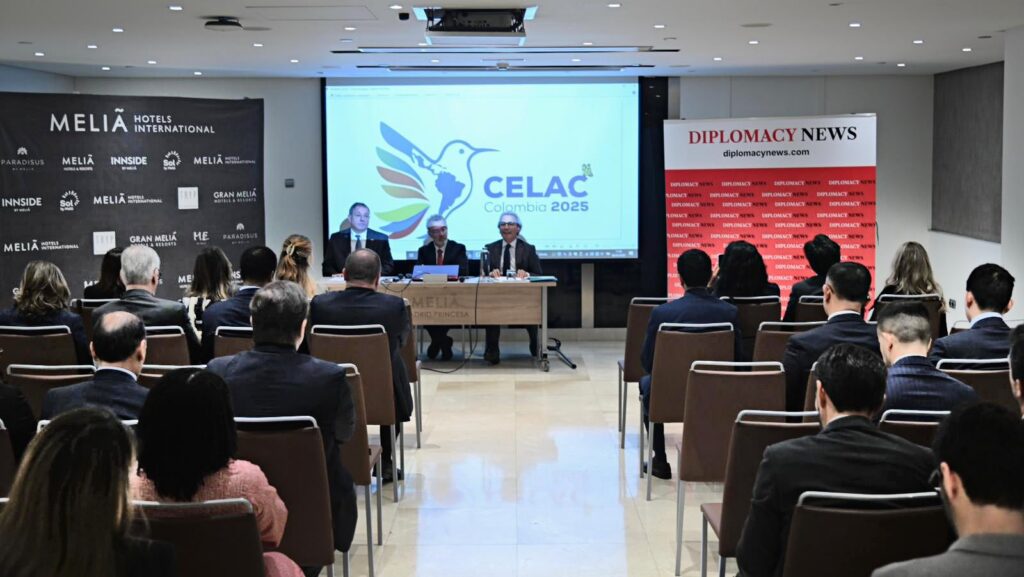
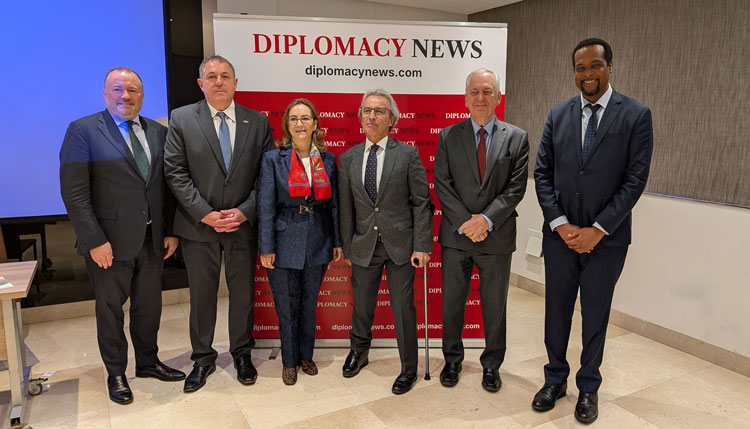
Last Friday, the diplomatic meeting Transfer of the Presidency of the Community of Latin American and Caribbean States (CELAC) from Colombia to Uruguay took place, organized by Diplomacy News, the Association of Foreign Diplomats (ADE), and Meliá Hotels, with the invaluable participation of the ambassadors of Colombia, Eduardo Ávila Navarrete, and Uruguay, Bernardo Greiver del Hoyo.
Before a large attendance of diplomats, the Colombian ambassador spoke first, as the outgoing country from the pro-tempore Presidency of CELAC last March. Ambassador Eduardo Ávila Navarrete described this transfer as “a moment that symbolizes continuity, shared responsibility, and, above all, commitment to a regional project that transcends circumstances. Colombia assumed this responsibility in April 2025 in a particularly challenging international context, an environment marked by increasing geopolitical tensions, an evident crisis of multilateralism, global conflicts that directly impact our economies and societies, and also by the legitimate but complex diversity of political visions within our own region.”

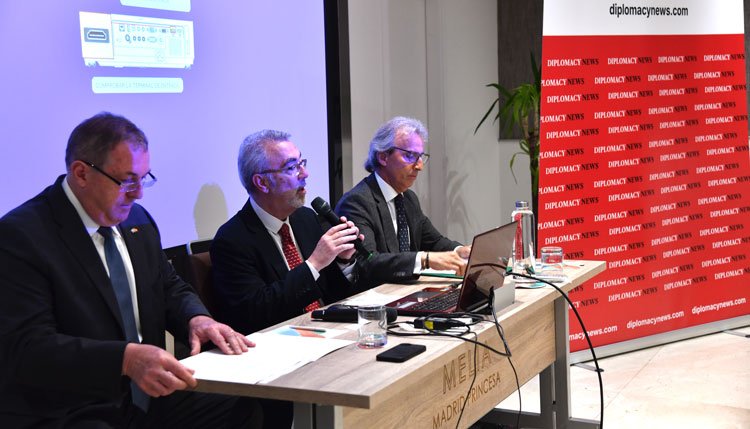

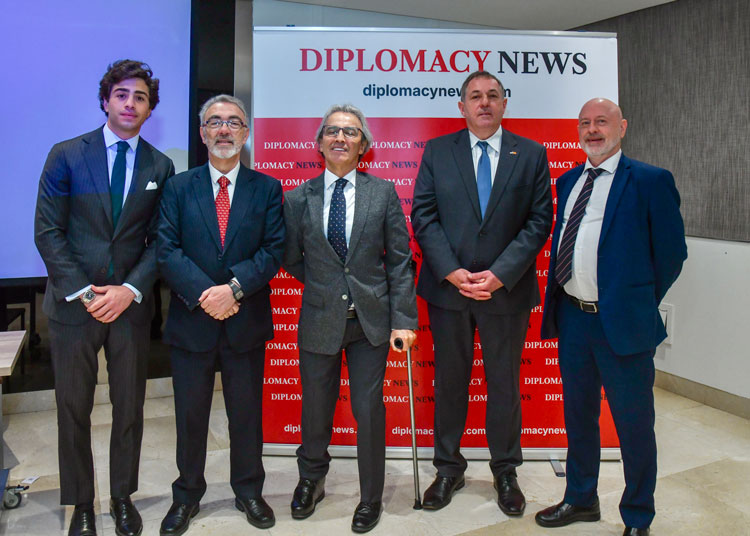
“In that scenario, he continued, the first major achievement of Colombia’s pro-tempore presidency was to maintain dialogue. It may seem obvious, but it is not. In a context of fragmentation, keeping communication channels open, preserving political dialogue, and ensuring that the 33 CELAC countries remained seated at the same table is in itself a strategic outcome. CELAC thus reaffirmed itself as the main political concentration space in Latin America and the Caribbean, a forum where diversity is not an obstacle but a condition for building consensus. From that basis, Colombia promoted an ambitious agenda structured around clear priorities, sustainable development, social justice, south-south cooperation, and strengthening ties with extra-regional partners.
The Colombian ambassador then detailed the role played by his country during the year in the Presidency of CELAC. “During this period, he indicated, 29 national coordination meetings were held, which constitute the technical heart of the mechanism, and five ministerial meetings of foreign relations, aimed at coordinating positions in the face of major regional and global challenges. These spaces allowed not only to maintain dialogue but also to advance in the construction of concrete agreements. The most representative example is the adoption of the Declaration of Bogotá at the tenth CELAC summit, a document that reflects both the points of convergence and the points of differences that exist in the region, but above all demonstrates that consensus remains possible. Another of the fundamental pillars of this management was the strengthening of external relations and the international projection of CELAC. In a world characterized by increasing interdependencies, the region cannot afford isolation; on the contrary, it must project itself as a relevant actor, with its own voice, capable of influencing global debates. Seven ministerial meetings were coordinated with key actors such as China, the European Union, the African Union, India, Japan, and the Gulf Cooperation Council. Consolidating a structured and permanent dialogue scheme.”
Eduardo Ávila detailed the importance of the presidency’s management regarding high-level bi-regional spaces. “The fourth CELAC-European Union summit, held in Santa Marta, allowed for progress on an ambitious bi-regional roadmap covering areas such as energy transition, digital transformation, food security, health, education, and citizen security cooperation. The fourth CELAC-China ministerial forum led to the adoption of a Joint Action Plan 2025-2027, aimed at deepening cooperation in trade, investment, innovation, connectivity, and sustainable development,” the ambassador noted.
The ambassador also wanted to highlight the holding of the first high-level CELAC-Africa forum, which “represented a historic milestone in the articulation of the global south. This space not only allowed for the identification of concrete areas of cooperation, such as energy, agriculture, innovation, and climate change, but also reaffirmed the willingness to build a joint agenda based on shared interests and a vision of more equitable development. These advances consolidate CELAC as an increasingly relevant actor on the international stage.”

“Substantive advances were made in key sectoral areas for the development of our societies, Eduardo Ávila later emphasized. In the area of energy, dialogue on regional energy integration and just energy transition was promoted, even exploring the possibility of advancing towards a regional treaty in this matter. In the field of health, important steps were taken towards health self-sufficiency, including strengthening regulatory cooperation and exploring regional mechanisms that allow reducing external dependence on medicines and technology. In science, technology, and innovation, a historic milestone was reached with the first CELAC-EU ministerial meeting in this area, which resulted in an operational agenda with priority areas such as health, climate change, and artificial intelligence. In education, progress was made in building a common space for higher education, aimed at strengthening academic mobility. The recognition of degrees and institutional cooperation among member countries. And in food security, he continued, the SAN CELAC 2030 Plan was strengthened, with the aim of eradicating hunger, promoting sustainable agri-food systems, and guaranteeing the right to food. One of the most relevant elements of this management was the transition towards a CELAC more oriented towards results. It is not just about producing declarations, but about advancing in concrete and measurable instruments.”
The Colombian ambassador highlighted this period of Colombian presidency as “an effective capacity for concertation in a diverse regional context,” with the adoption of 18 of the 26 negotiated documents.
“Now, the ambassador pointed out, alongside these achievements, it is essential to clearly address the challenges that CELAC faces in the future. The first of these is the challenge of implementation. The region has shown that it can agree, but the real challenge is to translate those agreements into concrete policies, with a real impact on the lives of all citizens. This implies strengthening monitoring, evaluation, and execution mechanisms. The second challenge is the strengthening of institutions. There is a growing consensus around the need for a more agile, more operational CELAC, with more efficient working methods and a more focused agenda that prioritizes concrete results and avoids thematic dispersion. The third challenge is to deepen the regional response capacity in the face of multiple crises: food, energy, health, and climate. In this context, CELAC must consolidate itself as an effective platform for collective action and for strengthening regional strategic autonomy. A fourth challenge is to continue strengthening external relations, ensuring that the voice of Latin America and the Caribbean has a greater weight in global governance and in defining responses to the major challenges of our times.”
“And finally, the most structural challenge, preserving unity in diversity. CELAC is, by nature, a plural space. Its strength lies not in uniformity, but in the ability to build consensus from differences. Maintaining that balance will be key to its future relevance. In this context, we want to greet Uruguay and at the beginning of its Pro Tempore presidency. We are convinced that, under its leadership, the advances achieved will continue and the process of consolidating a more efficient, more cohesive, and more influential CELAC on the international stage. Because, ultimately, CELAC is not just an institutional mechanism; it is an expression of political will, a manifestation that Latin America and the Caribbean can dialogue, coordinate, and act together in the face of global challenges. In an increasingly fragmented world, that capacity is not only valuable; it is essential,” concluded Eduardo Ávila Navarrete.
Bernardo Greiver del Hoyo, ambassador of Uruguay, emphasized at the beginning of his speech that this diplomatic meeting was taking place “at a very opportune moment, because news of diplomacy is more necessary than ever. And not only news, the information related to diplomacy is more important than ever.
“We add a new link to the continuity of CELAC presidencies that preceded us. We assume this presidency at this moment because we believe in the region, because we believe in dialogue and because we believe in integration. And more than ever, we believe in the need to build meeting spaces between our countries, so that solutions to the problems of Latin America and the Caribbean also arise from the region itself. The international order is going through a moment of tensions, conflicts, geopolitical peaks, inequalities, humanitarian and health crises. And in this context, multilateralism is not an option; it is a necessity. International cooperation is the only effective way to face challenges that do not recognize borders. That is why Uruguay assumes these responsibilities in 2026, not because it is the easiest, but because it is the most responsible. Because we believe we can contribute by articulating, facilitating, and building bridges.”
Ambassador Bernardo Greiver highlighted that “this year, in addition to CELAC, Uruguay holds the presidency of the Group of 77 and China, the broad expression of the Global South, with its 134 countries. And in the second half of this year, we will also assume the pro-tempore presidency of the New South. And all this we do at a historic moment, such as the entry into force of the agreement between Mercosur and the European Union. An agreement that encompasses more than 720 million people and dozens of countries, but whose true magnitude is not only the trade it will generate but the values it represents. Democracy, human rights, dignity, rule of law, and trust. Values not only shared but that project us towards a common destiny.”
“Uruguay, he pointed out, is above all a country of values, respect, honesty, solidarity, freedom, and justice. And we hope that this can be our contribution. Our foreign policy, guided by these principles, projects Uruguay as a reliable, respected country, with a vocation for understanding, both regionally and globally. Upon assuming the presidency of CELAC, President Yamandú Orsi recalled that Latin America and the Caribbean have managed to consolidate themselves as a zone of peace, without conflicts between states. It is not a casual fact; it is the result of decades of political construction in the region. And it is not an empty slogan; it is, as the president pointed out, a living way of building freedoms.”
“For Uruguay, exercising the presidency of CELAC is an honor, but also part of our identity. Our constitution enshrines the commitment to the peaceful resolution of controversies and also to the integration of Latin American peoples. And in CELAC, we naturally include the Caribbean. For us, integration is not just a strategy; it is a constitutional mandate. Because for Uruguay, peace and integration have always been part of the same idea. Today, we also face challenges that call us all. And they are part of the agenda that Uruguay will carry forward, continuing the path traced and imposed by the presidency of Colombia. Food security, energy transition, disaster risk management, education, productive development, logistics. All these are shared challenges and, therefore, also require not only responses but also dialogue and concertation,” the Uruguayan ambassador noted.
After expressing that all this work “must be done in a shared manner among the countries of the region” and Uruguay’s commitment “to the south and its values, the ambassador referred to” the deep intuition of the great master of Uruguayan painting, Joaquín Torres García, creator of the universal constructivist art movement. “When he taught us that our north is the south. An invitation with all the beauty and simplicity that comes from looking at things and the world from another perspective, also from the perspective of what Latin America and the Caribbean are. Or perhaps we are bringing to the negotiation tables and meeting rooms of the world what the great poet of everyday life and master of words, Mario Benedetti, expressed in his poetry and that Joan Manuel Serrat turned into song in The South Also Exists.
When questioned about the possibility of creating a community in Latin America and the Caribbean in the style of the European Union, the Colombian ambassador stated that “CELAC is an integration mechanism, but to get there we still have a long way to go. It would be a great illusion, but that requires time.”
For his part, the Uruguayan ambassador opined that “already with the world, CELAC is a interlocutor of the region with other places. When we meet CELAC with China, the entire region of Latin America and the Caribbean sits with China. And when we sit with the European Union, we are the 27 plus all the countries that make up CELAC. We are on a path where we sit down, we come together, and it is the only thing we have, but it is not an economic integration mechanism, there is currently no talk within CELAC of having a common market either.”
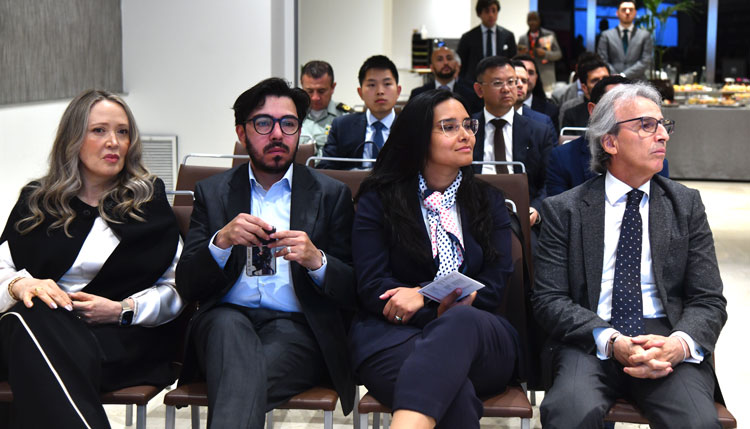
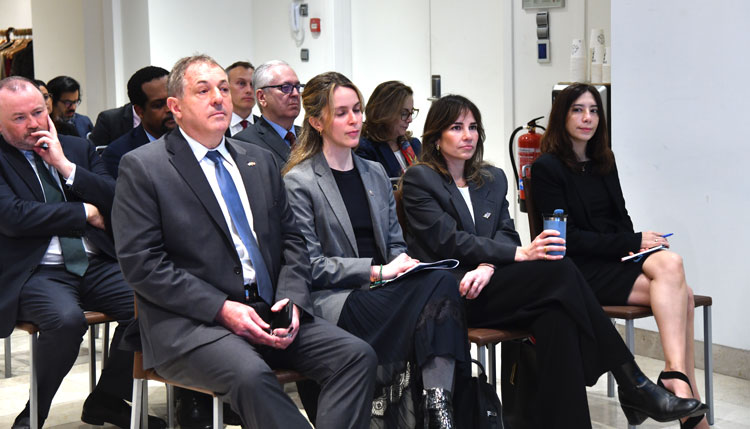
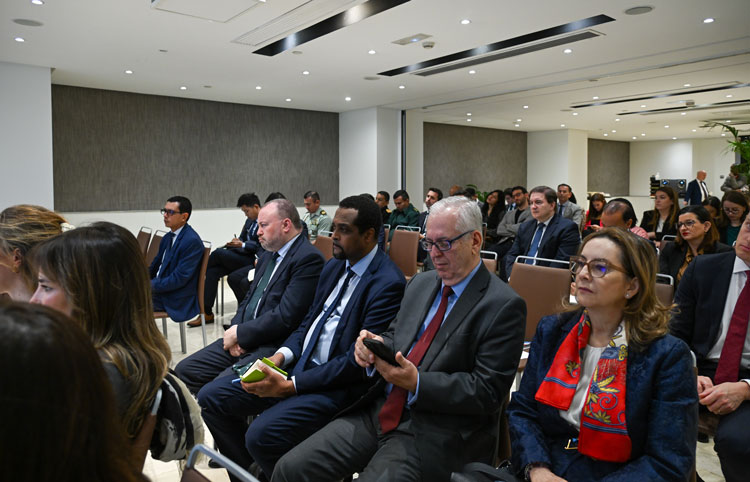
The ambassadors of Brazil, Haiti, El Salvador, and Ireland attended the meeting, along with diplomats from Argentina, Germany, Mexico, Costa Rica, Venezuela, Chile, Bosnia and Herzegovina, Serbia, Ghana, China, the United Kingdom, the Dominican Republic, Kuwait, Paraguay, Peru, Switzerland, and Romania, among others, along with Gina Magnolia Riaño, Secretary General of OISS, and personalities from the business and academic world.