


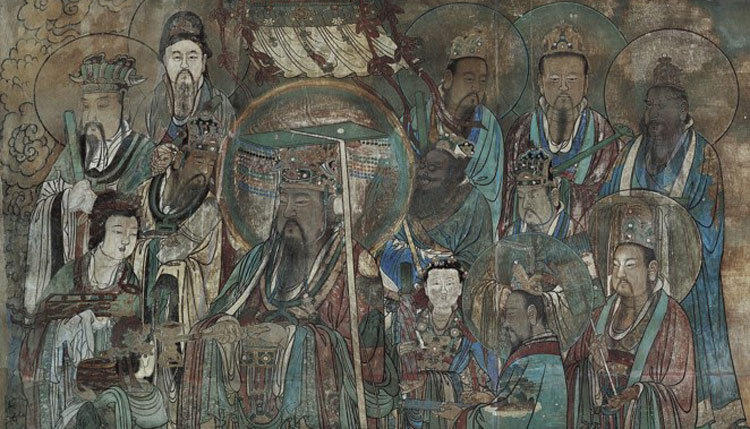
The Centro Cultural de China in Madrid (General Pardiñas street, 73) presents this afternoon at 5:30 PM the exhibition Tribute to the Yongle Palace-recreation with mineral pigments, which will be on display until June 20.
More than seven hundred years ago, on the banks of the Yellow River in China, painters shaped, in the Yongle Palace, a grand symphony of deities on walls covering thousands of square meters, using natural mineral pigments such as malachite, cinnabar, and azurite.
This palace, founded in the year 1247 and located in the Chinese province of Shanxi, is the largest and best-preserved Taoist complex in existence in China.
The complex preserves extraordinary wooden buildings from the Yuan dynasty, and the magnificent murals of the Yongle Palace, with an approximate area of 1,000 m², not only represent the pinnacle of temple mural painting in China in the 13th and 14th centuries, but also constitute an exceptional monumental work in the global history of mural painting.
The exhibition, which has the support of the Ministry of Culture and National Museum and Research Center of Altamira, recreates the artistic excellence of the murals of the Yongle Palace and showcases the interdisciplinary reflection of contemporary creators, through 17 works -including masterful copies, recreations, and an installation- created by 15 artists.
The density and relief achieved through the layering of mineral pigments engage in dialogue from a distance with the ancient Spanish mural tradition. By contemplating these recreations, one can discover how the stones of the earth, ground into powder and mixed with binders, manage to preserve their unaltered brilliance on paper and wall for centuries.