


As the world faces the challenges of an aging population and a shortage of healthcare personnel, digital transformation in healthcare is no longer optional but essential. Taiwan has presented the vision ‘Healthy Taiwan’, placing ‘the drive for digital health’ at its core.
By integrating big data, artificial intelligence (AI), and cloud technologies, the system aims to improve the quality and efficiency of healthcare, moving towards a new health model centered on comprehensive and person-centered care.
Taiwan benefits from both a robust ICT industry and the foundation of its National Health Insurance system (NHI), which has accumulated high-quality health data over time, laying the critical groundwork for the development of smart health. On this pillar, we have introduced a national digital health platform known as the ‘3-3-3 Framework’, which integrates three main health spaces, three key health data standards, and three national AI governance centers to establish a comprehensive digital health infrastructure. Under this scheme, we are promoting the integration of electronic medical records in over 400 hospitals across the country and adopting international standards such as Fast Healthcare Interoperability Resources (FHIR) to ensure interoperability between institutions. Within a ‘Zero Trust’ cybersecurity framework, health data can be shared securely and used effectively.
With these policies in place, tangible results are already beginning to emerge. In chronic disease management, the ‘Family Doctor Platform’ incorporates AI-based risk prediction to support doctors in providing personalized care, facilitating the transition from reactive treatment to proactive health management. Regarding health data integration, the MediCloud system provides real-time access to patient histories and medication information, while enhanced visualization of test results and AI-assisted medical image interpretation further improve the quality of care and patient safety.
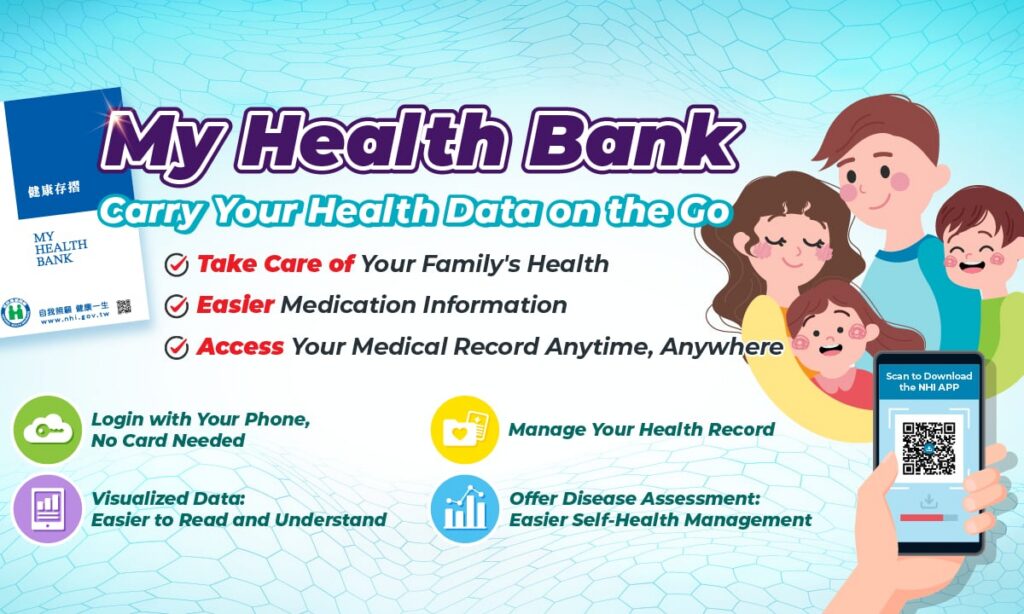
Personal health management has also been strengthened. The ‘My Health Bank’ platform has surpassed a 50 percent adoption rate and can integrate with data from wearable devices, encouraging individuals to take a more active role in managing their own health. In terms of cancer treatment digitization, Taiwan uses the FHIR standard to exchange Next Generation Sequencing (NGS) data, accelerating the review process for catastrophic illness certification and related medical use, thereby improving access to timely treatments. Additionally, the push for virtual health insurance cards, electronic prescriptions, and telemedicine services is effectively overcoming temporal and geographical barriers, expanding access to rural and home care.
Taiwan has established a comprehensive governance framework to drive the development of clinical AI. Nineteen national medical AI centers have been created covering responsible governance, clinical validation, and impact assessment, ensuring that AI is safe and reliable throughout the process, from development to application. To date, more than 50 AI medical products have received regulatory approval, supporting early cancer detection, predicting cardiac cases, and aiding clinical decision-making. Taiwan also has 13 hospitals ranked among the ‘World’s Smartest Hospitals 2026’ according to Newsweek, ranking second in Asia and demonstrating strong international competitiveness. Furthermore, Taiwan is promoting learning platforms that allow for the validation of AI models across institutions and borders without transferring sensitive data, and has begun collaborating with Southeast Asian partners to establish reliable international data exchange models.
Diseases know no borders and global health governance requires comprehensive collaboration. Taiwan has established a data-driven smart health ecosystem, powered by AI and supported by interoperable standards, extending medical services from hospitals to communities and daily life, thus achieving comprehensive care. Taiwan’s practical experience demonstrates that we are capable of contributing to the international community.
However, Taiwan remains excluded from fully participating in the World Health Organization (WHO) and its related mechanisms. United Nations General Assembly Resolution 2758 and World Health Assembly Resolution 25.1 neither mention Taiwan nor exclude it from participating in the WHO and the WHA.
We sincerely urge the WHO and relevant stakeholders to support Taiwan’s inclusion in the global health system, thereby strengthening its integrity and resilience. Taiwan will continue to advance smart health through digital innovation and contribute to global health and well-being. Together, we can make the vision of health as a fundamental human right, as established in the WHO Constitution, and the commitment of the United Nations Sustainable Development Goals to leave no one behind a reality.