


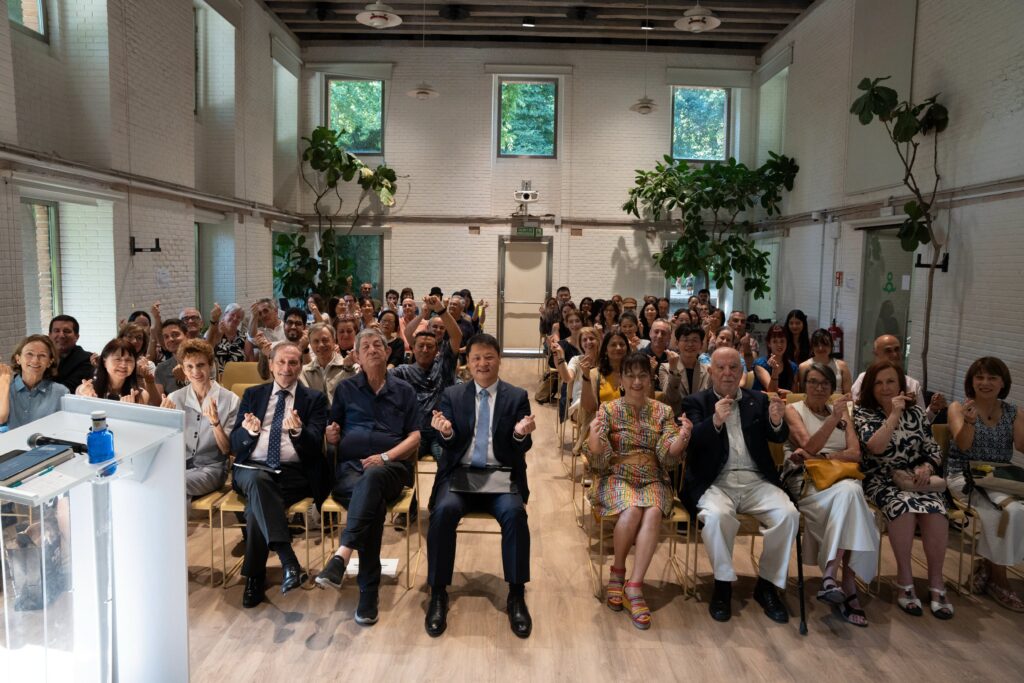
After almost three years of hard work, the LiFT series (Literature from Taiwan) from the National Museum of Taiwanese Literature (NMTL) officially lands in the Spanish-speaking world. In collaboration with the prestigious Spanish literary publisher Visor Libros, this June the Anthology of Contemporary Taiwanese Short Stories and the Anthology of Contemporary Taiwanese Poetry have been officially published.
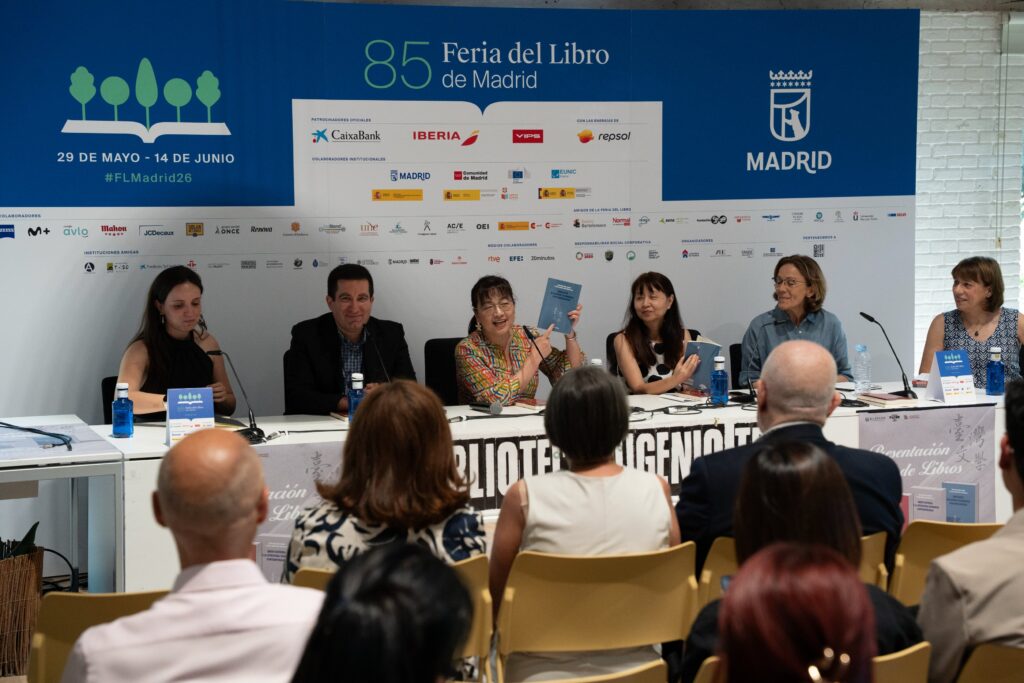
With the aim of increasing the visibility of Taiwanese literature in the Hispanic sphere, and within the framework of the Madrid Book Fair, the official presentation of both works took place on June 12 in the auditorium of the Eugenio Trías Library, located in El Retiro Park.
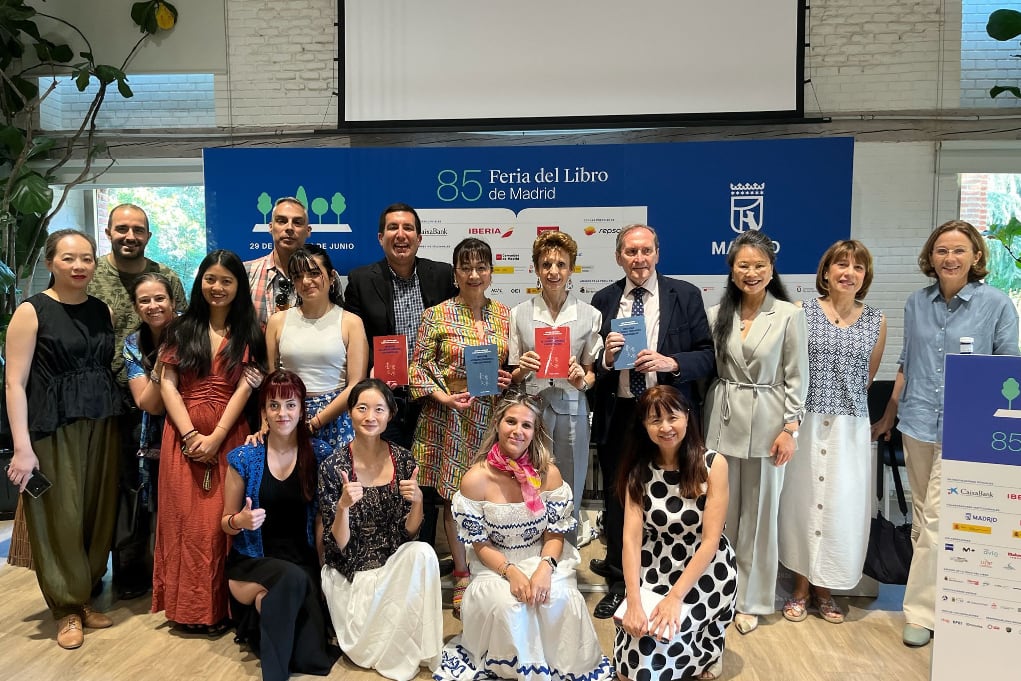
The event featured special participation from professors Luisa Shu-Ying Chang and Luisa Cheng-Fan Chen, who traveled from Taipei to Spain. Among the notable attendees were the Representative of the Taipei Economic and Cultural Office in Spain, Ambassador Lino Li-cheng Cheng; the founder of Visor Libros, Jesús García Sánchez (Chus Visor); the professor and vice-dean of the Faculty of Humanities at IE University (Segovia campus), Regina Llamas; and the former professor of the Autonomous University of Madrid, Begoña García Sierra. The main presentations were given by translators Mario Santander Oliván, assistant professor in the Department of East Asian Studies at Complutense University of Madrid, and Nerea García Cabello, professional translator.
Additionally, distinguished academics from the Royal Spanish Academy (RAE) attended, including Juan Gil —who participated in late May in the congress on the 400 years of the encounter between Taiwan and Spain organized by National Tsing Hua University— accompanied by his wife Consuelo Varela, and Aurora Egido, academic librarian of the RAE. Also joining the event were Dámaso López, former vice-rector of International Relations at Complutense University of Madrid; Consuelo Marcos Martínez, director of the Department of East Asian Studies at the same institution; Eduardo Euba, former director of the Chamber of Commerce of Spain in Taiwan; Corina Oproae, Romanian-Spanish poet invited to the Taipei Poetry Festival 2025; as well as numerous professors from Complutense University and the Autonomous University of Madrid.
The NMTL noted that this publication project was carried out by Taipei Medical University (TMU) during the period when Luisa Chang served as vice-rector for Service Commissions. Both anthologies, of great relevance, were made possible thanks to the joint effort of the administrative team at TMU, as well as the transnational work of Professor Luisa Chang (main coordinator), Professor Luisa Chen (co-coordinator), and assistant professor Mario Santander Oliván (adjunct coordinator), along with Nina Ya-Hui Chang, Li Mei Liu Liu, Daniel García González, and Nerea García Cabello. This milestone marks the debut of the LiFT series in the Spanish-speaking world.
Two key anthologies to understand Taiwanese literature
Both works are organized chronologically, offering a rich and diverse overview of the literary evolution of the island. It is noteworthy that their publication coincides with the IV Centenary of the historical encounter between Spain and the Beautiful Island (Taiwan, 1626–2026), which adds profound cultural significance to this launch.
1. Anthology of Contemporary Taiwanese Short Stories
- Content: Gathers 11 short stories from 11 key authors from Taiwan.
- Theme: Through a chronological structure spanning over 70 years, the texts explore colonial experience, modernism, realism, bodily and sexual desire, and gender identity, reflecting the resilience and inclusion of Taiwanese society.
2. Anthology of Contemporary Taiwanese Poetry
- Content: Anthologizes 47 poems from 43 traditional and contemporary poets.
- Characteristics: It is the most comprehensive modern poetry anthology from Taiwan published in Spanish to date. The poems are presented in bilingual edition (Chinese-Spanish) and include works from the period under Japanese rule to the early 21st century. The selection also evidences the influence of Western avant-gardes and Spanish poets from the Generation of ’27 (such as Federico García Lorca) on Taiwanese literature.
Voices of the protagonists
The ambassador, Mr. Lino Li-cheng Cheng, from the Taipei Economic and Cultural Office in Spain, opened the event with his opening speech. Observing a completely full auditorium, Ambassador Cheng highlighted the enthusiastic participation not only of a large number of local readers but also of numerous academics and prominent professionals from the publishing sector. He described the event as an extremely special occasion and expressed his deep gratitude to the Spanish-Taiwanese team led by Taipei Medical University, Professor Luisa Shu-Ying Chang from National Taiwan University (NTU), and Professor Luisa Cheng-Fan Chen from National Chi Nan University. He also emphasized that introducing the works of dozens of recognized Taiwanese authors to the Spanish-speaking world is undoubtedly a fundamental catalyst for this audience to get to know Taiwan in greater depth.
The ambassador expressed his conviction that, through the Spanish translations of these magnificent works, Spanish-speaking readers will clearly perceive the diversity, inclusion, and rich cultural heritage of Taiwanese society. The Taipei Economic and Cultural Office in Spain has dedicated years to cultivating and deepening bilateral ties in the educational, cultural, and academic fields. In the future, the Office will continue to promote the power of the written word emanating from these two anthologies, hoping to continue building an ever-stronger cultural bridge. At the same time, this effort seeks to continuously expand the presence of Taiwanese literature in the Spanish publishing market, enhancing the achievements accumulated in the past and promoting the development of friendship relations between Spain and Taiwan.
For her part, Professor Luisa Chang shared the profound personal significance of this project, which materializes a desire sown 36 years ago when she was pursuing her doctorate in Madrid. At that time, the renowned intellectual Chi Pang-yuan urged her to translate Taiwanese literature into Spanish; years later, in 1994, Nobel Prize winner Camilo José Cela also encouraged her to undertake the translation of a poetry anthology during his visit to the island. After decades resonating in her memory, these direct translations from Chinese to Spanish are finally a reality. Chang especially thanked editor Chus Visor for breaking her historical personal rule of not attending book presentations to support this project. She also described it as a sort of Penelope and Scheherazade in male version, weaving this edition with patience and perseverance over a thousand and one nights. Luisa Chang continued quoting the congratulatory words of former RAE director, Darío Villanueva:
“My congratulations to my editor Chus García Sánchez for the magnificent contributions he is making from Visor to keep alive an intense editorial activity for the benefit of poetry, literary criticism, and Hispanic philology…. I wish to congratulate the intellectual and university promoter of this initiative, Professor Luisa Shu-Ying Chang, professor at National Taiwan University and corresponding academic there of the Royal Spanish Academy. I know the care with which she has ensured that the translation of the original texts from Chinese to Spanish was of the highest quality, which is especially meritorious in the case of lyric poetry… The admirable effort represented by the entire process, now concluded with the presentation in Madrid of the three books published by VISOR, contributes to the reasonable utopian ideal of a Weltliteratur that Goethe announced in his conversations with Eckermann.”

During the round table, Professor Mario Santander highlighted the value of collective work under the motto «Unity is strength», emphasizing the wonderful thematic and formal diversity of the stories. Meanwhile, translator Nerea García Cabello described the experience of translating from Chinese as a “sweet bitterness” due to the density of the original language and the responsibility of preserving the authentic poetic voice, concluding that translation is ultimately a form of empathy and inhabiting an alien sensitivity.
The invited commentators, Begoña García Sierra and Professor Regina Llamas, provided their critical insights. García Sierra pointed out that these works help to dispel the “blind spot” that exists in Spain regarding the rich culture of Taiwan, going beyond the geopolitical or commercial labels of the past. Professor Llamas praised the “exemplary” chronological structure of the anthologies and highlighted the humanity, subtle humor, and love for the characters present in the works of authors such as Wang Wen-Hsing, Pai Kenneth Hsien-Yung, and Li Ang.
An international milestone and future perspectives
The question-and-answer session, which lasted 75 minutes, reflected the great interest of the audience. Editors from Latin America (such as Argentine Roberto Di Mario) and researchers were interested in the selection criteria and the challenges of poetic translation. Professors Chang and Chen explained that, in addition to being based on recognized canons and the representativeness of each era, they sought to include works that connected with the sensitivity of the Hispanic reader and that showcased the landscape and local identity of Taiwan.
Additionally, the honorary president of the AIH, academic Aurora Egido took the opportunity to announce important future academic events that will include panels dedicated to Taiwanese literature translated into Spanish: the XII International Congress of the Asian Association of Hispanists (Taiwan, January 2027) and the Congress of the International Association of Hispanists (University of Alicante, Spain, 2028).
Since the NMTL launched the LiFT editorial project in 2020, 34 books have been published in 7 languages in countries such as the Czech Republic, Germany, Japan, Poland, the United States, France, the United Kingdom, and the Netherlands. Spain thus becomes the ninth country and Spanish the eighth language to join this global network. As a continuation of this effort, it was announced that in the second half of the year the book A Brief History of Contemporary Taiwanese Literature, co-written in Spanish by Professors Luisa Chang and Luisa Chen, will be published.