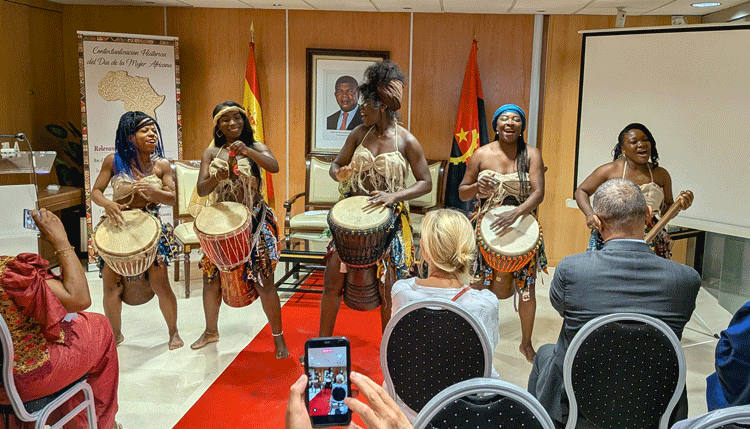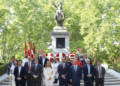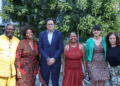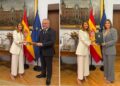
Last Friday, July 31, the Embassy of Angola celebrated African Women’s Day at its headquarters in Madrid. Ambassador Balbina Malheiros Dias da Silva noted that “we are here to talk about ourselves, about Africa, and to share the wisdom and strength of African women.”
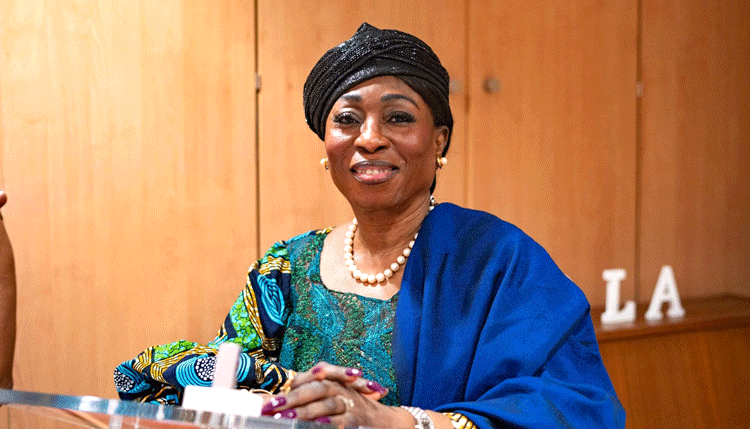
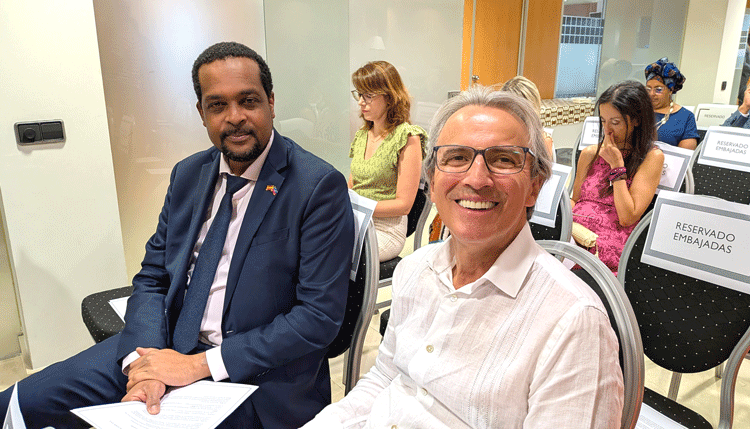
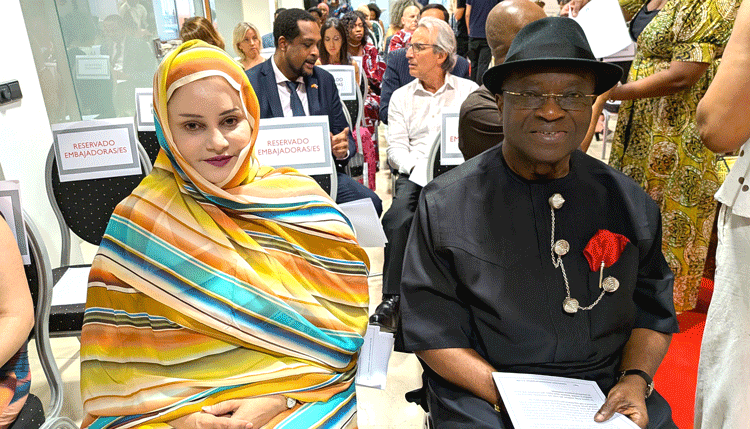
With a packed hall of attendees, including the ambassadors of Nigeria, Okezie Victor Ikpeazu; Mauritania, Zeineb Ely Salem; Colombia, Eduardo Ávila Navarrete; Haiti, Wooldy Edson Louidor, and Cape Verde, Eduardo Jorge Silva, along with representatives from other diplomatic delegations, such as Egypt, Mozambique, or Venezuela, the Angolan ambassador began her welcoming speech to the attendees, in which she recalled that African Women’s Day was established in 1962 in Dar es Salaam, the capital of Tanzania, during the Conference of African Women’s Organizations. “There was born the union of women from the continent with a clear objective, to fight for independence, peace, and the development of Africa. This year we have chosen as the theme The action of women in sanitation. Safe communities and better living conditions,” said Balbina Malheiros Dias da Silva.
“We know that development begins at home,” continued the Angolan ambassador, “and it is at home where women ensure water, hygiene, and health for the family. Although we have made significant strides towards the emancipation of women, we also must reflect on the need to achieve greater representation of women in the leadership of multilateral organizations to ensure greater inclusion of women in these decision-making spaces, in our countries and in international organizations. Women leaders bring to the decision-making table the experience from the ground, a more collaborative and inclusive leadership style, and the ability to place structural issues such as nutrition, food security, health, education, climate, and social protection at the center of the agenda.”
Later, the ambassador highlighted the candidacy of agronomist engineer Josefa Leonel Correia Sacko, the official candidate of Angola and the African Union for the Director-General of FAO, whose elections will take place in 2027. The ambassador noted that “Josefa Sacko has the technical, political, and diplomatic profile to lead FAO.” Finally, Balbina Malheiros Dias da Silva stated that “celebrating this day also means taking on a commitment, the commitment to be agents of transformation in our homes, in our neighborhoods, in our countries, and in international organizations.”
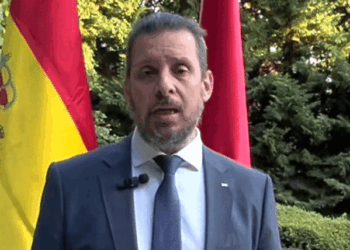
Next, the minister of the Embassy of Morocco, Loubna Totouh, who in the absence of the dean of the African ambassadors, ambassador Karima Benyaich, stated that “this date invites us to recognize the extraordinary contribution of women to the development of our continent and to renew our commitment to a more inclusive, fairer, and more prosperous Africa.”
The Moroccan minister highlighted the motto of this event, Together for development, culture, and African women. “A motto,” she said, “that expresses a deep conviction: development, culture, and women’s leadership constitute three inseparable pillars for building the Africa we all desire, an Africa proud of its diversity, faithful to the richness of its heritage, and capable of transforming its immense potential into opportunities for present and future generations. African culture is one of humanity’s greatest heritages. Its extraordinary diversity of languages, traditions, artistic expressions, literature, music, gastronomy, and ancestral knowledge constitutes an incomparable wealth. African women have been, generation after generation, the main guardians of this legacy, transmitting values, knowledge, and traditions.”
The minister of the Embassy of Morocco stated that “African women, as educators, doctors, farmers, entrepreneurs, scientists, diplomats, artists, judges, athletes, and community leaders, play a decisive role in building more inclusive, resilient, and prosperous societies. Investing in women means investing in Africa’s human capital. Every opportunity offered to a woman translates into better conditions for her family, greater opportunities for her community, and stronger growth for her country.”
Regarding the relations between Spain and Africa, Loubna Totouh affirmed that “they maintain a historical, geographical, and human relationship of extraordinary importance. We are united by the Mediterranean, the Atlantic, intense economic cooperation, and a shared vision of stability, development, and prosperity.”
“In this context,” she noted, “the promotion of female leadership also constitutes a privileged area to strengthen our cooperation. We celebrate the initiatives promoted by the Ministry of Foreign Affairs, European Union, and Cooperation, together with AECID and Casa África, such as the program RAISA – Women who lead, which fosters exchange between African and Spanish women leaders, as well as the program Learn Africa, which offers scholarships to young African women to pursue postgraduate studies and research at Spanish universities.
The Moroccan diplomat concluded her speech by stating that “celebrating African women today means recognizing the immense potential of our continent. It means paying tribute to millions of women who demonstrate that every day African talent stands out in peace, governance, economy, science, culture, sport, and diplomacy. Let us continue working together so that African women continue to occupy the place they deserve as protagonists of development, culture, peace, and the future of our continent.”
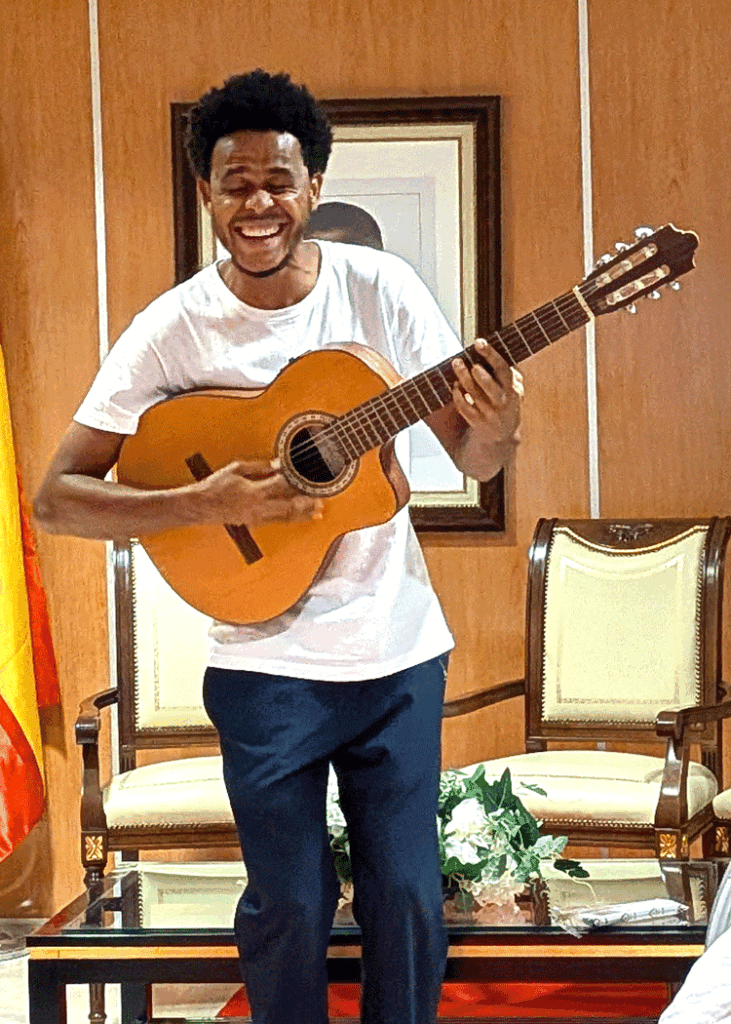
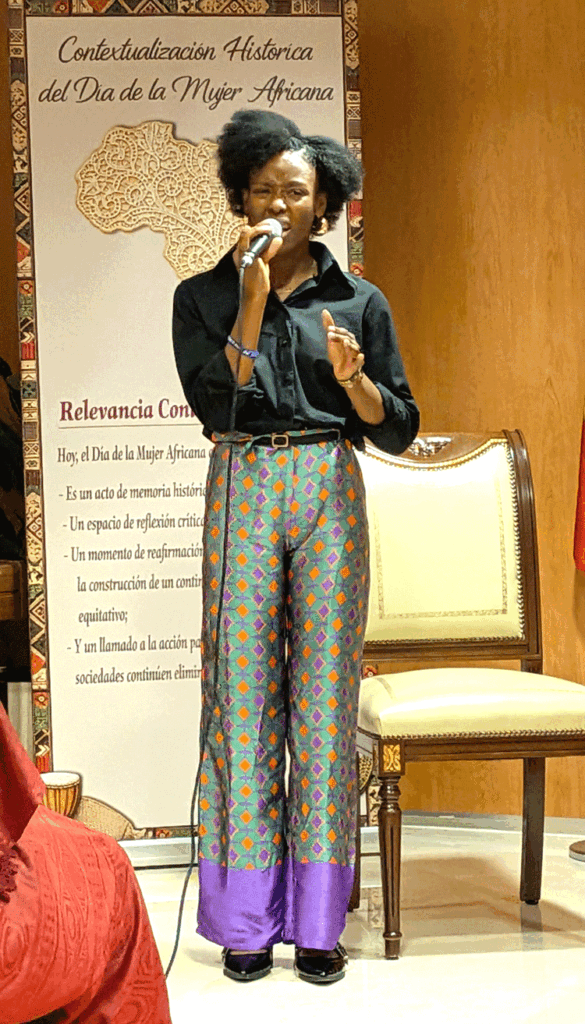
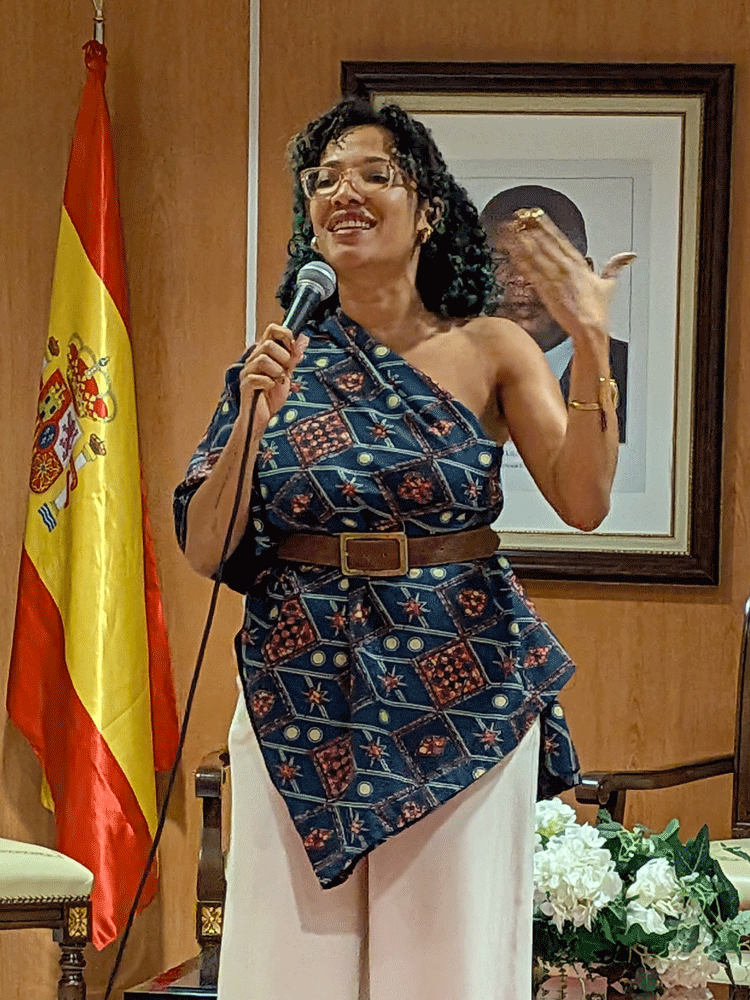
After a performance by the marimba virtuoso, David López Sáez, there was a poetry recital in Spanish and Portuguese by Angolan writer Elisangela Rita and a performance by Angolan singer Isaura Gando, who captivated the audience with her beautiful voice singing the song Black Skin. Likewise, the performance of Cape Verdean singer Txuninh was acclaimed with applause and chants.
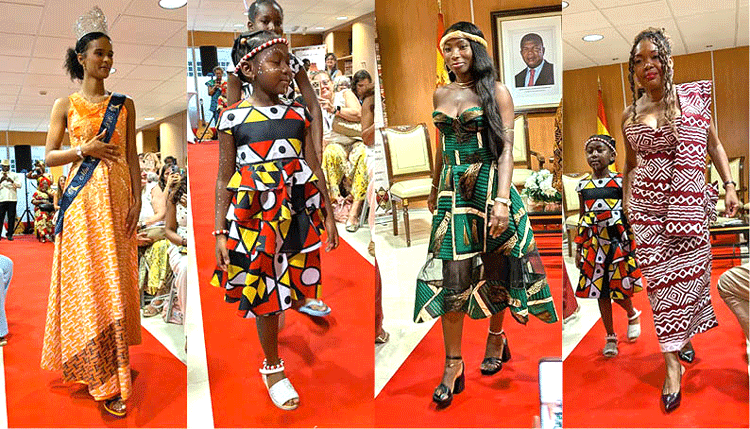
To conclude, and before tasting typical dishes from Cape Verde, Morocco, the Democratic Republic of the Congo, and Angola, there was a fashion show featuring traditional and contemporary outfits from these four countries.