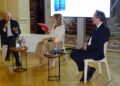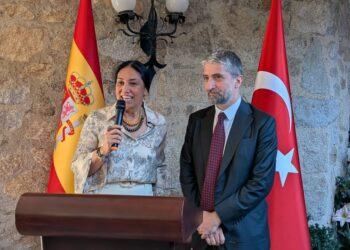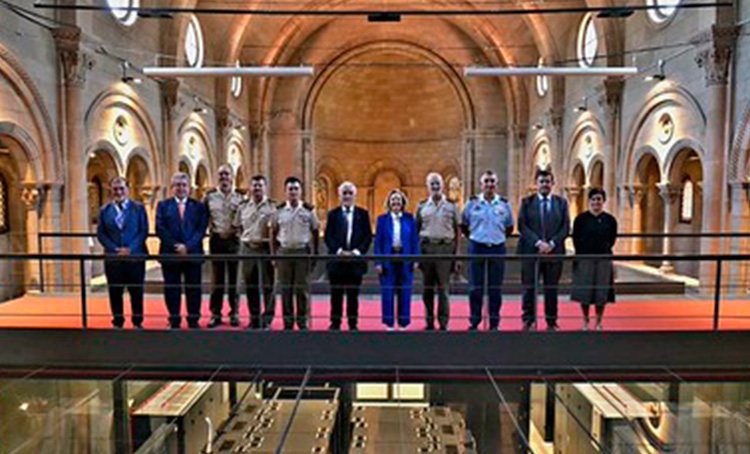
The Ministry of Defense and the Barcelona Supercomputing Center (BSC-CNS) have inaugurated the Stella Maris laboratory, a space dedicated to supercomputing for dual-use technologies. This laboratory focuses on the development of advanced capabilities in critical areas for security and defense, such as cyber resilience, Artificial Intelligence, advanced simulation, and quantum technologies.
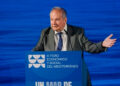
During the inauguration, the Secretary of State for Defense, Amparo Valcarce, emphasized that Stella Maris represents a significant advance in creating a national ecosystem that combines science, innovation, and strategic capabilities. Valcarce highlighted the importance of modeling complex scenarios and processing large volumes of information to anticipate risks and make quick and precise decisions in the context of modern defense.
Likewise, the Secretary of State stated that 21st-century defense requires “modeling complex scenarios, training advanced artificial intelligence systems, processing massive amounts of information, anticipating risks, and making increasingly quick and precise decisions.”
The BSC, with its solid experience in supercomputing, will play a crucial role in this initiative, which aligns with the Technology and Innovation Strategy for Defense (ETID 2026). This strategy prioritizes areas such as Artificial Intelligence and cyber defense, seeking to strengthen the technological autonomy of Spain and Europe. Through Stella Maris, an impetus for collaboration between public administration, the scientific community, and industry is expected, thus fostering innovation and economic growth.
With the launch of Stella Maris, the Ministry of Defense reaffirms its commitment to strengthening the Industrial and Technological Base of Defense, public-private collaboration, and the development of strategic capabilities that reinforce Spain’s technological sovereignty.