


The recent agreement signed by Repsol in Caracas to study a new oil area reflects the interest of international energy actors in consolidating their presence in Venezuela, in a scenario marked by the readjustment of economic and political balances in the global energy sector.
Repsol has formalized a new understanding with the Venezuelan Government and the state-owned PDVSA to analyze the development of an oil zone in the Horcón area, located southeast of Lake Maracaibo. Beyond its technical and industrial dimension, the agreement highlights the growing role that international energy companies continue to play in articulating economic relations with Venezuela, a key country in the global hydrocarbon map.
The signing of the agreement, at a meeting held in Caracas between company representatives and Venezuelan authorities, confirms the continuity of dialogue between the foreign energy sector and the country’s Government. This type of direct communication is common in a field where projects are deeply conditioned by regulatory frameworks, strategic interests, and diplomatic dynamics.
The case of the new Horcón area is representative of this logic. Located in an area close to assets already exploited by the company, its potential development responds to both geological criteria and the consolidation of a sustained presence in the country. Repsol has been operating in Venezuela since 1993, placing it among the international companies with the longest track record in the territory.
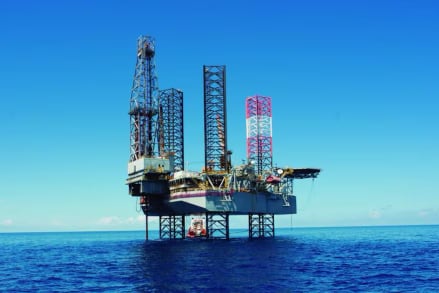
In this context, the agreement is not limited to the exploration of a new oil area. It also includes the analysis of opportunities in the gas sector and, particularly, in offshore projects. This approach responds to a broader trend in the energy industry, where natural gas and developments in maritime waters have gained prominence in the diversification strategies of large companies.
The understanding also reflects the willingness of both parties to continue existing operations. During the meeting, key issues were addressed such as the progress of the assets in operation, the planned investments, payment mechanisms, and the short-term crude shipment planning. These elements, although operational in nature, acquire a strategic dimension in environments where contractual and financial stability is crucial for the viability of projects.
Beyond the specific content of the agreement, its signing occurs at a time of progressive reconfiguration of the international energy environment. Venezuela, holder of some of the largest hydrocarbon reserves in the world, seeks to strengthen its productive capacity and attract foreign investment in a global context marked by market volatility and the need to ensure energy supply.
In parallel, international companies explore formulas that allow them to maintain or expand their presence in countries with high resource potential, combining profitability criteria with the management of regulatory and political risks. In this framework, agreements like the one reached by Repsol highlight the importance of alliances with state actors as a way to develop long-term projects.
The movement is also part of a sequence of recent understandings. In March 2026, Repsol and the Italian Eni signed an agreement with Venezuelan authorities to ensure the sustainability of gas production in the Cardón IV asset. Subsequently, in April, another agreement was formalized to regain operational control in Petroquiriquire and boost crude production.
These initiatives aim at a strategy of progressive consolidation of the company’s activity in the country, supported both by the optimization of existing assets and the exploration of new areas. At the same time, they reflect a model of cooperation in which the business and diplomatic dimensions appear closely interrelated.
From an international perspective, the case illustrates how the energy sector continues to act as a meeting space between economic interests and relations between States. In a global context characterized by the energy transition, the search for supply security, and the fragmentation of the international system, agreements in the hydrocarbon sector maintain their relevance as instruments of influence and cooperation.
In short, the agreement on Horcón not only opens the door to a possible technical development in a new oil area, but also fits into a broader scenario where energy continues to be a central vector of international politics. The evolution of such initiatives will allow us to measure to what extent industrial actors and governments are capable of articulating sustainable collaboration frameworks in complex environments highly conditioned by geopolitical factors.