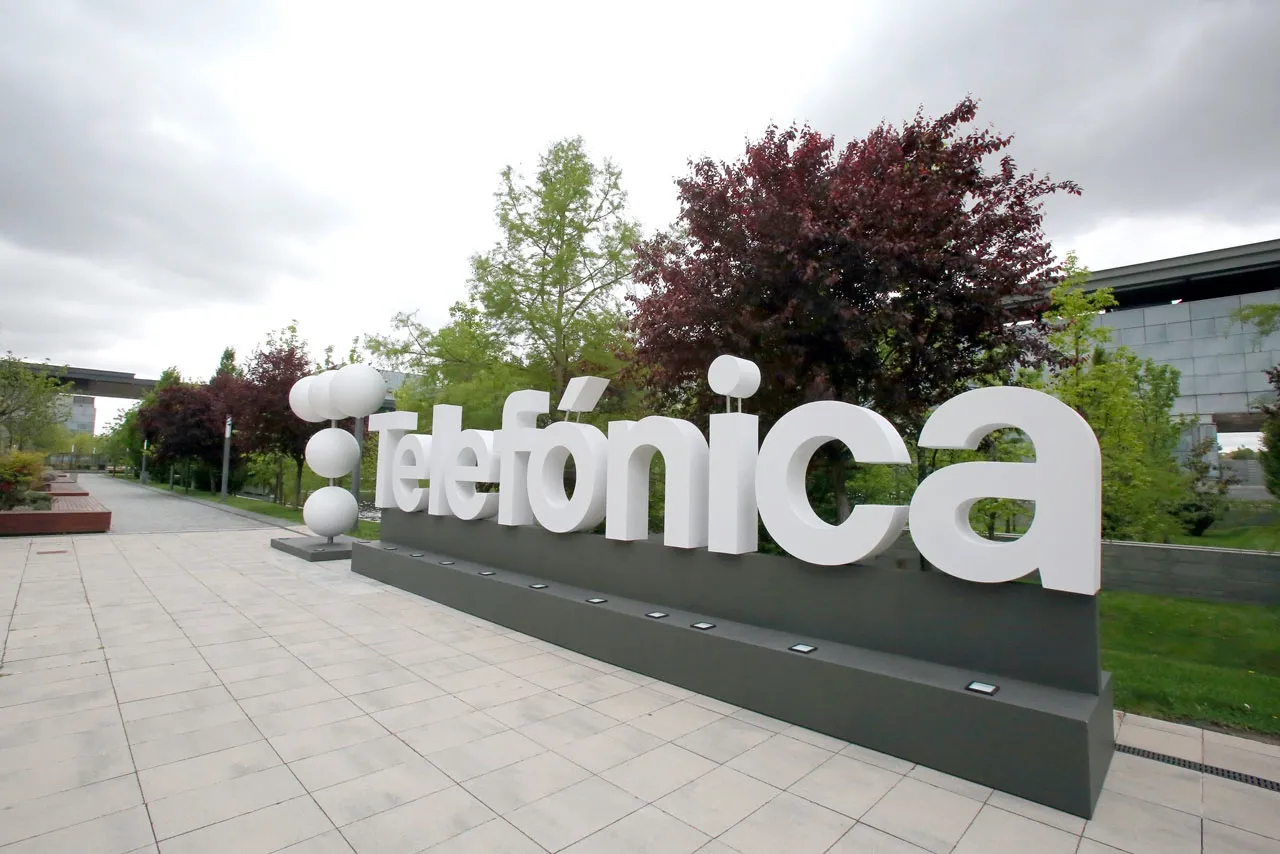
For more than three decades, Telefónica has been one of the leading Spanish multinationals with an international presence. Its expansion in Europe and Latin America made it a benchmark in telecommunications, and today, the company is redefining its strategy to focus on markets with the greatest growth potential and value creation. In a context marked by digitalization, artificial intelligence, and cybersecurity, connectivity has become a strategic asset for economies and for the technological autonomy of states.
Telefónica’s internationalization began in the 1990s with the liberalization of telecommunications markets. The acquisition of operators in Latin America allowed the company to consolidate a leadership position and become one of the Spanish companies with the greatest foreign presence. Currently, the group focuses its activity on four strategic markets: Spain, Brazil, Germany, and the United Kingdom, considered priorities within its new corporate roadmap.
According to the Annual Report 2025, Telefónica provides service to more than 350 million accesses among mobile services, broadband, and other digital products, supported by a strong investment in fiber and 5G networks. The strategy aims for greater profitability, corporate simplification, and debt reduction by concentrating resources on assets considered strategic.
Brazil has consolidated itself as one of the main growth engines for Telefónica outside of Europe. The high demand for digital services, the expansion of 5G, and the acceleration of business digital transformation position the country as an investment priority for the group. At the same time, the company has progressively reduced its exposure in various Hispanic American markets to concentrate resources on its core businesses. A reorganization that responds to a focusing strategy on markets with greater profitability and financial efficiency, within the redefinition process driven by the new management of the company.
Beyond the traditional telecommunications business, Telefónica develops cybersecurity solutions, cloud, internet of things, and artificial intelligence through its various technological areas. These capabilities reinforce its position as a technological partner for companies and public administrations immersed in digital transformation processes.
The relevance of these activities transcends the business sphere. The European Commission considers that digital infrastructures, advanced connectivity, cloud computing, artificial intelligence, and cybersecurity constitute essential elements to strengthen the technological sovereignty and strategic autonomy of the European Union. In this context, the development of secure and resilient digital infrastructures has become a priority objective to strengthen the competitiveness and innovation capacity of the continent.
The evolution of the sector is also driving consolidation processes among European operators with the aim of gaining scale, improving investment capacity, and facing increasing global competition. In this context, Telefónica actively participates in the debate about the future of European telecommunications and has publicly defended the need for a regulatory framework that favors investment in digital infrastructures and technological innovation.
Various sectoral organizations agree on the strategic importance of these investments. The GSMA considers that the massive deployment of 5G networks will be one of the main drivers of economic growth, innovation, and productivity over the next decade, while the European Telecommunications Network Operators’ Association (ETNO) has warned about the need to strengthen investments in connectivity and digital infrastructures to maintain European technological competitiveness against other major economic powers.
The evolution of Telefónica must also be interpreted in a broader geopolitical context. The growing technological competition between the United States, China, and the European Union has placed telecommunications, data, cloud computing, and artificial intelligence at the center of national security, competitiveness, and international influence strategies. In this scenario, major telecommunications operators have become strategic actors to ensure the resilience of critical infrastructures, reduce external technological dependencies, and reinforce the digital autonomy of states. Telefónica’s commitment to advanced connectivity, cybersecurity, and digital services aligns with the priorities defined by community institutions to strengthen European technological sovereignty.
In Latin America, Telefónica’s footprint continues to be significant from an institutional, technological, and economic perspective. For decades, the company contributed to the deployment of mobile and broadband networks that favored the digital transformation of companies, public administrations, and citizens. Although its shareholding presence has reduced in some markets as a result of the strategic reorganization undertaken in recent years, it maintains a solid corporate reputation and relevant business relationships in much of the region.
Telefónica’s international projection reflects a transition from a model primarily based on geographical expansion to one focused on technological leadership and value creation. The combination of connectivity, artificial intelligence, cybersecurity, and digital services places the company in a relevant position to respond to the new demands of companies, administrations, and citizens. In an environment marked by digital transformation and global geoeconomic competition, technological infrastructures will be a decisive factor for economic competitiveness and technological sovereignty, areas in which Telefónica aspires to maintain a leading role over the next decade.