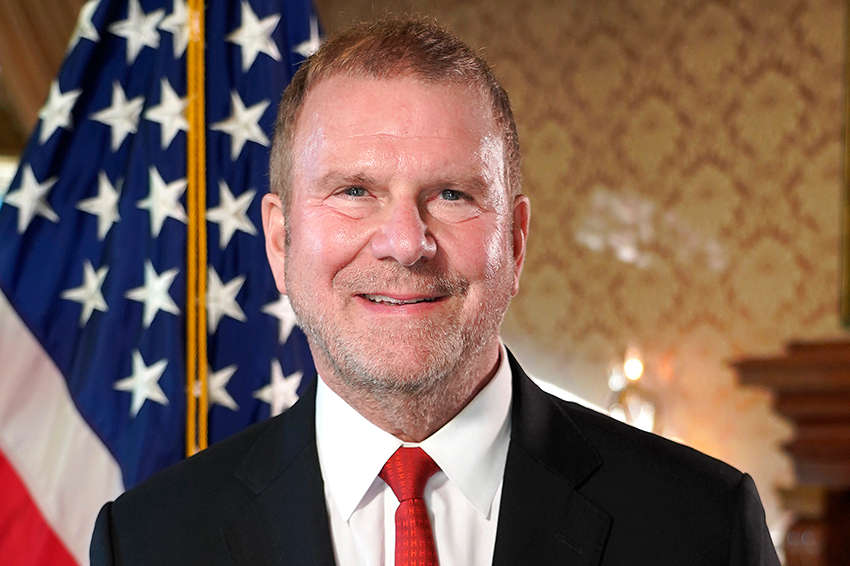
Businessman in the hospitality sector, owner of the Houston Rockets and one of the richest entrepreneurs in the United States, Tilman Fertitta arrived in Italy as the U.S. ambassador to Italy and San Marino in 2025 with a profile closer to that of a magnate than a diplomat. Coming from the private sector, he has decades of business experience, although he lacks prior experience in diplomacy or international relations.
Upon his arrival and while the renovations of Villa Taverna, the official residence of the U.S. ambassadors in Rome, were being completed, the Texas businessman resided for several weeks on his superyacht Boardwalk, measuring 76.5 meters, built by Feadship in 2021. According to the embassy, this was a temporary solution and Fertitta later moved into the official residence.
A year later, the Boardwalk is back in the headlines. On the occasion of the 250th anniversary of American independence, Fertitta has been cruising the Italian coasts aboard the superyacht since June 13 as part of the initiative Freedom 250 Coastal Diplomacy, a campaign driven by the embassy with a distinctive name, social media presence, and a marked symbolic component.
The vessel that is the focus of the journey is not the same one he arrived in Italy with. In May 2026, the businessman took possession of a new Boardwalk, built by the German shipyard Lürssen, valued at hundreds of millions of dollars and measuring 117 meters in length, placing it among the largest private yachts in service worldwide. Onboard, he organizes receptions and meetings with authorities, entrepreneurs, and representatives of civil society on a tour that will cover at least 13 Italian regions and, according to the official program, will last until mid-August. According to information released during the presentation of the initiative, Fertitta is personally financing the Boardwalk’s journey, although not all details regarding the costs associated with the initiative have been made public.
The image is as striking as it is symbolic: diplomatic meetings held on a private yacht that surpasses in size many historical buildings in the cities it visits. For some, it is an example of public diplomacy adapted to current times, capable of generating media attention and bringing American representation closer to various Italian territories. For others, it constitutes a display of wealth that risks overshadowing the political content of the meetings.
The controversy reached one of its most visible moments in Venice, where several hundred people protested against the arrival of the ambassador and his vessel, even causing moments of tension with the police. Organizers denounced what they considered a demonstration of economic power and a use of the city as a personal showcase.
The United States has always combined career ambassadors with political appointments. Each administration assigns certain posts to trusted individuals of the president, often coming from the business, academic, or political world. During Donald Trump’s presidencies, however, the appointment of major entrepreneurs and billionaires to some key embassies has gained special visibility. In Fertitta’s case, before taking up the embassy in Rome, he was known for his businesses in the restaurant, hospitality, gaming, and professional sports sectors. His net worth is estimated at over $11 billion, and for years he maintained a close relationship with the Republican establishment.
Supporters of this trend argue that businesspeople accustomed to negotiating multimillion-dollar deals, leading large organizations, and weaving networks of international influence can bring useful skills to foreign action. Moreover, they often have direct access to political and economic leaders, an asset that many governments consider valuable for strengthening economic ties between countries. However, the appointment of major entrepreneurs to diplomatic positions continues to raise questions about the role that private resources and personal relationships can play in the foreign action of states. The case of Fertitta incorporates a particularly unique element into that debate, placing part of his institutional activity in a space closely associated with his fortune and his own public image.
Although the case of Tilman Fertitta remains exceptional, and the Boardwalk may end up as a mere diplomatic anecdote, it illustrates an increasingly visible trend in contemporary public life: the growing difficulty in separating institutional projection from personal branding.