


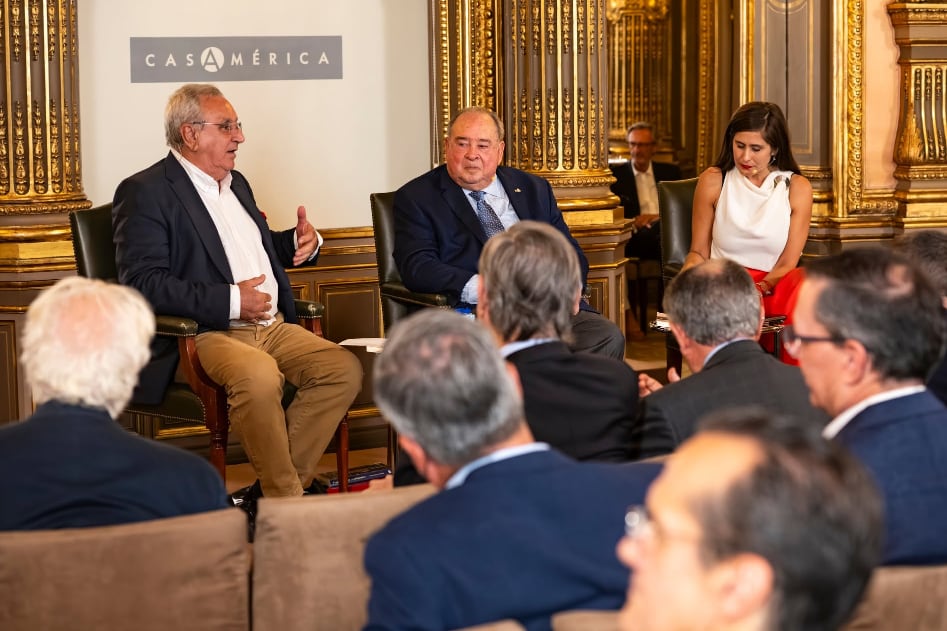
‘From Cuban refugee child to American ambassador in the Kingdom of Spain‘, a work by Eduardo Aguirre, United States ambassador to Spain and Andorra from 2005 to 2009, was presented by its author at an event organized by the Franklin-UAH Institute and Casa de América.
The meeting, held on June 23, brought together representatives from the academic, institutional, and diplomatic fields to reflect on immigration, leadership, public service, and opportunities for personal and professional development.
The event featured the institutional welcome from León de la Torre, director of Casa de América, and the participation of Eduardo Aguirre, author of the book, José Antonio Gurpegui, director of the Franklin-UAH Institute, and Ana Lariño, director of Research and External Relations at the Franklin-UAH Institute, who moderated the conversation.

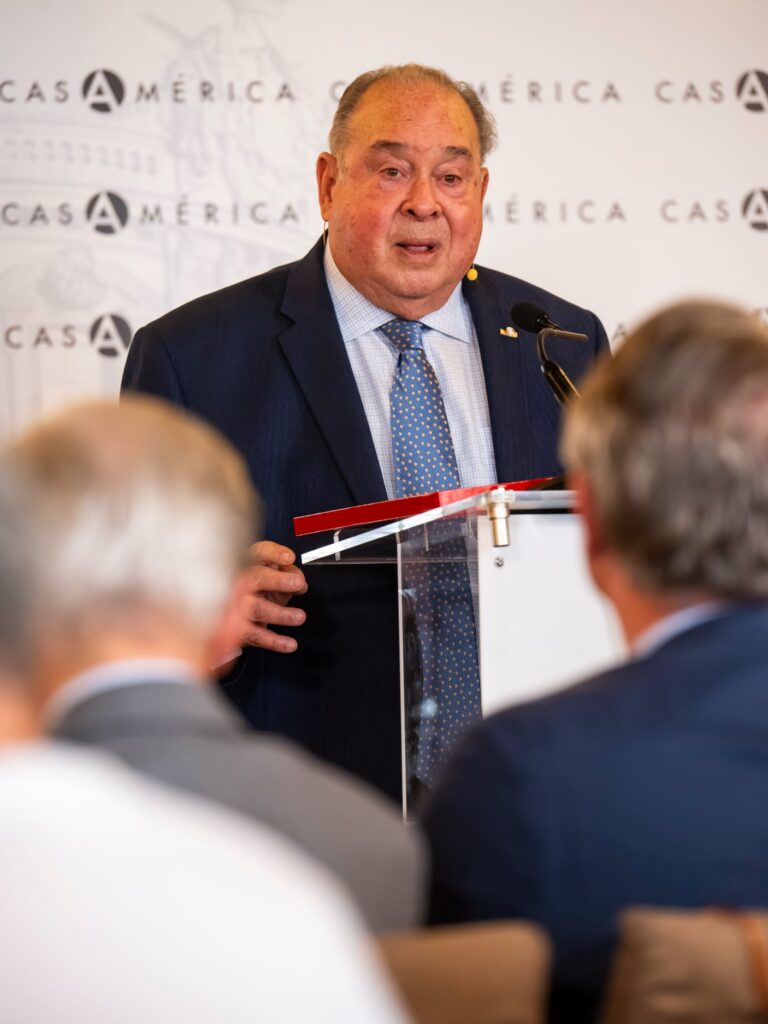
During the presentation, Eduardo Aguirre reviewed some of the most significant episodes of his life, from his arrival in the United States in 1961 as a fifteen-year-old Cuban refugee to his roles in prominent positions within the U.S. Administration, including the presidency of the Export-Import Bank of the United States, the direction of Citizenship and Immigration Services after the September 11 attacks, and his appointment as United States ambassador to Spain and Andorra.
Throughout the dialogue, the author reflected on the challenges of the migratory experience, the importance of education as a tool for social mobility, and the role of resilience in building a professional trajectory marked by a commitment to public service. He also highlighted the contribution of millions of immigrants to the development of the United States and the relevance of values such as effort, responsibility, and a vocation for service.
The work constitutes a personal testimony about the ability to overcome adversity and transform difficulties into opportunities, while also offering a reflection on the migratory experience and its impact on contemporary American society. For more information about the publication belonging to the Emily Dickinson Collection, the following link can be consulted.

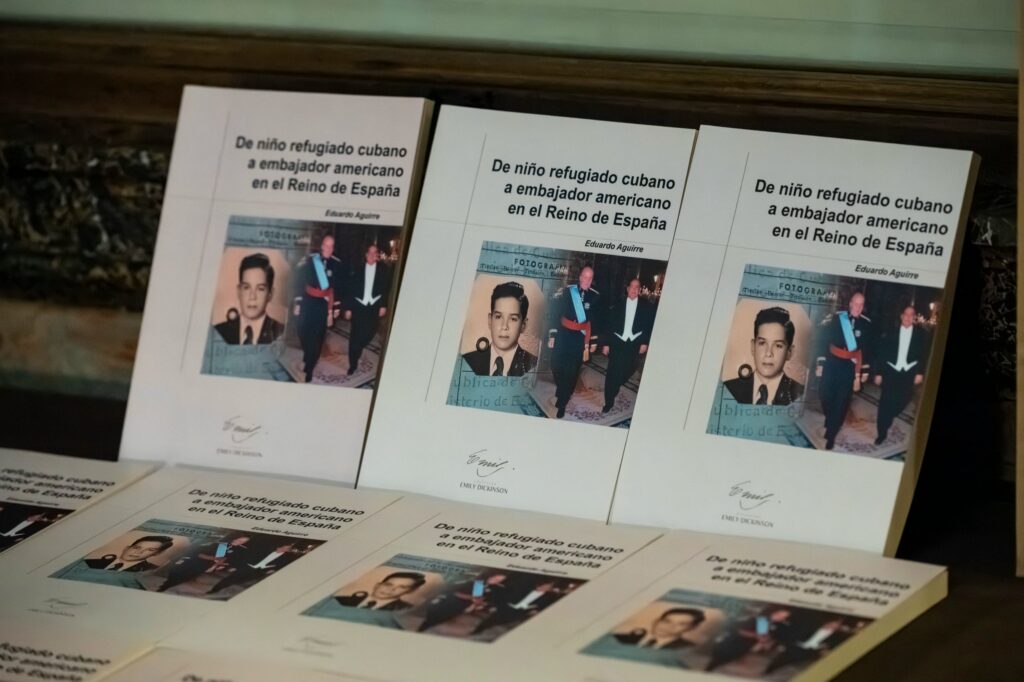
The narrative spans from 1961, when Eduardo Aguirre, then a teenager under fifteen, arrived alone in Miami from Cuba with a dime in his pocket and without speaking English. What he lacked in resources, he made up for with resilience and determination. His journey took him from those humble beginnings to the highest levels of American leadership: president and interim CEO of the Export-Import Bank of the United States, first director of Citizenship and Immigration Services after 9/11, and United States ambassador to Spain and Andorra. His story is a powerful testament to perseverance and the promise of the American dream.