


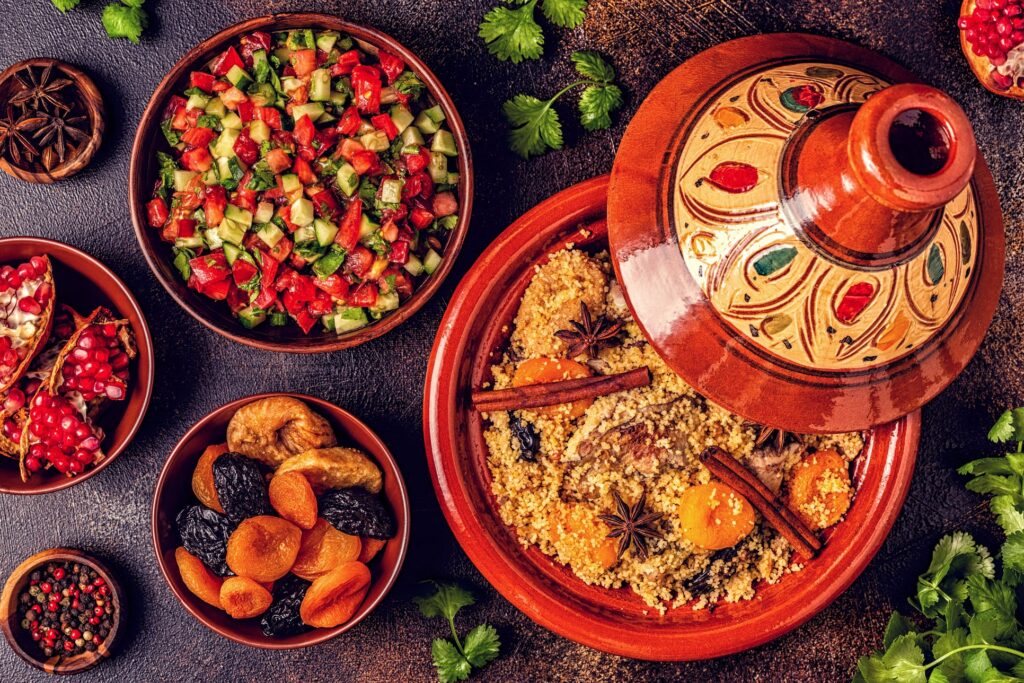
Moroccan cuisine occupies a privileged place among the most recognized in the world due to the richness of its flavors, the variety of its ingredients, and the deep connection it maintains with the history and traditions of the country. Beyond its undeniable culinary appeal, it represents a living cultural heritage that contributes to strengthening national identity, boosting tourism, and projecting Morocco’s image internationally.
Cuisine is one of the best ways to get to know a country. In each recipe, centuries of history, cultural influences, and ways of understanding life are hidden. Morocco is a clear example of this. Located between the Mediterranean, the Atlantic, and the gates of the Sahara, the Alaouite kingdom has turned its cuisine into one of its main hallmarks, a powerful tourist attraction, and an effective tool for cultural projection abroad. Its aromas, the colors of its markets, and the hospitality of its people make every meal an experience that transcends the culinary to become a journey through the history and culture of the country.
A cuisine born from miscegenation
Moroccan cuisine is the result of centuries of exchanges between civilizations. Its roots lie in the Amazigh (Berber) tradition, based on cereals, olive oil, legumes, and livestock meat. From the 7th century onwards, the arrival of the Arabs incorporated new spices, fruits, and culinary techniques that profoundly transformed the diet of the territory.
Subsequently, Muslims and Jews from the Iberian Peninsula contributed more refined recipes, especially in pastries and stews where sweet and savory ingredients coexist. By the 20th century, during the French protectorate, baking and some European techniques completed a cuisine that has managed to integrate all these influences without losing its personality.
Many recipes are still made today as they were centuries ago, slowly cooked in clay pots and passed down from generation to generation. This fidelity to tradition has contributed to the international recognition of Moroccan cuisine, considered one of the most influential and appreciated in North Africa.
The flavors that define Morocco
Talking about Moroccan cuisine means talking about spices. Cumin, turmeric, ginger, cinnamon, saffron, and paprika are part of the daily life of any household. In addition, ras el hanout, a blend that can include more than twenty different spices and whose composition varies according to each spice master.
The best example of this culinary richness is couscous, considered one of the most emblematic dishes of Morocco and the entire Maghreb. Made with semolina and accompanied by vegetables, chicken, lamb, or beef, it occupies a central place in family life. Traditionally, it is prepared on Fridays, after prayer, when families and friends gather around a large dish to share the meal.
In 2020, the knowledge, practices, and traditions related to the preparation and consumption of couscous were inscribed by UNESCO on the Representative List of the Intangible Cultural Heritage of Humanity, through a joint nomination presented by Morocco, Algeria, Tunisia, and Mauritania. This recognition highlighted the cultural and social value of a culinary tradition shared by millions of people in the Maghreb.
Another great symbol is the tagine, the name given to both the clay pot with a conical lid and the stew cooked in it. Thanks to slow cooking, the meat absorbs the aroma of preserved lemon, olives, saffron, ginger, or cumin. There are countless variations, although one of the most popular combines chicken with olives and lemon, while another unites lamb, plums, almonds, and honey, reflecting the balance between sweet and savory that characterizes Moroccan cuisine.
The pastela, a pastry made with thin layers of dough traditionally filled with bird meat, almonds, and spices, which is finished by sprinkling with powdered sugar and cinnamon, reflects a notable Andalusian heritage, although specialists maintain different theories about the exact origin of this dish. The harira, a soup made with tomato, chickpeas, lentils, cilantro, and parsley, also stands out, gaining special prominence during Ramadan.
Among the specialties of Amazigh origin, the madfouna or medfouna, popularly known as “Berber pizza,” stands out. Traditional to the region of Rissani, in southeastern Morocco, this bread dough filled with spiced meat, onion, herbs, and nuts is slowly cooked until achieving a juicy interior and a crispy exterior. Born on the caravan routes of the desert, it is considered one of the most characteristic specialties of the Amazigh regions of southeastern Morocco.
And if there is a drink that symbolizes Moroccan hospitality, it is the traditional green tea with mint. Prepared with plenty of sugar and served from a height to create foam, offering a glass of tea is a sign of respect and welcome that is part of daily life.
The richness of Moroccan cuisine has also found in haute cuisine and culinary dissemination two important allies for its international projection. Chef Najat Kaanache has contributed to reinterpreting traditional cuisine with a contemporary perspective, while Choumicha Chafay has become one of the main ambassadors of the country’s cuisine thanks to her television programs, publications, and dissemination work. Both have contributed to preserving and spreading a culinary legacy that today transcends the borders of Morocco.
A country, many cuisines
The geographical diversity of the country is also reflected in its kitchens.
In the north, cities like Tangier, Tetouan, or Chefchaouen show a clear Mediterranean and Andalusian influence, with a cuisine where fresh fish and olive oil play a leading role.
Fez and Meknes, ancient imperial cities, occupy a prominent place in Moroccan gastronomic tradition and are recognized for the sophistication of many of their historical recipes. There, some of the most recognized versions of pastela and much of the traditional Moroccan pastries made with honey, almonds, and orange blossom water were consolidated.
Marrakech is especially known for the presence of spices and intense aromas in much of its gastronomic offer. Its souks are filled with stalls where cumin, saffron, or cinnamon permeate the atmosphere and give personality to tagines, skewers, and traditional stews.
In the southeast, a good part of the Amazigh culinary tradition is preserved. In addition to the popular madfouna, the cuisine of this area stands out for the use of dates, lamb, and artisanal breads, heritage of the ancient trade routes that crossed the desert.
The Atlantic coast stands out for the quality of its fish and seafood, while other regions near the Sahara keep many Berber and nomadic traditions alive.
Cuisine as a tool for cultural diplomacy
Cuisine has established itself as an effective tool for cultural diplomacy, capable of projecting a country’s identity, promoting tourism, and strengthening ties between societies. Morocco has managed to incorporate its culinary heritage into this strategy, using cuisine as a vehicle to disseminate its cultural diversity and reinforce its international presence.
In Spain, the Embassy of the Kingdom of Morocco, led by Ambassador Karima Benyaich, promotes the dissemination of Moroccan cultural heritage through various initiatives in which cuisine occupies a prominent place. Collaboration with Casa Mediterráneo in events such as Alicante Gastronómica, as well as the presence of traditional cuisine at the official receptions of the Throne Festival, reflect the role of cuisine as a vehicle for rapprochement between Morocco and Spain.
Because discovering Morocco through its flavors is much more than enjoying a good meal. It is understanding the history of a country that has made the encounter between cultures one of its greatest strengths and has found in its cuisine a universal language capable of bridging gaps between peoples, promoting tourism, and reinforcing dialogue between the two shores of the Mediterranean.