


Such an association escapes the everyday life of the lively citizen. Although it must be recognized that it is becoming evident in some people; and not only because of the inflated bills of domestic electricity. It no longer surprises us to know what is related to the climate regarding what draws attention to the Copernicus system of the European Union.
Namely: Almost the entire European continent (at least 95%) recorded annual temperatures above the average in 2025; several countries in northern Europe experienced the warmest or second warmest year in their history; the area of Europe that endures winter days with sub-zero temperatures is shrinking and in 2025 was well below the average; five of the warmest years recorded in Europe have occurred since 2019, and ten since 2014.
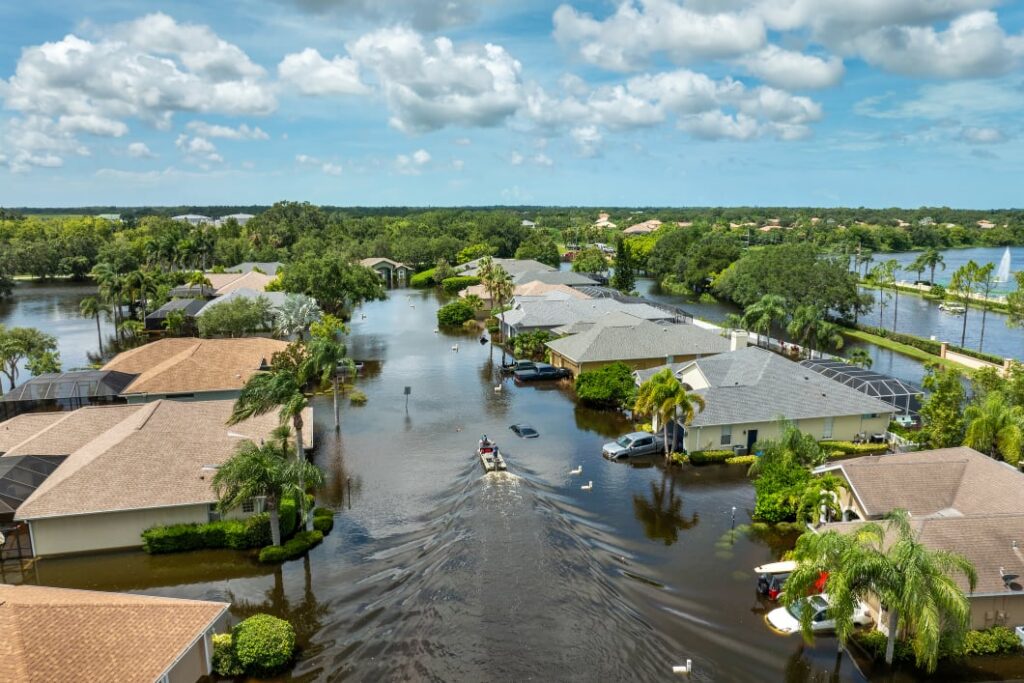
Let’s continue with what Copernicus calls “Events”. In summary, it says: In 2025, storms and floods in Europe caused at least 21 deaths and affected about 14,500 people. Wildfires caused at least three more deaths and affected about 500 people; heatwaves reached Europe from the Mediterranean to the Arctic Circle, including the second most severe heatwave recorded in Europe in July; storms and floods affected some areas of Europe, but in general, extreme precipitation and flooding were less widespread than in recent years.
We must ask ourselves if all this accumulation of data, which reflects everyday climate, “comes to us for free”. It is not necessary to be very sharp to at least conjecture that it is not possible. Indeed, they carry a high economic burden.
When accounting for all climate risks – floods, droughts, wildfires, heatwaves, or diseases related to global warming – they would translate into euros, in a very conservative estimate, to a decrease of 7% of the EU GDP by the end of the century. Let’s compare it with the percentage of public spending dedicated to education across the EU. I remember that Euronews warned that this spending in the European Union fell in 2022 to 4.66% of GDP, the lowest level since 2013. Data provided by the European Commission in 2023, which are easily accessible, Investing in Education, indicate that in that year they accounted for 4.7% of gross domestic product (GDP) on average, with variations among member states. In Spain, it is 4.56% for 2024, excluding financial data. The Ministry of Education, Vocational Training, and Sports shows this. I cannot find reliable data for 2025, but it seems that they will hover around the same GDP percentages.
Let’s step out of the official management channels and seek information through other means. I read in the report on “Climate Change and Economic Growth: The Impact in the Coming Decades” from BBVA bank two extremes worthy of consideration. On one side, “Inaction on climate change negatively affects potential economic growth”; on the other, “In the long term, climate change is not neutral for GDP, it could be positive.” As an excessively simplified synthesis, it could be concluded from their studies that “in the absence of political action, climate change can act as a negative supply shock on potential GDP. However, with effective adaptation and an orderly clean transition, it can become a tailwind in the long term.”
The study refers to a broad consensus that unmitigated climate change reduces the potential GDP of economies. This was already anticipated by an OECD report from 2015 (Economic Consequences of Climate Change). It estimated losses of between 1% and 3.3% of global GDP by 2060 and between 2% and 10% by 2100; in the current scenario of high GHG emissions and with too limited adaptation in many countries.
While confirming the reality, the economists of the study assumed it likely that unmanaged climate change would generate a wide and growing negative gap in potential GDP compared to the reference scenario. At the same time, they pointed out that there is a possibility that “if early, ambitious, and well-managed mitigation and adaptation strategies were concerted, they could lead to a more gradual positive boost in the long term, with spillover effects throughout the economy through innovation and private investment in capital.”
But of course, when they stated this, Mr. Trump had not yet launched his war against Iran, which is on its way to becoming a humanitarian and economic nightmare. The OECD also dipped into the “economic-environmental” piggy bank. It claims that integrated climate and growth strategies can raise G20 GDP by around 2.8% by 2050, and nearly 5% if avoided damages are included. Moreover, they can generate gains even in the short term (around 1% of GDP) when policies drive green investment and efficiently recycle revenues from decarbonization. We repeat the notion of “combined strategies” because they need to be focused differently in poor countries, which have hardly incentivized climate change, compared to rich countries, which are the main culprits of the current situation.
The Bonn conference in June 2026, preparatory to COP21, began marked by intense requests from developing countries, demanding the necessary funding from industrialized powers to mitigate global warming. According to the Climate Alliance, “the negotiations between sessions held in Bonn over the past two weeks, aimed at preparing the negotiation texts for the upcoming COP31 in Turkey, have concluded with the inability of countries to advance on three of the four mandated packages. Only progress is being made in just transition, which reflects part of the positions of the countries. Although many debates remain pending, this package has been able to be saved thanks to the concessions of the countries to weaken the mentions of linking the program to emission reductions and the need to secure resources for its implementation. For civil society, “there is much work ahead of COP31 to define a mechanism capable of accelerating a just transition and providing the necessary means to make it effective.”
Such forcefulness leaves in suspense that objective of making the planet a more habitable place. This is because those who hold economic power have never believed that it is possible/should be helped for more and more people to live better than the previous day, that global biodiversity should not be reduced. Furthermore, climate funds are not counted the same way in poor countries and in rich ones. To conclude, let us illustrate the matter with a
headline taken from the newspaper El Economista (04/18/2026): Climate change could halve the potential growth of global GDP.