The ‘la Caixa’ Foundation and the Ministry of Foreign Affairs will promote the dissemination of Spanish art with a traveling exhibition of the Foundation’s Collection in several Spanish embassies in Europe
The Minister of Foreign Affairs, European Union and Cooperation, José Manuel Albares, and the General Director of the ‘la Caixa’ Foundation, Josep Maria Coronas, signed an agreement this Thursday to exhibit works from the Foundation’s Contemporary Art Collection in the embassies of Spain in major European capitals.
The agreement outlines a multi-year plan for itineraries that will allow some of the most representative works of Spanish art from 1925 to 1976 to travel to different cities in Europe.
The first exhibition resulting from this agreement will open in the coming months at the Spanish Embassy in Berlin, according to the ‘la Caixa’ Foundation. The exhibition, titled ‘Fragments, Quotes and Passages’, consists of fifteen paintings and sculptures by Spanish creators from the 20th century who stood out for their quality and international relevance.
A journey through avant-garde Spanish art
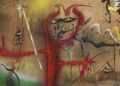
‘Fragments, Quotes and Passages’ includes pieces by Spanish artists present in the collections of important national and international museums that have been widely referenced in specialized publications.
The itinerary begins with the work ‘Le lion’ (1925), by Joan Miró, an example of his early incursions into surrealism. It continues with paintings by Joan Ponç and Modest Cuixart, from the Dau al Set group, one of the first collectives to move away from official art with a sensitivity close to surrealism. The exhibition continues with the piece ‘The Kiss – Maternity’ (1951), by Eudald Serra, a pioneer of post-war sculptural avant-garde, and continues with works by members of the El Paso group and informalism —Manuel Millares, Luis Feito, Martín Chirino, Gustavo Torner and Antoni Tàpies—, who were pioneers in the international recognition of Spanish art in the mid-20th century.
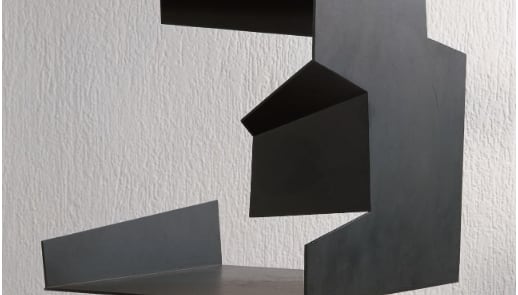
The exhibition also features paintings and sculptures of marked abstract and personal character, such as those by Jorge Oteiza and Eduardo Chillida. The journey concludes with the sculpture ‘Menina-Miró’ (1976), by Equipo Crónica, which embodies the reivindicative and ironic aspect of the new European realism. The project is curated by Oscar Pina, head of content for the ArtHub Department and Collection of the ‘la Caixa’ Foundation.
Itinerary through major European capitals
The exhibition ‘Fragments, Quotes and Passages’ will begin its journey in the coming months at the Spanish Embassy in Berlin, where it will be open for visits until autumn. It will then travel to the embassies in Paris, London and Brussels, with dates yet to be determined.
The itinerary of the exhibition has been planned applying criteria of efficiency and sustainability in all phases of the project: from the selection of responsible materials to a modular design that optimizes resources and facilitates assembly at each venue. In addition, the installation will be carried out by a small, specialized team of professionals, with Spanish assemblers and designers, and some local technicians to minimize travel and promote the local economy.
The ‘la Caixa’ Foundation and its commitment to contemporary art
The collaboration agreement with the Ministry of Foreign Affairs reaffirms the commitment of the ‘la Caixa’ Foundation to artistic excellence and the dissemination of cultural heritage. This commitment is reflected in the Foundation’s Contemporary Art Collection, created in 1985. With nearly 1,100 pieces and a clear international vocation, it includes artists such as Gerhard Richter, Antoni Tàpies, Cindy Sherman, Doris Salcedo, or Mona Hatoum and is considered one of the most relevant in Europe in the private sector. The collection promotes both its own projects and collaborations with major museums and cultural centers.
‘La Caixa’ Foundation is one of the main philanthropic entities in Europe, committed to social progress and cultural development. Through social, educational, research, and cultural programs, it promotes an accessible and inclusive culture, conceived as a key tool to generate opportunities and strengthen social cohesion.