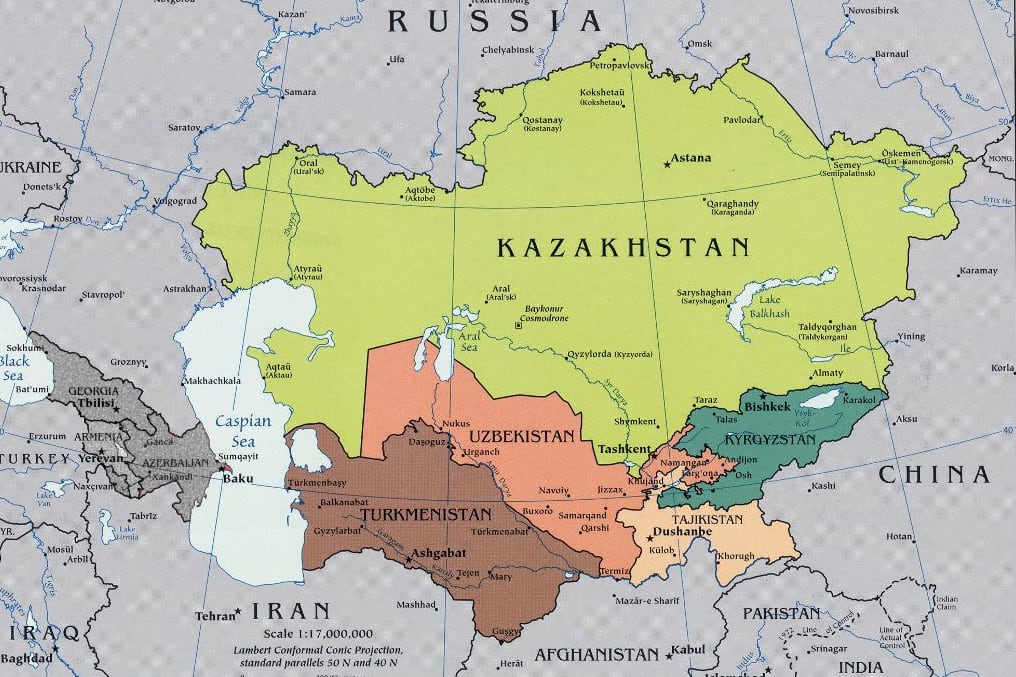
In a global scenario marked by the reconfiguration of energy routes and Eurasian security, the ties with the five Central Asian countries —Kazakhstan, Uzbekistan, Tajikistan, Kyrgyzstan, and Turkmenistan— are on the verge of celebrating 35 years of history. Within this geographical environment, the two lesser-known cases, Turkmenistan and Tajikistan, consolidate as pillars of stability and connectivity.
Spain has established very different ties in the Central Asian scenario with each of the five “stans”; the relationships with Turkmenistan and Tajikistan range from economic pragmatism with the Ashgabat regime to security cooperation with Dushanbe. They are probably two relationships lacking visible results, but they have positioned Spain as a key interlocutor at the heart of the New Silk Road.
In 2026, Spain’s foreign policy towards Central Asia is undergoing a phase of institutional maturity. While 1992 was the year of the legal recognition of the new Central Asian republics following the dissolution of the USSR, the path traveled to date shows an uneven but constant evolution: from accompanying diplomacy to the European Union to seeking a voice of its own in a region where the interests of great powers converge.
The diplomatic structure: presence and representation
Today, Spain’s diplomatic architecture in Central Asia relies on two physical pillars that manage ties with its five main states.
The Embassy in Astana (Kazakhstan) is the heart of Spanish diplomacy in the area. From here, not only is the relationship with the largest country in the area managed, but the Spanish ambassador, Luis Francisco Martínez Montes, is also accredited multiple times to Kyrgyzstan and Tajikistan.
The honorary consulate in Tashkent (Uzbekistan) is the second base of operations, vital for current commercial dynamism. From this legation, matters related to Turkmenistan are also supervised, although diplomatic representation for both corresponds to the Spanish Embassy in Moscow.
This structure of “multiple accreditations” has allowed Madrid to maintain a constant official communication channel with Dushanbe (Tajikistan) and Ashgabat (Turkmenistan) without the need for a permanent resident mission, optimizing the resources of the foreign service.
The milestone with Turkmenistan: neutrality and recognition (March 19, 1992)
Diplomacy with Turkmenistan is an exercise in respect for Permanent Neutrality, a status recognized and ratified by the UN in its General Assembly, which marks the entire agenda of Ashgabat. In these almost 35 years, Spain has maintained a diplomatic profile based on high-level political consultations.
Dialogue has been institutionalized through the Ministries of Foreign Affairs, where Spain supports the EU’s approach to Turkmenistan —one of the largest natural gas reserves in the world— before the European Union to facilitate the implementation of the Partnership and Cooperation Agreement (PCA). Madrid understands that the stability of Ashgabat is key to the EU’s energy security, and its diplomatic work focuses on fostering a climate of legal security for investments in the gas and infrastructure sector.
The link with Tajikistan: cooperation on the southern flank
With Tajikistan, Spanish diplomacy has a historical component of gratitude and operational collaboration. During the years of Spanish deployment in Afghanistan, the base of Dushanbe was an essential logistical node for the Armed Forces.
Currently, the relationship has transformed into a preventive dialogue. Work is being done with Tajik authorities to increase the legal basis of their bilateral relations. It should be added that Spain has a Reciprocal Promotion and Protection of Investments Agreement (APPRI).
Moreover, beyond security, the relationship has diversified towards the management of critical resources. Tajikistan is a water power in a region where water is the new “blue gold”. Here, Spanish experience in basin management and water technology presents an unparalleled opportunity for technical cooperation.
The regional framework: Kazakhstan, Uzbekistan, and Kyrgyzstan
Although the focus of this anniversary is on the milestones of 1992, Spanish diplomacy in the region cannot be understood without the weight of Kazakhstan, with which Spain maintains a Strategic Partnership Agreement (2009). Kazakhstan acts as the anchor of the Spanish presence in the region, being the main destination for exports and direct investment.
The good relationship between Spain and Uzbekistan has led to Spain strengthening its diplomatic presence in the country since 2022, boosting bilateral relations, which has favored cooperation, trade, investments, and connectivity in key sectors such as rail (Talgo), energy, sustainable agriculture, and culture; sectors where Spain seeks to be a strategic partner.
Kyrgyzstan, on the other hand, represents the commitment to democratic consolidation and cooperation in multilateral forums, completing a regional puzzle where Spain seeks to be a balancing and developmental actor.
Within the framework of the EU Strategy for Central Asia, Spain actively participates in working groups coordinated by the EEAS and rotating EU presidencies on the rule of law and governance, using its own experience of democratic transition as a highly valued soft power tool in the region.
The Challenge of 2026: Towards new resident embassies?
On the verge of completing 35 years of relations, the debate in the Palacio de Santa Cruz (seat of the Ministry of Foreign Affairs in Madrid) revolves around the need to strengthen physical diplomatic presence and high-level visits. In a global context of reconfiguration of trade routes, the growing relevance of the Middle Corridor and the geopolitical competition for critical minerals opens the debate that the model of multiple accreditations could give way, in the short term, to the opening of new consular offices or permanent commercial attachés in Ashgabat and Dushanbe.
In short, Spanish diplomacy in Central Asia has moved from post-Soviet “curiosity” to strategic realism. In 2026, Spain is not just a trading partner; it is a balancing actor that defends multilateralism and the sovereign connectivity of the five “stans”, ensuring that the bridge between Europe and Central Asia becomes increasingly solid and bidirectional.