The escalation of the conflict in Iran has brought the Middle East back to the center of global economic concerns. For Spain, the impact should not be analyzed solely from the perspective of direct exposure to the Persian country, but from its role within a deeply interconnected European economy that is vulnerable to energy and logistical shocks.
At first glance, the Spanish economy starts from a comparatively stronger position than that of other member states. However, this relative advantage does not immunize it against disturbances that act through indirect and systemic channels.
Spain’s direct trade exposure to the Persian Gulf region is limited. Exports of goods and services to the Middle East account for around 2% of the total and barely 0.7% of GDP. Following the energy crisis that began in 2022, moreover, Spain has strengthened several of its structural strengths: a high regasification capacity, a wide diversification of energy suppliers, and a lower dependence on Russian gas than other industrial economies in central and northern Europe. This combination significantly reduces the risk of physical supply disruptions, a key factor from the macroeconomic stability perspective.
Since 2022-2023, the use and optimization of the seven operational regasification plants in Spain has intensified, all managed by Enagás, consolidating the country as the main entry point for liquefied natural gas (LNG) in Western Europe. In 2024 and 2025, this role has been reinforced thanks to the diversification of suppliers —the United States, Nigeria, Algeria, and Qatar— and the stability of the infrastructures. Spain has been able to guarantee supply even during the highest price tension moments between 2022 and 2024. And although regasification alone does not lower the energy bill, it acts as a key buffer against extreme price scenarios and supply crises.
Indirect impact via prices
The main economic risk does not lie so much in the origin of crude oil or gas as in the global increase in energy prices resulting from geopolitical tension in the Strait of Hormuz. Although Spain does not import Iranian oil, any blockade or perception of risk in this strategic route acts as an invisible tax on the entire European economy. The rise in oil prices is almost immediately passed on to fuels, while the increase in gas prices directly impacts both the gas market and the electricity market. If the shock persists, energy —a transversal input— ends up filtering into the entire range of goods and services.
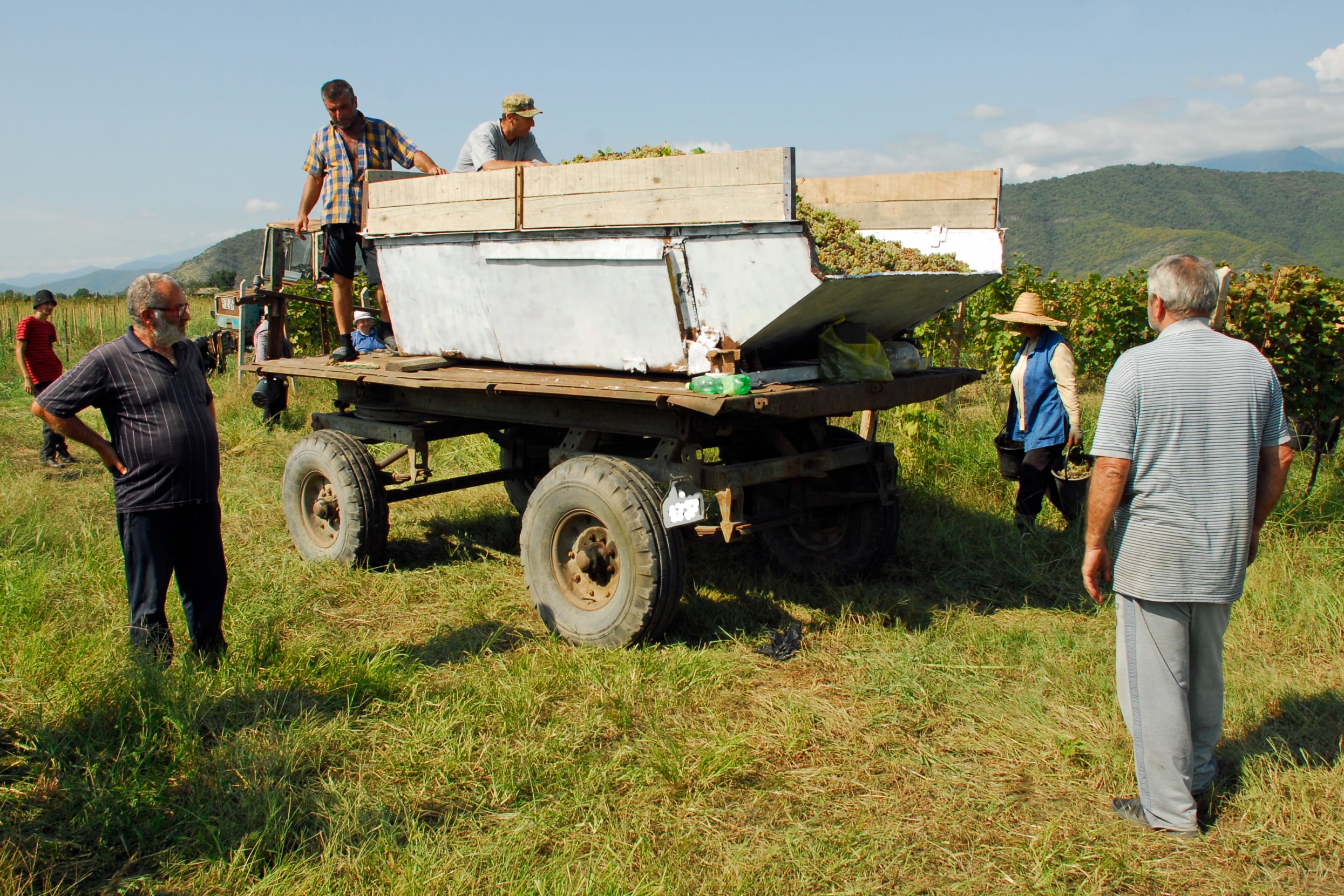
In this context, one of the most sensitive points for Spain is found in the agri-food chain. The Persian Gulf is an essential node for the production and export of critical inputs such as urea and sulfur, fundamental for the manufacture of nitrogen fertilizers. A sustained conflict in the region raises the costs of these products and, consequently, the costs of agricultural production.
Spanish agriculture has an economic weight that explains this vulnerability. In 2024, the Agricultural Branch Production reached 67.483 billion euros, positioning Spain as the fourth agricultural producer in the European Union by value and as the leading country in agricultural income, with 36.760 billion euros. The sector represents between 2.5% and 2.8% of GDP and is a strategic pillar for both rural employment and the trade balance.
This productive volume requires an intensive use of inputs. In 2024, Spanish agriculture consumed more than four million tons of fertilizers, of which a substantial part comes from abroad. Only that year, Spain imported more than 3.26 million tons of fertilizers, confirming a high dependence on international supply. Given that the production of nitrogen fertilizers is closely linked to the price of natural gas, any escalation of tensions in the Middle East becomes a direct risk factor for field costs and, with some delay, for food prices.
Sectoral impacts and macroeconomic effects
More quietly, the impact extends to industries dependent on raw materials whose transit passes through the Middle East. The automotive and plastics sectors face risks of rising costs and delays in petroleum derivatives, while construction suffers from rising prices of aggregates and imported chemicals, with direct effects on the execution of infrastructures and projects linked to European funds.
It is therefore not surprising that several organizations have begun to revise downward growth forecasts if tensions in Hormuz persist. The IMF has lowered its growth forecast for 2026 by two-tenths, placing it at 2.1%. And the “geopolitical tax” of the conflict burdens the entire economy through energy and basic inputs, slowing growth and complicating inflation control.
The Government has reacted with measures aimed at mitigating energy price increases, combining tax cuts, sectoral aid, and greater market oversight. The Executive insists that the current impact is explained more by prices than by physical supply problems, emphasizing that Spain faces this scenario from a stronger position than in previous crises.