In a few days, all workers will celebrate International Workers’ Day, which is made worldwide every year on May 1st. And why that day? Who were known as the “Haymarket martyrs”?
The workday for industrial workers lasted more than 11 hours, despite the Ingersoll Law, signed by American President Andrew Johnson in 1868, which established an eight-hour workday for all federal office employees and public works workers, with exceptions and in “absolutely urgent cases.” The industrial workers’ union was excluded from this law, and moreover, in a vast part of the labor world, the new legal imperative was not complied with.
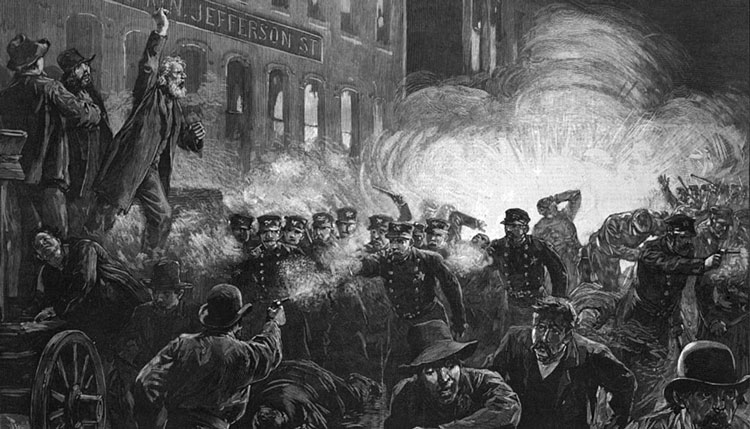
Precisely for this reason, on November 11, 1887, eight anarchist unionists, who demanded an eight-hour workday, were imprisoned, and five of them were sentenced to death for the events that occurred on May 4, 1886, in Haymarket Square, Chicago. The other three suffered prison sentences. They are known as “the Haymarket or Chicago martyrs.”
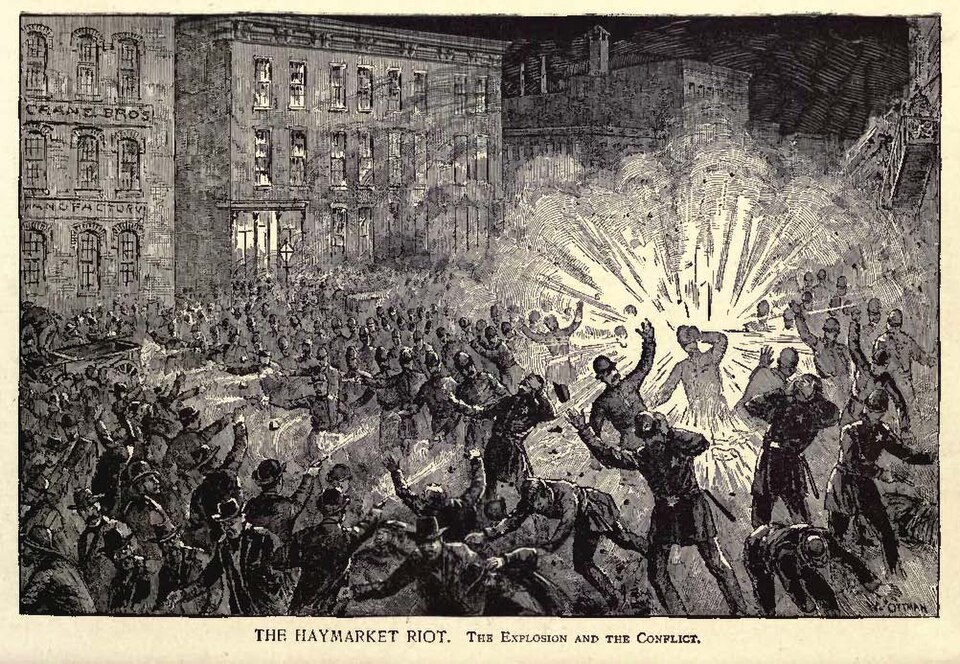
During those riots, an explosive device was thrown at the police in the middle of one of the demonstrations. That incident unleashed a violence that ended in the arrests, trial, and sentences previously mentioned. Just a few days later, several sectors of the employers agreed to recognize that fairer workday.
The American Federation of Labor, a national federation of unions, announced after the celebration of its fourth congress in October 1884, that it would demand an eight-hour workday and that, if this right was not recognized, its members would go on strike. However, the Noble Order of the Knights of Labor, a kind of union with anarchist influences, ordered by letter to all the organizations it gathered that “no worker affiliated with this central should strike on May 1, as we have not given any instruction in this regard.”
The workers labeled the union as “traitors to the labor movement” and continued with their demands. The press described their demands as “outrageous and disrespectful” and as “the delirium of unpatriotic lunatics,” and compared them to “asking to be paid a salary without fulfilling any hours of work.”
On May 1, 1886, about 200,000 workers went on strike. In Chicago, where working conditions were even worse than in other cities, the mobilizations did not cease and continued on the 2nd and 3rd. The agricultural machinery company McCormick continued its production thanks to the employees who had not joined the strike and who are popularly known as scabs. The rest of the workers, around 50,000, had been violently dispersed by the police while participating in a gathering on May 2. The next day they held a new demonstration, and when the siren sounded and the scabs came out, a pitched battle began that ended with six workers dead and several dozen injured at the hands of the police. After this incident, journalist Adolph Fischer, editor of the Chicagoer Arbeiter-Zeitung, an anarchist newspaper written in German, quickly printed 25,000 leaflets calling “to arms” and convening a protest for the 4th at 4 PM in Haymarket Square.
“To white terror, let us respond with red terror. Dry your tears, you who suffer! Have courage, slaves! Rise up!”, the printed leaflets proclaimed. After the explosion of the device thrown at the police during the riots, a toll of 38 workers dead and 115 injured was recorded.
“The Haymarket martyrs” were Oscar Neebe, sentenced to 15 years of hard labor; Samuel Fielden and Michael Schwab, to life imprisonment, and George Engel and Adolf Fischer, sentenced to death. Albert Parsons, who, despite not being present at the scene, voluntarily surrendered to be with his companions, was hanged; August Spies and Louis Lingg were also sentenced to capital punishment. The latter committed suicide in his cell on November 10, 1887, a day before the execution.
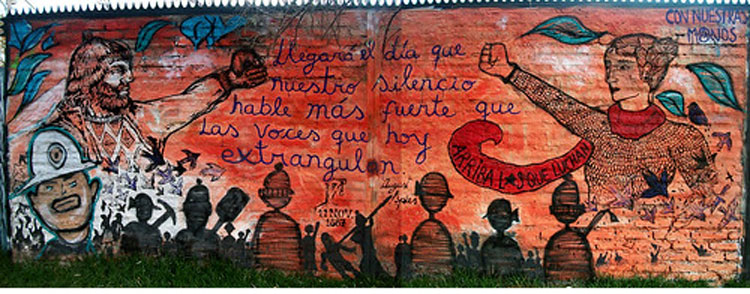
Thanks to them and their companions, today the workday for all workers is set at 8 hours. Before dying, August Spies said: “The voice you are going to silence will be more powerful in the future than any words I could say now.”
In 1889, the Socialist Workers’ Congress of the Second International declared May 1st as International Workers’ Day in memory of “the Haymarket martyrs.” This day is celebrated in the vast majority of countries around the world, except for two, the United States and Canada, which celebrate Labor Day on the first Monday of September.