There are countries whose strategic value has not always been visible to European eyes, but which becomes evident when the world around them becomes disorderly. Azerbaijan is one of them. For decades, the small South Caucasus state was treated as a convenient source of hydrocarbons and a minor geopolitical curiosity, trapped between Russia, Iran, and tensions with Armenia. That interpretative framework has become obsolete in just a few years.
The Russian invasion of Ukraine, the conflict between Iran, the United States, and Israel, and the reconfiguration of trade corridors between Asia and Europe have placed Baku in a position that no planner would have designed with such precision: the only safe, sovereign, and operational passage between the post-Soviet world and the European market that does not run through Moscow or Tehran.
This reality is not reversible in the short term. Trade routes do not reconfigure in months, and the infrastructures that allow one corridor to be replaced by another take years to build. While Europe continues to seek energy and logistical alternatives to its Russian dependence, Azerbaijan has been building the architecture of that alternative for some time, with a pragmatism that has managed to take advantage of others’ urgency without giving up its own margins of maneuver.
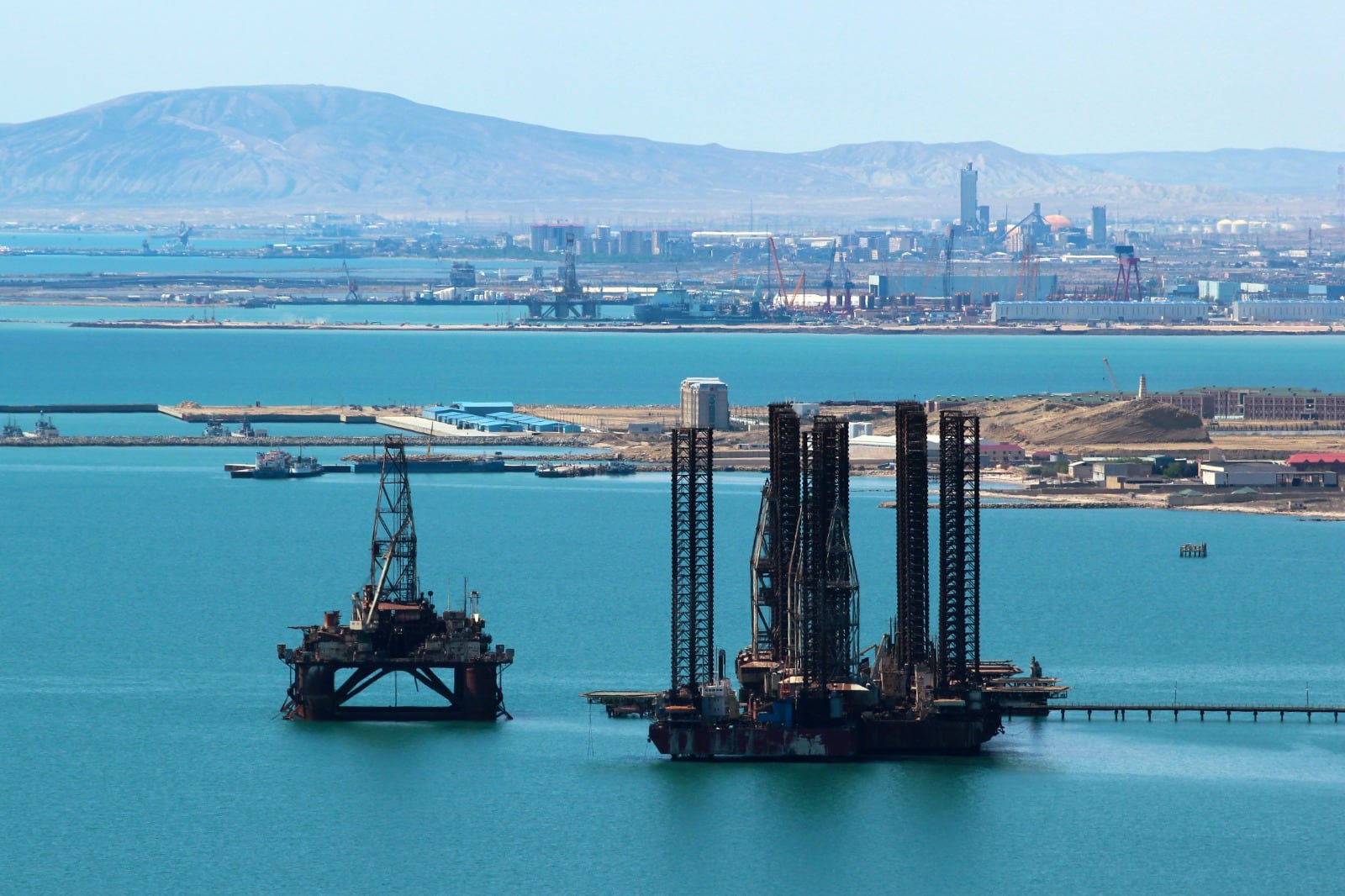
The energy dimension is the most well-known, although not the most static. Through the Southern Gas Corridor, Azerbaijani gas now reaches fourteen countries, ten of them European. In January 2026, SOCAR began supplying Austria and Germany, including the first long-term German gas contract with a non-Russian supplier in decades. This is not a minor detail; Germany had historically avoided such commitments outside of Russia, and making an exception with Baku says something about how the assessment of risk has changed in European capitals. The goal of doubling exports to at least 20 billion cubic meters annually by 2027 is progressing alongside talks for a new bilateral framework agreement between Baku and Brussels. The Memorandum of Understanding on energy signed in 2022 quickly became insufficient, and the first round of negotiations for the new agreement was held in April 2026. António Costa, President of the European Council, described energy security as the “cornerstone” of that cooperation during his visit to Baku in March.
What is less evident to the outside observer is that Azerbaijan is not only betting on consolidating its role as a gas exporter. It is executing, with some discipline, a parallel transition to renewable energies that has both internal opportunity and positioning towards the West. The country has enormous technical potential that is far from being exploited, and major sector operators have noticed. Masdar, ACWA Power, and bp are developing concrete projects on Azerbaijani soil: solar plants and wind farms that are already producing electricity or are under advanced construction. COP29, held in Baku in November 2024 with representatives from nearly two hundred countries, was not a calendar accident. It was a declaration of intent that projected Azerbaijan before investors and governments as an actor with ambitions in the energy transition, and not just as an exporter of fossils. At that same summit, the presidents of Azerbaijan, Kazakhstan, and Uzbekistan signed the foundational agreement of the Trans-Caspian Green Corridor, an initiative aimed at connecting the electrical systems of Central Asia with Europe. It is too early to know what real scope it will have, but the direction of the movement is unequivocal.
If energy is the most worked argument, logistics is probably the most underestimated and, in the current context, perhaps the most decisive. The Middle Corridor, the Trans-Caspian International Transport Route that connects China with Europe via Kazakhstan, Azerbaijan, Georgia, and Turkey, has become the only fully operational route without insurmountable geopolitical friction. The Eurasian corridor that passed through Russia has been practically closed to Western goods since 2022. The route through Iran already accumulated risks of sanctions and instability that made it unmanageable for many operators before its total halt in February 2026. The Suez route has also suffered severe interruptions linked to the instability of the Red Sea routes. In that context, the Middle Corridor has shifted from being a theoretical alternative to becoming an operational necessity for a growing number of companies.
Traffic figures reflect this shift. After the latest escalation of tension in the Middle East, demand for containers in this corridor increased by around 500% in a single week compared to the same period the previous year. The transit time of about fifteen days between China and Europe via Azerbaijan contrasts with the forty or fifty days of the alternative maritime route, a difference that has a direct impact on supply chain costs. To absorb that demand, The Port of Alat is being significantly expanded, and the Baku-Tbilisi-Kars railway, which completed the modernization of its Georgian section in 2025, now connects Azerbaijan directly with European and Mediterranean markets. The network of roads and international airports completes an infrastructure that, with its limitations, is notably more functional than that of most of its neighbors.
This logistical advantage responds to structural factors that, as long as they persist, reinforce Baku’s position as a transit node. For industries that depend on transcontinental supply chains, that is not geography: it is a competitive advantage with an uncertain but not immediate expiration date.
To understand the investment bet, one must add a layer that is often overlooked: Azerbaijan’s strategic autonomy in a regional environment where almost all actors are subordinated to some external power. The country does not belong to the Russian CSTO, has not requested NATO membership, and has been part of the Non-Aligned Movement since 2011. After the withdrawal of the Russian contingent in 2024, it is the only state in the Eastern Partnership without foreign military presence on its territory. This position does not respond to inaction but to the deliberate use of sovereignty as a tool of foreign policy. In a neighborhood where Georgia is drifting towards the Russian orbit and Armenia is undergoing a still uncertain political rebalancing process, that independence has real value. Azerbaijani economic decisions do not pass through the filter of Moscow or any other capital antagonistic to the West, and that matters when it comes to planning in the medium and long term.
This is complemented by the normalization of relations with Armenia, culminated within the framework of the Washington agreement of August 2025, which has significantly reduced the geopolitical uncertainty weighing on the region. Kaja Kallas, the EU High Representative for Foreign Affairs, has referred to that normalization as a priority for the Union. That Brussels has a direct interest in the stability of Azerbaijan’s immediate environment says something about the place this country occupies today in the European security architecture.
The economic fundamentals accompany that geopolitical reading without the need to exaggerate them. The GDP exceeds 75 billion dollars, the non-oil sector already represents more than 70% of economic activity, and foreign exchange reserves are solid in relation to external public debt. The country has attracted more than 120 billion dollars in foreign direct investment since the mid-nineties. The currency is stable, and the state has room to sustain its commitments. These are data that speak of an economy that has been becoming less dependent on oil prices for years, although the process is far from complete.
The regulatory environment for foreign investment is open: legislation guarantees equal treatment between domestic and foreign investors, with no requirement for a local partner and no restrictions on the repatriation of profits. The business registration process is agile, taking only two days to register a company through an online portal. The country has signed 57 double taxation treaties and 49 bilateral investment treaties. The country’s special economic zones, led by the Sumgait Industrial Park and the Alat Free Economic Zone, offer considerable tax incentives such as exemption from corporate taxes, property taxes, land taxes, VAT on imported machinery, and tariffs on technological equipment; in exchange for executing export-oriented production, and the infrastructure in those zones is delivered built by the state. By the end of 2025, exports from industrial parks represented 33.9% of the total non-oil exports of the country.
The concrete opportunities are broad: petrochemicals, renewable energy, mining, agribusiness, tourism, real estate, logistics, etc. Not all have the same risk profile or the same time horizon, allowing different types of capital to find their fit. The government also issues an investment promotion document that grants additional tax advantages for projects in strategic sectors, from renewables to waste management or the aerospace industry.
What underlies all this is a long-term bet that Azerbaijan is willing to sustain. The country knows that its geopolitical window of opportunity is not eternal: if conflicts are resolved, if Russia reintegrates somehow into trade circuits, or if Iran reaches some kind of normalization with the West, part of the logistical argument would weaken. That is why it is investing in turning its transitional position into permanent infrastructure, in diversifying its economy enough so that the country’s value does not solely depend on being a mandatory passage, and in approaching Europe through institutional agreements that create ties that are difficult to undo.
What the country offers is something different: a geographical position that the international context has made relevant, an economy with enough solidity to sustain its commitments, and a stable government that has clear incentives for incoming investors to want to stay. The South Caucasus has ceased to be a periphery. And Azerbaijan has been acting for some time as if it knows this.