Diplomacy News
es Español en English
24 de Aug, 2026
No Result
View All Result
  • Current Affairs
    • Business
    • Diplomacy
    • Geopolitics
  • In Depth
    • Interviews
    • Reports
    • Research
  • Life
    • Culture
    • Gastronomy
    • Tourism
  • Opinion
  • Agenda
  • Who is Who
  • DiplomacynewsTV
NEWSLETTER
Diplomacy News
NEWSLETTER
Diplomacy News
No Result
View All Result

United States against its own promise

"American influence was never solely based on military or economic power, also rested on credibility of a republic capable of expanding rights and embodying an idea of freedom"

Marcel Muñoz Rodríguez by Marcel Muñoz Rodríguez
5 de July de 2026
in Opinion
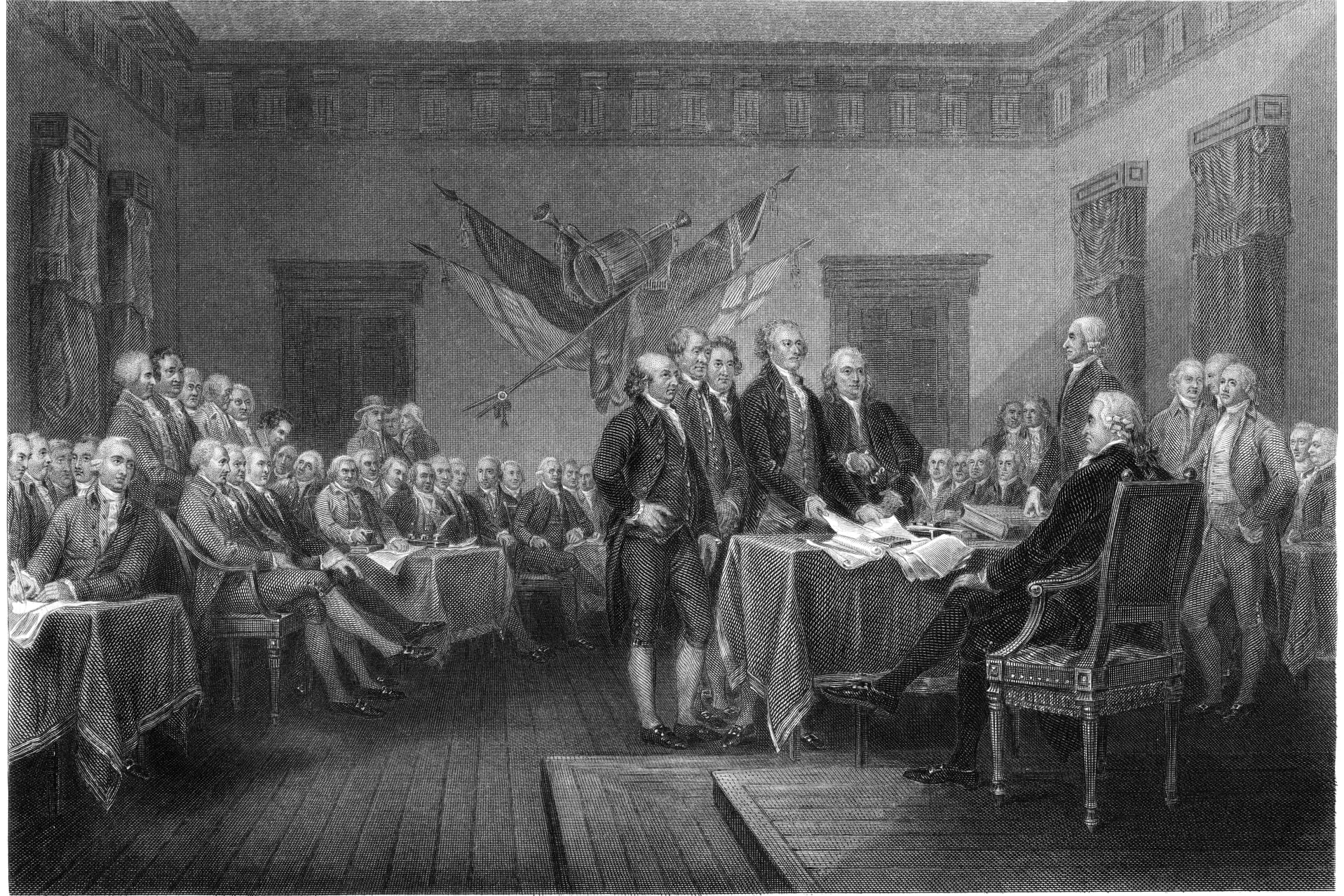
Engraving of the United States Declaration of Independence./ Image: FierceAbin / iStock

Engraving of the United States Declaration of Independence./ Image: FierceAbin / iStock

On July 4, 1776, the thirteen colonies that had risen against the British Empire jointly signed the Declaration of Independence of the United States of America. That new nation, with the will to be freer, more equal, and more just, detached itself from subordination to London to embark on its own path that aimed to be exemplary. The Constitution adopted a few years later sought to give legal form to that promise, establishing a government subject to norms and controls.

Two hundred and fifty years later, the United States bears no resemblance to what its founders promised. It is enough to observe the moment when the anniversary arrives, amidst the celebration of a World Cup conditioned by immigration bans, a systematic persecution of immigrants who are criminalized and deported without guarantees, the deployment of military personnel in cities governed by the opposition and against the will of their authorities, a fragile memorandum with Iran that barely extends a ceasefire and is passed off as a beneficial peace agreement, and the presidential attempt, halted at the last moment by the Supreme Court, to abolish birthright citizenship.

In addition, there is the pardon of the Capitol rioters, pressures on media and universities, and the use of state resources against political opponents. These are just some examples of the explicit abandonment of the principles on which the country was founded and the concentration of unchecked power.

The United States was built on the separation of powers and respect for the courts, the idea that power is exercised within limits and that belonging to the political community does not depend on the discretion of the ruler. Its founders, fervent opponents of the tyranny characteristic of much of the European monarchies of their time, wanted an Executive subject to the law and courts capable of controlling it. And, underlying all this, was the conviction that all men are created equal and that belonging to the nation is not inherited by blood or lineage, but is acquired by joining a common project.

This was a significant part of its prestige. The American influence was never solely based on its military or economic power. It also rested on the credibility of a republic capable of expanding rights, rectifying, and embodying an idea of freedom that many young democracies have tried to imitate over the decades.

It is advisable to avoid here the nostalgia for a golden age that never existed. The gap between the ideal and practice has been considerable from the beginning. Slavery, the extermination of indigenous peoples, segregation, or support for dictatorships and coups in Latin America and other regions of the world remind us that the United States has repeatedly failed to fulfill its foundational promises.

The difference is that, even in those episodes, the ideal continued to operate as a normative reference, as the criterion by which its own practice was measured and corrected. Those practices betrayed the ideal, although without completely nullifying it as a shared aspiration. What is relevant now is that it is being deliberately and explicitly renounced.

That is the crux of the matter. Donald Trump does not simply defend questionable policies; he governs against the principles on which his country was founded. He empties them of content while constantly appealing to patriotism and national symbols. Two hundred and fifty years after that declaration, the main threat to the project that defined the United States comes today from its own presidency.


Tags: 4th of JulydestacadafeaturedIndependencenewsletterUnited States
Marcel Muñoz Rodríguez

Marcel Muñoz Rodríguez

Coordinador de Políticas Públicas de la Fundación Alternativas

Related Posts

Pencil portrait of Mohamed V, grandfather of the current King of Morocco. / Image: GeorgiosArt / iStock
Opinion

Letter to the King of Morocco: Would you mind if we start talking like adults?

by Marcel Muñoz Rodríguez
24 de August de 2026

"Both governments should talk seriously about cooperation because applying some economic measures, not an impossible shared sovereignty, could be very...

Read moreDetails
Poster advertising the Sopron picnic in 1989.

1989 Pan-European Picnic: when Europe began to tear down its borders

23 de August de 2026
Imagen: Ruma Aktar / iStock

The Mecca Agreement, a glance

21 de August de 2026
A Pakistani worker with a Spanish worker at the port of Valencia. / Photo: Alessandro Biascioli / iStock

Pakistan, a regional power in South Asia: closer to Spain than we think

18 de August de 2026
A street in Sarasota, Florida, flooded after Hurricane Debby. / Photo: Bilanol / iStock

Climate funds

17 de August de 2026

Lo más leído de esta semana

  • Pencil portrait of Mohamed V, grandfather of the current King of Morocco. / Image: GeorgiosArt / iStock

    Letter to the King of Morocco: Would you mind if we start talking like adults?

    161 shares
    Share 64 Tweet 40
  • The Romanian Embassy brings the Training Ship “Mircea” to the port of Málaga

    160 shares
    Share 64 Tweet 40
  • Day of the Romanian Language, painting and music at Instituto Cultural Rumano

    153 shares
    Share 61 Tweet 38
  • Who resolves conflicts when borders no longer matter?

    153 shares
    Share 61 Tweet 38
  • Brussels authorizes Telefónica, Santander, ACS and SETT to create an AI gigafactory

    154 shares
    Share 62 Tweet 39

Newsletter Diplomacy News

NEWSLETTER

Lo último en Diplomacy News

Image: CrailsheimStudio

Who resolves conflicts when borders no longer matter?

24 de August de 2026
The Romanian school ship "Mircea" made a port call in Malaga last Friday, August 21. /Photos: Courtesy of the Embassy of Romania

The Romanian Embassy brings the Training Ship “Mircea” to the port of Málaga

24 de August de 2026

Sections

  • Business
  • Culture
  • Current Affairs
  • Diplomacy
  • DiplomacynewsTV
  • Gastronomy
  • Geopolitics
  • In Depth
  • Interviews
  • Life
  • Opinion
  • Reports
  • Research
  • Tourism

About Diplomacy News

  • Nosotros
  • Aviso Legal
  • Política de Privacidad
  • Política de Cookies
  • Contactar
logo diplomacy news

© 2026 Diplomacy News.

No Result
View All Result
  • Current Affairs
    • Business
    • Diplomacy
    • Geopolitics
  • In Depth
    • Interviews
    • Reports
    • Research
  • Life
    • Culture
    • Gastronomy
    • Tourism
  • Opinion
  • Agenda
  • Who is Who
  • DiplomacynewsTV
  • Español

© 2026 Diplomacy News.