Diplomacy News
es Español en English
29 de Jul, 2026
No Result
View All Result
  • Current Affairs
    • Business
    • Diplomacy
    • Geopolitics
  • In Depth
    • Interviews
    • Reports
    • Research
  • Life
    • Culture
    • Gastronomy
    • Tourism
  • Opinion
  • Agenda
  • Who is Who
  • DiplomacynewsTV
NEWSLETTER
Diplomacy News
NEWSLETTER
Diplomacy News
No Result
View All Result

Networked universities: research and academic diplomacy in Europe

In a context of global competition, where the United States or China offer especially attractive conditions, Europe struggles to retain the talent that is being formed

Natalia Martorell by Natalia Martorell
29 de May de 2026
in In Depth, Reports
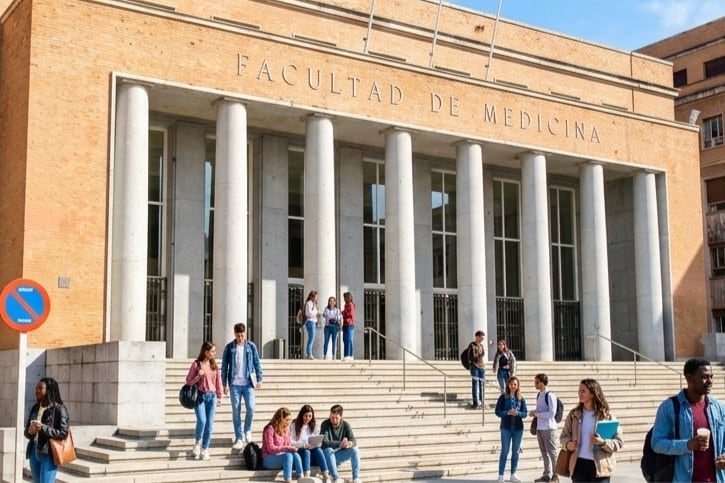
Faculty of Medicine of the Complutense University./ Photo: UCM

Faculty of Medicine of the Complutense University./ Photo: UCM

Universities have traditionally been presented as spaces for training and knowledge production, but today they have become operational actors in contemporary diplomacy. Their alliances, joint programs, and research networks function as infrastructures of relationship between countries, with cumulative effects that go beyond the specific academic exchange.

This change is supported by the transformation of their own function. Today, universities participate in the application of knowledge, connecting scientific research, technological development, and the needs of businesses. In this way, training, research, and economic activity, areas that previously tended to act separately, are now coordinated and function in an integrated manner.

In this context, cooperation between universities has shifted from being organized around specific exchanges to being structured through programs designed and managed jointly. This evolution requires reconciling academic systems and maintaining ongoing relationships, which facilitates joint projects, shared access to funding, and greater international projection.

A clear example of this logic is the European doctoral networks funded through the Marie Skłodowska-Curie actions. These programs structure international consortia in which universities, research centers, and companies from different countries participate. Beyond training researchers, the goal is to integrate them from the beginning into shared work environments and projects that combine academic research and industrial application.

The doctoral candidate thus joins an organized network in which mobility, collaboration, and access to different research environments are part of the program’s own design. This structure facilitates the circulation of knowledge between countries and its transfer to the productive fabric, while generating stable relationships between institutions that tend to persist beyond each specific project and reinforce the European system’s capacity to generate and apply knowledge.

Despite this capacity, Europe still faces difficulties in retaining the talent it trains. In a context of global competition, where systems like the United States or China offer particularly attractive conditions in terms of funding, research careers, and scientific infrastructures, some of these researchers continue their careers outside of Europe.

Nevertheless, the circulation of talent and the networks it generates remain central to academic diplomacy. These networks connect institutions, scientific systems, and productive sectors, and keep channels of collaboration open even when researchers move. But they also pose a clear challenge: to transform that capacity for training and mobility into scientific, industrial, and economic activity within the European system itself. It is in that step —from generated talent to its translation into activity— where a significant part of Europe’s position in global competition is at stake.


Sources: European Commission, documentation on Horizon Europe and the European Research Area (ERA); Marie Skłodowska-Curie actions (MSCA); institutional literature on university internationalization and transnational scientific cooperation.

Tags: CooperationdestacadaDiplomacyfeaturedScienceUniversity
Natalia Martorell

Natalia Martorell

Related Posts

Javier Cabello.
Interviews

“Spain has a global scientific network that only leverages below its potential”

by Natalia Martorell
27 de July de 2026

Javier Cabello, member of RAICEX, assures that "the diaspora constitutes a network of more than forty countries, which can expand...

Read moreDetails
Los participantes en la presentación del informe./ Foto: CEOE

Sustainability in Ibero-America: more regulation new challenges

27 de July de 2026
Part of the historic textile complex of the Cathedral of Oviedo. /Photos: Real Fábrica de Tapices

Real Fábrica de Tapices restores a historic textile from the Cathedral of Oviedo

26 de July de 2026
Informe ‘Chinese FDI in Spain: Global Outlook 2026’

Chinese investors strengthen their bet on the electric sector in Spain

20 de July de 2026
Ana María Serra, mother of 1st Sergeant Débora Grau Serra, accompanied by the Minister of Defense, Margarita Robles, during the act of handing over the Military Merit Cross with a white badge

Robles remembers Sergeant 1st Débora Grau, legacy of solidarity and courage

18 de July de 2026

Lo más leído de esta semana

  • Ambassador Nüket Ezberci presents the president of TÜSIAD, Ozan Diren./ Photo: JDL

    A delegation of Turkish businessmen visits Spain to study possible ‘joint ventures’

    189 shares
    Share 76 Tweet 47
  • Albares promises students of Casa Árabe that he will go on talking with Almeida

    153 shares
    Share 61 Tweet 38
  • EU sends planes and firefighters in response to the wildfires ravaging France and Spain

    155 shares
    Share 62 Tweet 39
  • The Embassy of Thailand commemorates the birthday of King Vajiralongkorn

    153 shares
    Share 61 Tweet 38
  • ‘The Empire Strikes Back’, the largest collection of Star Wars fan articles

    153 shares
    Share 61 Tweet 38

Newsletter Diplomacy News

NEWSLETTER

Lo último en Diplomacy News

Aguirre Schools building, headquarters of Casa Árabe./ Photo: José Luis Vega García

Albares promises students of Casa Árabe that he will go on talking with Almeida

29 de July de 2026
Spanish Air Force 'Ala 12' badge.

Spanish Air Force 12 Squadron to be deployed in Romania until December

29 de July de 2026

Sections

  • Business
  • Culture
  • Current Affairs
  • Diplomacy
  • DiplomacynewsTV
  • Gastronomy
  • Geopolitics
  • In Depth
  • Interviews
  • Life
  • Opinion
  • Reports
  • Research
  • Tourism

About Diplomacy News

  • Nosotros
  • Aviso Legal
  • Política de Privacidad
  • Política de Cookies
  • Contactar
Diplomacy News

© 2026 Diplomacy News.

No Result
View All Result
  • Current Affairs
    • Business
    • Diplomacy
    • Geopolitics
  • In Depth
    • Interviews
    • Reports
    • Research
  • Life
    • Culture
    • Gastronomy
    • Tourism
  • Opinion
  • Agenda
  • Who is Who
  • DiplomacynewsTV
  • Español

© 2026 Diplomacy News.