Diplomacy News
es Español en English
30 de May, 2026
No Result
View All Result
  • Current Affairs
    • Business
    • Diplomacy
    • Geopolitics
  • In Depth
    • Interviews
    • Reports
    • Research
  • Life
    • Culture
    • Gastronomy
    • Tourism
  • Opinion
  • Confidential
  • Agenda
  • Who is Who
NEWSLETTER
Diplomacy News
NEWSLETTER
Diplomacy News
No Result
View All Result

Networked universities: research and academic diplomacy in Europe

In a context of global competition, where the United States or China offer especially attractive conditions, Europe struggles to retain the talent that is being formed

Natalia Martorell by Natalia Martorell
29 de May de 2026
in In Depth, Reports
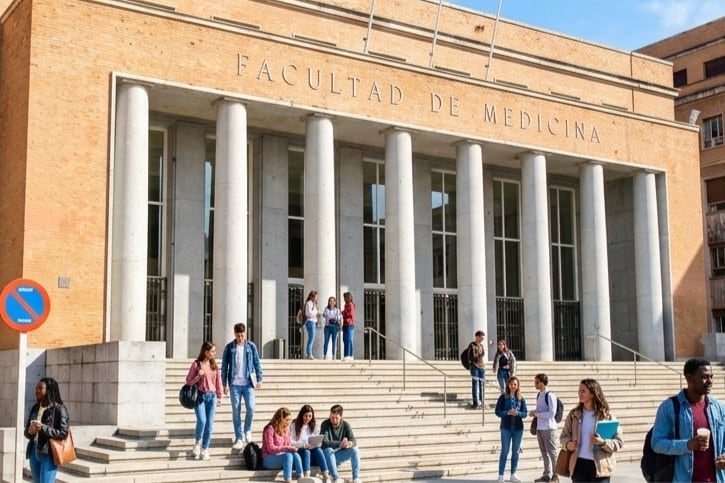
Faculty of Medicine of the Complutense University./ Photo: UCM

Faculty of Medicine of the Complutense University./ Photo: UCM

Universities have traditionally been presented as spaces for training and knowledge production, but today they have become operational actors in contemporary diplomacy. Their alliances, joint programs, and research networks function as infrastructures of relationship between countries, with cumulative effects that go beyond the specific academic exchange.

This change is supported by the transformation of their own function. Today, universities participate in the application of knowledge, connecting scientific research, technological development, and the needs of businesses. In this way, training, research, and economic activity, areas that previously tended to act separately, are now coordinated and function in an integrated manner.

In this context, cooperation between universities has shifted from being organized around specific exchanges to being structured through programs designed and managed jointly. This evolution requires reconciling academic systems and maintaining ongoing relationships, which facilitates joint projects, shared access to funding, and greater international projection.

A clear example of this logic is the European doctoral networks funded through the Marie Skłodowska-Curie actions. These programs structure international consortia in which universities, research centers, and companies from different countries participate. Beyond training researchers, the goal is to integrate them from the beginning into shared work environments and projects that combine academic research and industrial application.

The doctoral candidate thus joins an organized network in which mobility, collaboration, and access to different research environments are part of the program’s own design. This structure facilitates the circulation of knowledge between countries and its transfer to the productive fabric, while generating stable relationships between institutions that tend to persist beyond each specific project and reinforce the European system’s capacity to generate and apply knowledge.

Despite this capacity, Europe still faces difficulties in retaining the talent it trains. In a context of global competition, where systems like the United States or China offer particularly attractive conditions in terms of funding, research careers, and scientific infrastructures, some of these researchers continue their careers outside of Europe.

Nevertheless, the circulation of talent and the networks it generates remain central to academic diplomacy. These networks connect institutions, scientific systems, and productive sectors, and keep channels of collaboration open even when researchers move. But they also pose a clear challenge: to transform that capacity for training and mobility into scientific, industrial, and economic activity within the European system itself. It is in that step —from generated talent to its translation into activity— where a significant part of Europe’s position in global competition is at stake.


Sources: European Commission, documentation on Horizon Europe and the European Research Area (ERA); Marie Skłodowska-Curie actions (MSCA); institutional literature on university internationalization and transnational scientific cooperation.

Tags: CooperationdestacadaDiplomacyfeaturedScienceUniversity
Natalia Martorell

Natalia Martorell

Related Posts

Oil platform off the coast of the Caspian Sea near Baku, Azerbaijan.
In Depth

Azerbaijan in the new Eurasian order: geography, stability, and opportunity

by David Martínez
28 de May de 2026

The authorities in Baku are not only betting on consolidating their role as a gas exporter; they are executing a...

Read moreDetails
Strategic autonomy on the European horizon

Spring Economic Forecast: the EU will slow its growth in 2026 and rebound in 2027

26 de May de 2026
Aerial view of the ITER complex in Cadarache (France)./ Photo: ITER

ITER: the cooperation in nuclear fusion that survives the sanctions against Russia

25 de May de 2026
Photo: Teukwonjae707 under licence Creative Commons Attribution-Share Alike 4.0 International

President Trump’s Squid Game: The Korean Nuclear Debate Revisited

25 de May de 2026
Anne Sofie Bender/norden.org / Licensed under Creative Commons (CC BY-NC-SA 4.0)

The Baltic-Nordic scientific-energy cooperation as strategic response to Russia

21 de May de 2026

Lo más leído de esta semana

  • Defense Minister Margarita Robles, along with BRILIB XLV chief Brigadier General Antonio Ortiz

    Robles emphasizes the importance of Spanish troops in Lebanon and the Horn of Africa

    154 shares
    Share 62 Tweet 39
  • Spain urges the EU to protect tourism in light of the war in the Middle East

    154 shares
    Share 62 Tweet 39
  • Romania asks its allies to deploy more anti-drone systems on its territory

    154 shares
    Share 62 Tweet 39
  • Czech Embassy unveils the statue of anti-nazi hero František Suchý in Madrid

    155 shares
    Share 62 Tweet 39
  • Tolón celebrates Ibero-American agreement for inclusive and quality education

    153 shares
    Share 61 Tweet 38

Newsletter Diplomacy News

NEWSLETTER

Lo último en Diplomacy News

Preparations for the Pope’s visit: mobility and security in Spain

31 de May de 2026
Foto: Cortesía de la Embajada de Rumanía

Romania asks its allies to deploy more anti-drone systems on its territory

30 de May de 2026

Sections

  • Business
  • Confidential
  • Culture
  • Current Affairs
  • Diplomacy
  • Gastronomy
  • Geopolitics
  • In Depth
  • Interviews
  • Life
  • Opinion
  • Reports
  • Research
  • Tourism

About Diplomacy News

  • Nosotros
  • Aviso Legal
  • Política de Privacidad
  • Política de Cookies
  • Contactar
Diplomacy News

© 2026 Diplomacy News.

No Result
View All Result
  • Current Affairs
    • Business
    • Diplomacy
    • Geopolitics
  • In Depth
    • Interviews
    • Reports
    • Research
  • Life
    • Culture
    • Gastronomy
    • Tourism
  • Opinion
  • Confidential
  • Agenda
  • Who is Who
  • Español

© 2026 Diplomacy News.