Beyond speeches, mass events, or liturgical meetings, the historic visit of His Holiness Pope Leo XIV to Spanish soil represents a new chapter in a bilateral relationship with over half a millennium of history. It is time to review a very special relationship.
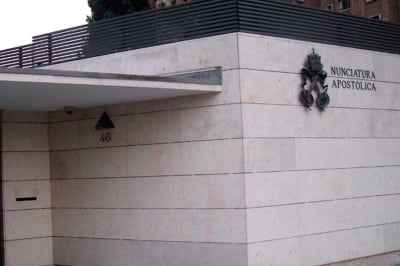
At the epicenter of this network of institutional relations stands the figure of the Apostolic Nunciature in Madrid, a diplomatic delegation that combines the historical depth of over 500 years with the ecclesiastical and legislative challenges of the 21st century.
A profile of a curial school
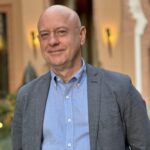
Currently, the papal legation in Spain is under the direction of the Italian archbishop Monsignor Piero Pioppo. Appointed by Pope Leo XIV in September 2025 after the granting of government approval, he formally assumed his duties in Madrid in December. Born in Savona in 1960 and holding a doctorate in Dogmatic Theology, Pioppo is a clear exponent of the diplomatic career forged at the Pontifical Ecclesiastical Academy, and his appointment was not without criticism. For his detractors, his past as personal secretary to Angelo Sodano, Secretary of State under John Paul II, a great defender of Pinochet and Marcial Maciel, or his role as head of the IOR in the last years of Benedict XVI does not play in his favor.
Pioppo’s agenda with the Spanish administration focuses on managing highly sensitive legal and social files such as the re-signification of the Valley of Cuelgamuros, the Church-State commissions on compensation for abuses or taxes; and the appointment of a dozen bishops for dioceses that will soon become vacant.
The oldest permanent Nunciature in the world
Significant issues that, for the contemporary analyst, are impossible to dissociate from the historical perspective. The institutional roots date back to the late 15th century, in a context where the Catholic Monarchs were consolidating peninsular unity and initiating Atlantic projection.
It was Pope Alexander VI who decided to transform the old temporary legations into a structure of permanent representation, appointing in the year 1492 the Balearic cleric Francisco des Prats as the first permanent nuncio at the court of Isabella and Ferdinand. This decision laid the foundations for the oldest permanent Nunciature in the world.
The correspondence records kept in the Vatican Secretariat of State reveal a pragmatic facet of those early missions. Francisco des Prats repeatedly expressed in his letters to Rome the enormous logistical difficulty of keeping up with the itinerant court of the Catholic Monarchs, sometimes lacking the necessary funds to cover the cavalry and the express mail delivery across Europe. What is now a consolidated infrastructure began as an adventure at the limits of the resources of the time.
The evolution of a balance of power
After des Prats, the history of this diplomatic relationship has not been a straight line of submission, but a fascinating tug-of-war between powerful sovereigns. We can highlight the reigns of Charles V or Philip II who defended tooth and nail their right to control the appointment of bishops and the collection of certain ecclesiastical taxes in their territories. Without a doubt, the nuncio in Madrid had one of the most difficult positions in European diplomacy: representing the Pope before the “Empire on which the sun never sets.”
Another period in which diplomacy had to give its best version was with the arrival of the Bourbons in Spain as tensions increased. The State sought to limit the legal influence of Rome on Spanish soil. Nuncios had to shift from purely religious figures to top-level political negotiators. And already in the 19th and 20th centuries, the relationship was modernized through the Concordats: the one in 1851 stabilized relations after the disappropriations of the 19th century, and the one in 1953 redefined the role of the Church in the 20th century, paving the way for the current Agreements of 1979.
In the context of current international relations, the visit of Leo XIV highlights the relevance of the so-called Soft Power of the Vatican with a unique influence based on moral authority, mediation in global humanitarian crises, and the defense of multilateralism. It is in this scenario where the embassy on Pío XII street continues to act, after five centuries of history, as a top-level geopolitical tool for stability and dialogue in the Ibero-American environment.