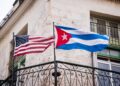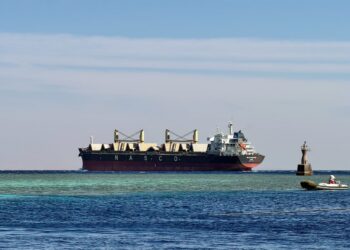
My generation, the one from the 60s, grew up with that little song of ‘Gibraltar, Spanish’, which was, more than a little song, a patriotic entertainment so short that it couldn’t even be sung. In 1982 we added, without much appreciation for uniforms and more out of solidarity with our austral cousins, I suppose, the ‘Malvinas, Argentinas’. Both toghether at least they seemed like a rhyme, although they still had little musicality.
At that time, more or less, 280 years had passed since Captain Whitaker and his boys occupied Gibraltar during the War of Succession. Too many years for us Spaniards of that time to take the ‘affront’ personally.
Even so, we felt folklorically legitimized to claim that piece of territory, which was part of Spain but ceased to be so in 1714 through the Treaty of Utrecht. And nostalgia aside — aside note: by 1980 there were no survivors left from the Anglo-Dutch attack — the truth is that Spaniards, at least those I know, if we thought about it well, we didn’t perceive the ‘territorial amputation’ as something unbearable.
That said — call me a traitor if you like — what I want to focus on is that, at this point in the 21st century we are in, the United Kingdom-European Union agreement, which is set to come into effect on July 15, is the best thing that could happen to resolve a long-standing dispute over ‘sovereignty’ that only served, if anything, to ‘get us riled up’ before a football match.
But that didn’t matter, and it may still not matter at all, to the inhabitants of La Línea, in particular, and of the Campo de Gibraltar in general. Just as the promises of successive governments, including the last one, only cared about the area when they saw things very bleak.
Because they, the inhabitants of the region, have indeed suffered for centuries having to live in one of the borders with the greatest economic inequality and where mafias of all kinds, local and foreign, have grown in the warmth of governmental abandonment, creating one of the most socially and economically depressed areas in Spain.
That, it is also true, without counting the fiscal damages that Gibraltar has caused to the Spanish Treasury and the headaches for security forces due to the lax attitude of the ‘llanitos’ towards certain forms of crime.
The constant tug-of-war of 300 years has not led us anywhere, except to a Gibraltar enriched by its status as a tax haven and a neighboring area, the Campo de Gibraltar, impoverished and dependent on poorly paid jobs in the Rock to maintain a subsistence economy.
Worse still. That enormous economic imbalance, which no Spanish administration knew how to solve, has allowed the entrenchment of mafias that, under the promise of high irregular incomes, have taken over the area and have recruited many of its inhabitants to swell organized crime, which has faced security forces with impunity.
So we already have several important issues, really important ones, to solve: mafias, crime, drug trafficking, human trafficking, taxation, poverty, unemployment… And this time it does seem that the administrations have moved, mainly the European Union, which had its own urgencies to provide a legal solution to the relationship with the Rock after Brexit, as happened with Northern Ireland.
At this point, it is worth making a note: the Spanish Government has been represented in the conversations, yes. But it has been Brussels that has really taken the lead in the agreement with the United Kingdom. In case we have forgotten, let us recall its exact title: “Agreement regarding Gibraltar between the European Union and the European Atomic Energy Community, on the one hand, and the United Kingdom of Great Britain and Northern Ireland, on the other.” Where is the word ‘Spain’ in that title?
Seeing that the agreement is celebrated between the United Kingdom and the EU, Senator José Ignacio Landaluce is right to criticize that the PSOE has not supported the creation of the Special Economic Zone (ZEE) that he, also mayor of Algeciras, has proposed. Because if the EU has done its job, the Spanish Government should have done its own.
The agreement “does not include mechanisms for social cohesion or economic development,” Landaluce has recalled. It is evident that the European Union has gone about its own business, to solve the problem posed by Brexit. And it is also evident that the Spanish Government should have taken the opportunity to, with the mechanisms at its disposal, boost the economy of the area. It is not enough to ‘draft behind’ in the shadow of Brussels to later claim a foreign achievement.
Senator César Mogo’s arguments are surprising, who has pulled out the rulebook to reject Landaluce’s proposal. Perhaps it is because he is a senator from Lugo and Gibraltar is out of his way. But to say that Landaluce’s proposal is ‘opportunistic’ and ‘partisan’ does not require a genius of politics. And to add that it presents ‘tax difficulties in its application’ does not either. Look, Senator Mogo, they are not ‘difficulties’, they are ‘advantages’ because it is about facilitating tax exemptions for those who invest in the development of the Campo de Gibraltar. That’s what the ZEEs are about.
No one disputes the benefits of the agreement contemplating the elimination of physical barriers, of the controls over people and goods that circulate between Spain and Gibraltar. We are all glad that police cooperation is increased in aspects such as ‘hot pursuit’ or the fight against money laundering, to name a few examples.
But the agreement is not the work of our ‘representatives’ in the UK-EU meetings, who have limited themselves to ‘seeing, hearing, and speaking softly’. The pact is a consequence of the community acquis, which does not need to be invented because it is already there. What was not there, and the PSOE has limited itself to letting it pass with little enthusiasm, is the Special Economic Zone.
That is why it is touching the enthusiasm that the current Foreign Affairs officials show, especially the minister himself, when talking about the agreement, as if they had drafted it from start to finish. There are 366 articles and 43 annexes, in total. There is no imagination for so much in the Palace of Santa Cruz.