


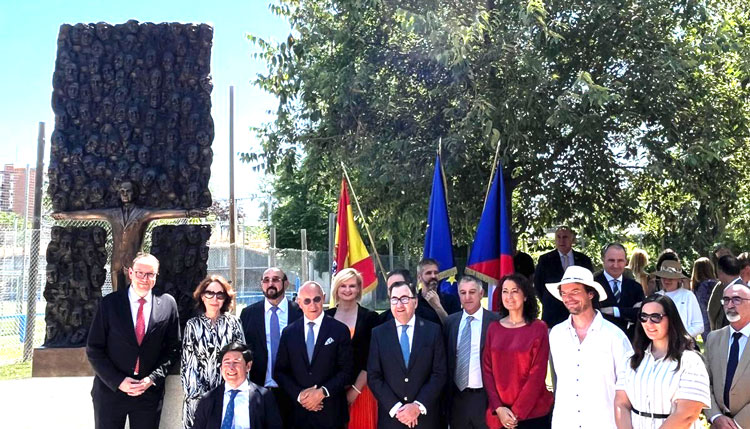

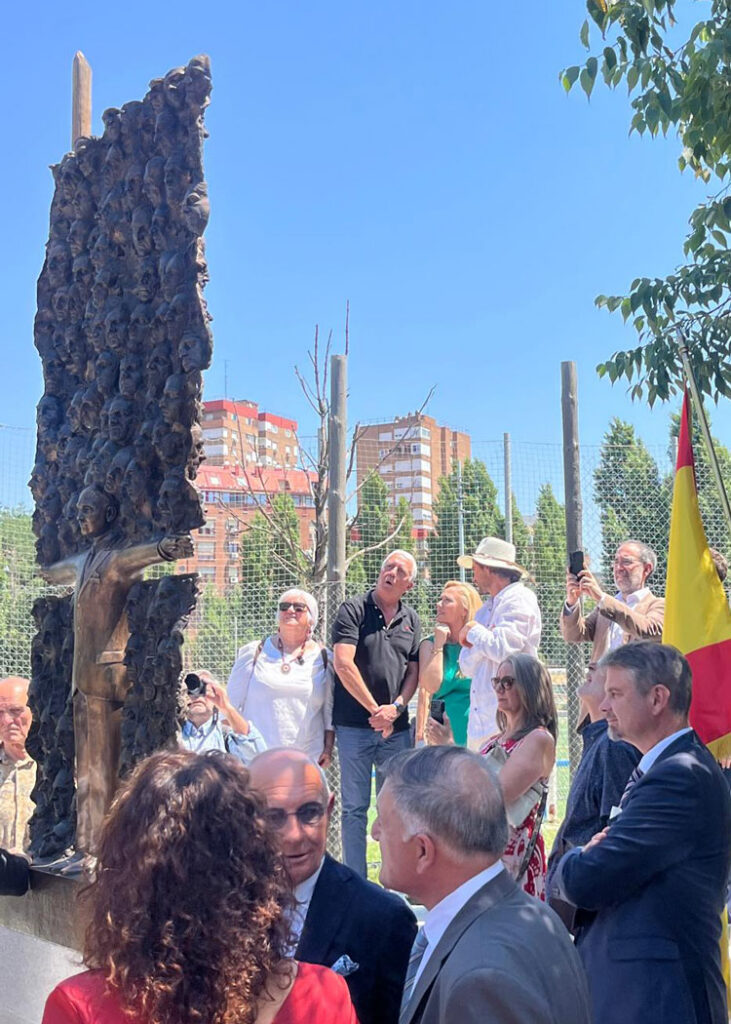
Under a stifling heat, and as part of the second edition of the Czech-Spanish Days, a monument dedicated to František Suchý was unveiled last Friday at the Prague Bridge in Madrid.
The Czech ambassador, Libor Sečka, led a delegation that unveiled the monument to the hero who, as the director of the crematorium in Strašnice, during the Nazi and communist repression, hid the ashes of the victims so they could receive a dignified burial in the future.
As we reported in Diplomacy News last Thursday, May 28, František Suchý risked his life during World War II to preserve the remains of thousands of victims of the Nazi regime. Among them were also Spanish citizens deported to the Hradištko concentration camp near Prague.
Suchý took advantage of his position to save important documents and personal belongings of the victims that the Nazis wanted to destroy to hide the traces of their crimes. Suchý was supposed to hand over the lists of the victims to the authorities, and the ashes were to be scattered anonymously. However, together with his son, he secretly transcribed these lists and replaced the victims’ ashes with common ashes. He then hid the urns with the real ashes in a secluded place in the crematorium.
During the war, approximately 2,200 people were incinerated in this way, including not only Czechs but also victims of different nationalities, including several Spaniards. Thanks to Suchý’s work, it is now known where their remains rest.

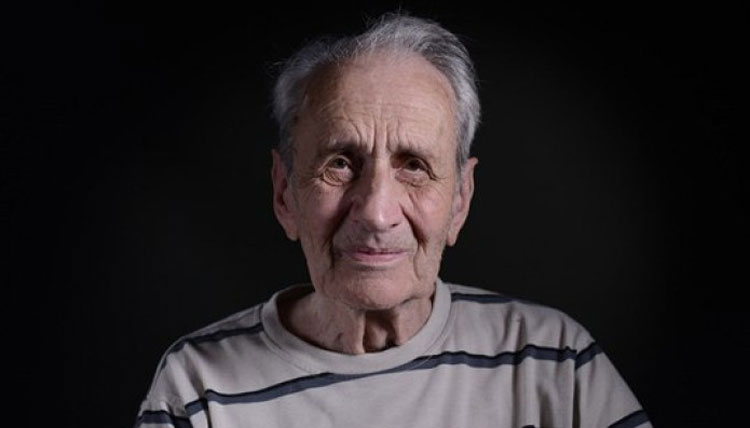
After the war and the communist coup of 1948, the crematorium became a place where the victims of the new totalitarian dictatorship were incinerated again. The Suchý family was investigated by State Security, and both the father and son were eventually arrested for their involvement in anti-communist activities. However, despite the persecution, both continued transcribing the names of the victims, which they preserved for decades.
Among those present at the event were, among other personalities, Gandarías Lekuona, a Basque researcher who dedicated years to reconstructing the history of his uncle, Anjel Lekuona Beitia, a victim of Nazism in 1945 at the Czech concentration camp of Hradištko, near Prague, and the sculptor who created the statue, Jakub Vlček.
The monument is the work of Jakub Vlček, a Czech sculptor, medallist, and draftsman. Born in 1979 in České Budějovice, he studied in Prague and currently develops his artistic activity in Vraclav, a district of Ústí nad Orlicí in the Pardubice region, Czech Republic.