


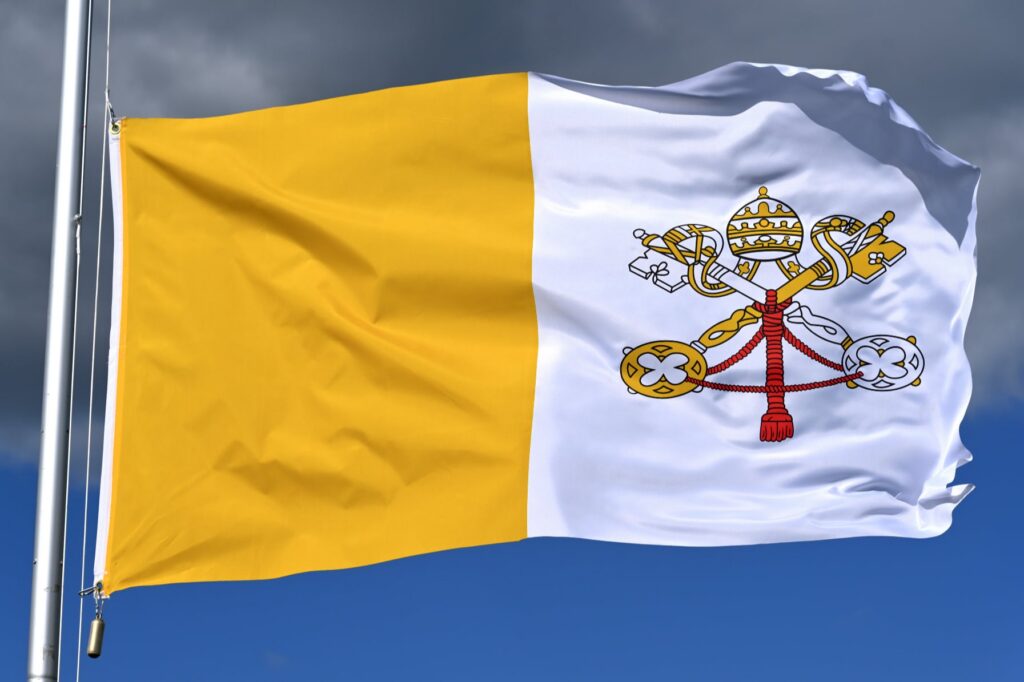
Spain becomes the epicenter of the papacy for six days with the visit of Pope Leo XIV, who from June 6 to 12, 2026, travels through Madrid, Barcelona, and the Canary Islands on an apostolic journey conceived as a pastoral itinerary of broad scope.
Beyond the specific events in each city, the route outlines an overview of the major axes that underpin the message of the Pontiff: the encounter with society, attention to the peripheries, and the centrality of faith in the public space.
The apostolic journey of Pope Leo XIV to Spain is structured as a progressive route that links the peninsula with the Canary archipelago, connecting major urban capitals with territories particularly sensitive from a social perspective. Over six days, the Pontiff traverses four cities —Madrid, Barcelona, Las Palmas de Gran Canaria, and Santa Cruz de Tenerife— in a journey that combines air travel and an agenda designed to highlight the geographical, cultural, and human plurality of the country.
The first stage, in Madrid, serves as the institutional and symbolic gateway of the journey. The capital hosts the initial moments of the visit, where the Pope presents himself before the state authorities, civil society, and the diplomatic corps, situating the journey in a context of dialogue and international presence.
From there, the route advances towards Barcelona, where the focus shifts to the cultural, spiritual, and heritage dimension, before culminating in Canary Islands, a territory that has become an emblem of the major migratory challenges of the present.
Beyond geography, the Pope’s journey through Spain responds to a clearly defined pastoral architecture. The official program articulates the journey around three major axes: the Eucharist, charity, and encounter. These principles are not distributed in isolated stages but traverse the entire itinerary, providing coherence and continuity.
The celebration of faith occupies a central place, with large liturgical acts conceived as moments of collective gathering in open and symbolic spaces. Alongside this, the social dimension of the journey is expressed in visits to assistance projects, reception centers, and realities marked by vulnerability. The Pope does not limit himself to the grand stages but incorporates into his route places where the Church carries out its more discreet and everyday work.
The third axis, the encounter, manifests itself both in dialogue with institutions and in direct contact with young people, volunteers, and local communities. The journey thus outlines an overview of the Church in mission, present in decision-making spaces, but also on social margins.
The route of Pope Leo XIV through Spain also fits into a diplomatic and global dimension. Spain acts as a stage for a message that transcends the strictly national and projects a view towards Europe, the Mediterranean, and Africa. The inclusion of the Canary Islands as the final stage of the journey reinforces this reading, placing a key geographical and human border in the center of the itinerary in contemporary migratory flows.
From this perspective, the apostolic journey is not understood merely as a succession of events, but as a moving narrative that connects territories,
issues, and sensitivities. The overview provided by the route allows the visit to be read as a synthesis of the papacy: a Church present in history, attentive to social challenges and willing to engage in dialogue with a plural world.
The end of the route, in Santa Cruz de Tenerife, adds a symbolic dimension to the entirety of the journey. The Atlantic serves as a physical and metaphorical horizon of a visit that looks outward, towards migratory routes, the peripheries, and the spaces where some of the major challenges of the 21st century are played out. With this last stage, the Pope concludes an itinerary that, beyond Spain, calls upon the international community.