


The Consular Activity Report 2025 is “a mix of repetitions about the increase of new consulates —like the mentions of those in Camagüey and Bangalore, still not operational—, and half-truths about the increase in resources allocated to the consular network,” explains Alberto Virella, president of the Association of Spanish Diplomats, to DiplomacyNews.
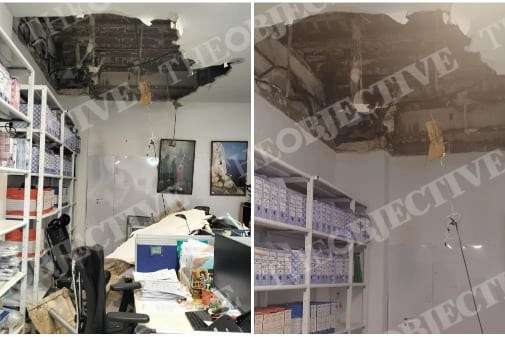
“It’s not just that there are not enough resources to improve Spain’s consular services abroad, it’s that one could say that there is also negligence,” Virella asserts, providing several examples: from the recent collapse of a ceiling at the Consulate of Oran (Algeria) in 2026 to the fall of an elevator in the building housing the Consulate of Casablanca last year. And there are more.
Minister José Manuel Albares presented the Consular Activity Report for 2025 on Tuesday, June 9, which literally reflects “several milestones” that the Ministry of Foreign Affairs points out. Among them, it includes the completion of the DICIREG deployment and the implementation of the Unified Processing Desk,” as stated on the Ministry of Foreign Affairs’ website.
In reality, DICIREG depends on the Ministry of Justice and the Unified Processing Desk is still being implemented in most consulates, as DiplomacyNews has verified by randomly accessing some websites of different consulates, including that of the Consulate in Buenos Aires, which thanks you for your understanding regarding any inconveniences that may arise as a result of these profound and structural changes during the time the transition between systems may last.”
In fact, the Ministry’s own website, in its information bulletin from January of this year, includes the “news” regarding the Unified Desk and —in addition to stating that it “has begun to implement” the system “for the management of consular registration and passports”— includes a link that promises “complete information” on this topic, but actually links to information on how to obtain a visa by the usual method.
As Alberto Virella points out, the Consular Activity Report 2025 again takes for granted the “openings” of new general consulates in Camagüey (Cuba) or in Bangalore (India). Regarding the planned Consulate in Camagüey, the president of ADE confirms that it is also “approved on paper, but still does not exist.” As for Bangalore, it is true that on December 30, its creation was published in the Official State Bulletin and it is expected that in the coming months its first Consul General will be appointed, after several years of announcing it.
On the other hand, Virella denies the minister’s claims about the touted increase in material resources and personnel allocated to the consular network. The Ministry insists on stating that “in the last 4 years, the staff abroad has increased by 2,300 workers.” However, the president of ADE explains the possible “trick” of that statement: that Foreign Affairs counts as an increase in workers the new contracts after the end of temporary local contracts (which should not exceed three years). “The number of people working is almost the same,” he confirms, “but when a new worker is added, it is omitted that they are doing so in place of another.”
The truth is that, according to ADE’s calculations, Foreign Affairs does not have 2,300 more workers than it did 4 years ago, as the minister claims. “We know that the staff is practically the same as at the beginning of the century, but we cannot know exactly how many workers there are because there is no transparency or an updated and clear job listing.” Virella asserts that “in the Ministry, we all know that the preparation of job listings, abroad and in central services, that reflect reality is a task that has been postponed for years, possibly due to the technical incapacity of those responsible for its management”; in any case, “the management of personnel is very opaque and inefficient,” he adds.
Regarding the report made public by the Ministry, the president of ADE is clear that “it does not include measures to solve the precarious conditions in which the consular network is operating, whose staff “are working at maximum capacity, under very precarious working conditions,” which also include the lack of maintenance of many buildings and their poor state, which endangers both workers and those who come to carry out procedures.
In 2025, the Labor Inspection ordered the immediate closure of the Consulate General in Mendoza (Argentina) following a complaint from the Comisiones Obreras union for not meeting minimum safety measures. Already in 2026 “we were lucky because the double ceiling that collapsed at the Consulate of Spain in Oran (Algeria) did not cause any casualties as it occurred in the early hours of a weekend.”
A year earlier, a person died when an elevator collapsed in the building of the Consulate of Spain in Casablanca. “It is true that accidents can happen,” admits Virella, “but for years the Ministry’s internal inspections have indicated that this consulate should be moved to another property, as the current one is rented, does not meet appropriate conditions, and is part of a building in an inadequate state.”
These are just a few examples of the state of the Spanish consular network around the world that the Association of Foreign Diplomats has been denouncing for years without the Government taking measures to solve it.
Meanwhile, Spanish diplomats are struck by the fact that from the beginning of the report there are repeated mentions of the activation of consular services to serve members of the fleets heading to Gaza. “We do not criticize it, because it is the work of consular services,” Virella adds, “but it simply seems to us that the minister is playing with it because it has a greater media impact.” And in that, Albares is a master.