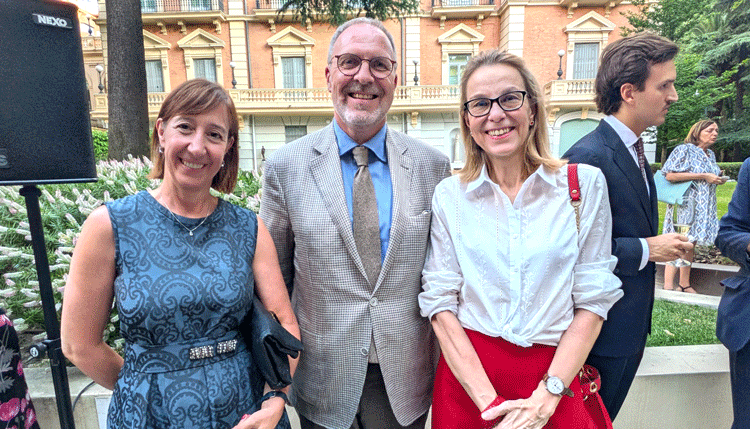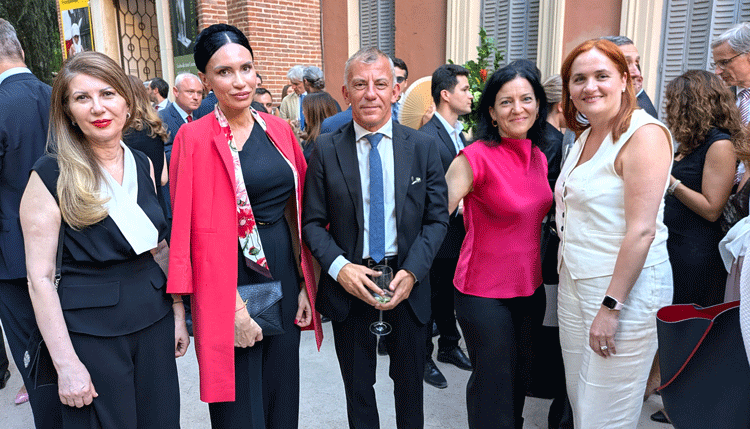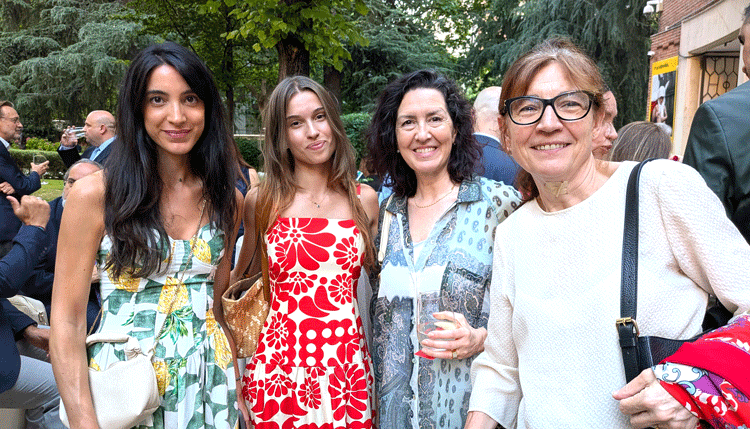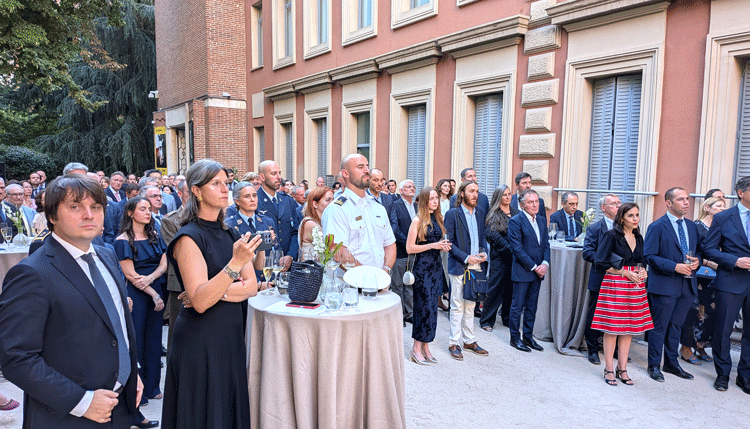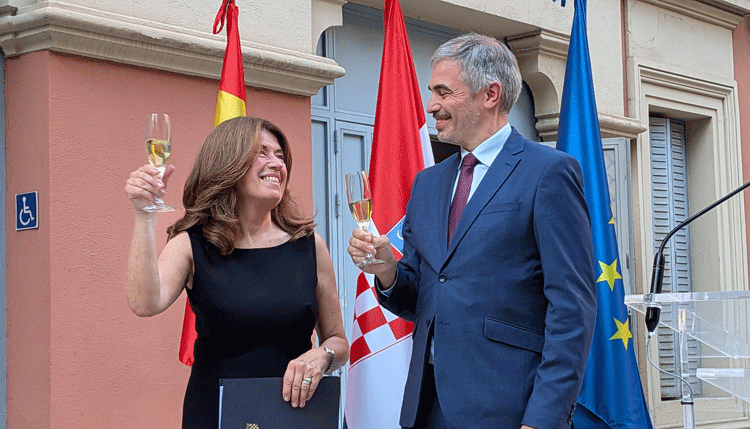
Last Monday, the National Day of the Republic of Croatia was celebrated in the gardens of the Lázaro Galdiano Museum in Madrid, with a reception organized by the Embassy of the central European and Mediterranean country, to commemorate May 30, 1990, the date on which the first democratically elected Croatian parliament was established.
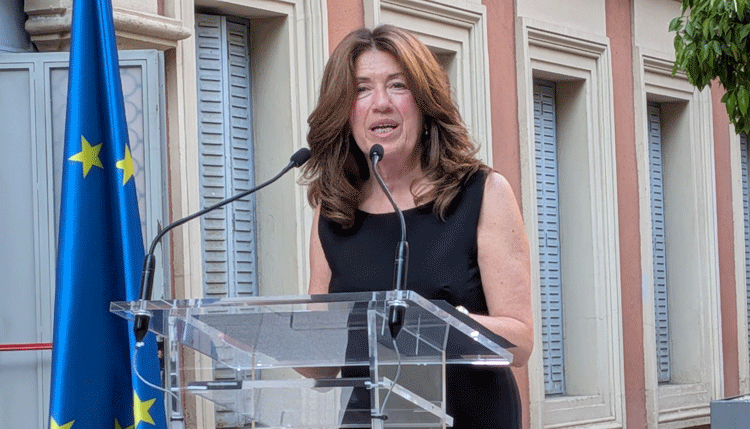
The Ambassador of Croatia, Nives Malenica, had an emotional remembrance of the victims of the recent earthquakes in Venezuela. “Our thoughts,” she noted, “are with the victims, their families, and all those affected by this tragedy.”
“The date of May 30, 1990, 36 years ago when the first democratically elected parliament was established, was one of the key dates for the establishment of modern Croatia and represents not only a moment to remember history but above all an opportunity to always look forward with hope and commitment to the values that modern society demonstrates,” said the Croatian ambassador.
The ambassador then highlighted the international and economic stability of the country, emphasizing that “today Croatia is a member of the European Union, NATO, the eurozone, and the Schengen area, and starting next year a member of the Organization for Economic Cooperation and Development, the club of the most developed economies in the world, which represents a new confirmation of our economic maturity. The Croatian economy has accumulated 18 consecutive quarters of growth since 2021, one of the highest rates in the European Union. For this year, we expect a growth of 3.3 and at the same time unemployment has been reduced to around 4 percent, the lowest level in our recent history. All of this makes Croatia a stable, safe, and predictable country for investments and a reliable partner for the development of new business projects.”
After highlighting Croatia’s role this year as the presidency of the MED-9 and the Three Seas Initiative, Nives Malenica wanted to emphasize that “such collaboration reflects the growing importance of regional cooperation in a strong Europe, facing current global challenges.”

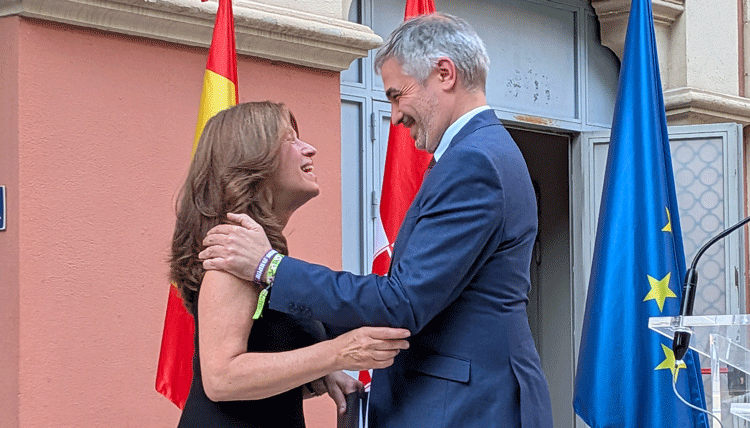
Regarding bilateral relations with Spain, the ambassador noted: “This year we also celebrate 34 years of diplomatic relations between Spain and Croatia, relations that are excellent and are based on friendship, mutual trust, and a firm commitment to European values. In recent years, we have witnessed a significant exchange of high-level bilateral visits, the most recent being the visit of our Minister of European Foreign Affairs to Madrid last February, during which a Memorandum of Understanding was signed to further strengthen cooperation between our two ministries. But in our relations, the highlight was the visit of the Kings of Spain to Zagreb in November 2023, a special satisfaction and great joy for the entire country and the Croatian people.”
In reference to economic relations, the Croatian ambassador indicated that “in the economic field between Croatia and Spain in 2025, the volume of trade exchange reached around 1.5 billion euros, the reflection of the dynamism of our economies and the broad potential to continue strengthening our cooperation. There is significant potential in areas such as infrastructure, transportation, energy, ecological transition, and new technologies. We highly value the cooperation between Spanish and Croatian companies in the field of security and defense, a sector that opens new opportunities for industrial, technological, and joint research collaboration.”
On the international aspect, Ambassador Malenica then referred to Russia’s aggression against Ukraine, which she described as a “turning point that has reconfigured the European security architecture and highlighted the need for a systematic strengthening of the industrial base and technological defense capabilities of Europe. Croatia is developing its own capabilities, and a growing number of Croatian companies are successfully positioning themselves in the field of advanced defense technologies and innovative solutions.”
“The times of new forms of geopolitical competition, from the instrumentalization of energy and trade to the increase of tariffs and the growing pressures on the global economy, underscore the need to strengthen our competitiveness, resilience, and cohesion of the European Union, promote alliances based on international law, cooperation, and mutual trust,” she noted.
The ambassador continued to highlight the state of collaborations between Spain and Croatia, emphasizing in the scientific field the IFMIF-DONES project, “a scientific infrastructure of reference in Europe,” she noted, “aimed at promoting research on fusion energy, which represents one of the most prominent examples of cooperation between our countries and reflects our common commitment to science, innovation, and future technologies. In the field of tourism, each year the number of Spanish citizens choosing Croatia as a tourist destination increases, and in 2025 we had more than 300,000 Spanish tourists visiting Croatia. Today, around 6,000 Croatian citizens live in Spain, with approximately 1,200 in the Community of Madrid.”
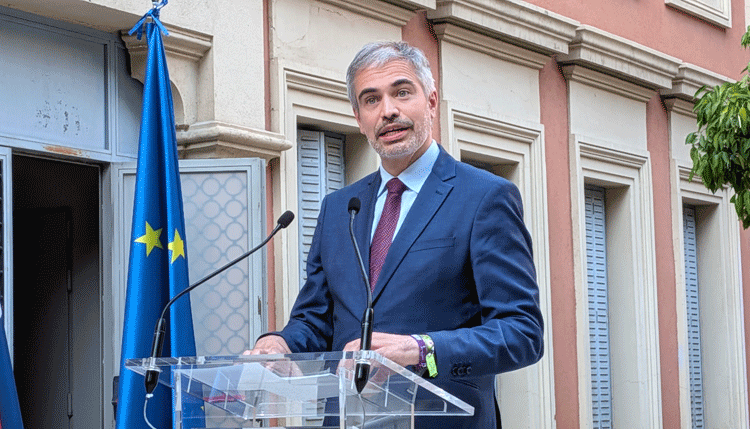
The Secretary of State for the European Union, Fernando Sampedro, took the floor and noted that “Spain and Croatia maintain excellent relations, based on mutual trust, solid friendship, and a shared vision of Europe during these years we have been walking together, also in the European Union and in other international organizations.”
“We are clearly united by a Mediterranean vocation, the conviction that we need more Europe to face current challenges, and a firm commitment to cooperation as the best response in an increasingly complex international environment,” continued Fernando Sampedro.
After reviewing the “intense political dialogue” and the numerous exchanges of visits between Spanish and Croatian authorities, the Spanish Secretary of State commented regarding the economic and tourism field that “our relations are going through an excellent moment, there is a valuable exchange of experiences in sustainability, digitalization, and destination management and he effectively referred to the high number of 300,000 Spaniards who visit Croatia each year, strengthening human ties that constitute the best foundation of our relationship and that will surely also lead to deepening the importance of Spanish as a language in the Croatian economy and in Croatian education.”
“We also agree,” continued Fernando Sampedro, “to continue betting on the strategic importance of the enlargement of the European Union supporting a process based on the merits of each country and accompanying the necessary reforms so that finally, still in this decade, we can welcome other Balkan countries that follow the excellent path taken by the last member that joined the European Union in 2013, which was Croatia. So we also work for a more competitive Europe with a more integrated internal market capable of generating growth, innovation, and prosperity.”