


Every July 30, Morocco commemorates the enthronement of King Mohammed VI, a celebration that symbolizes the institutional continuity of the Kingdom and the bond between the monarchy and Moroccan society. The anniversary becomes a high-level diplomatic event, as Moroccan representations around the world organize receptions and meetings.
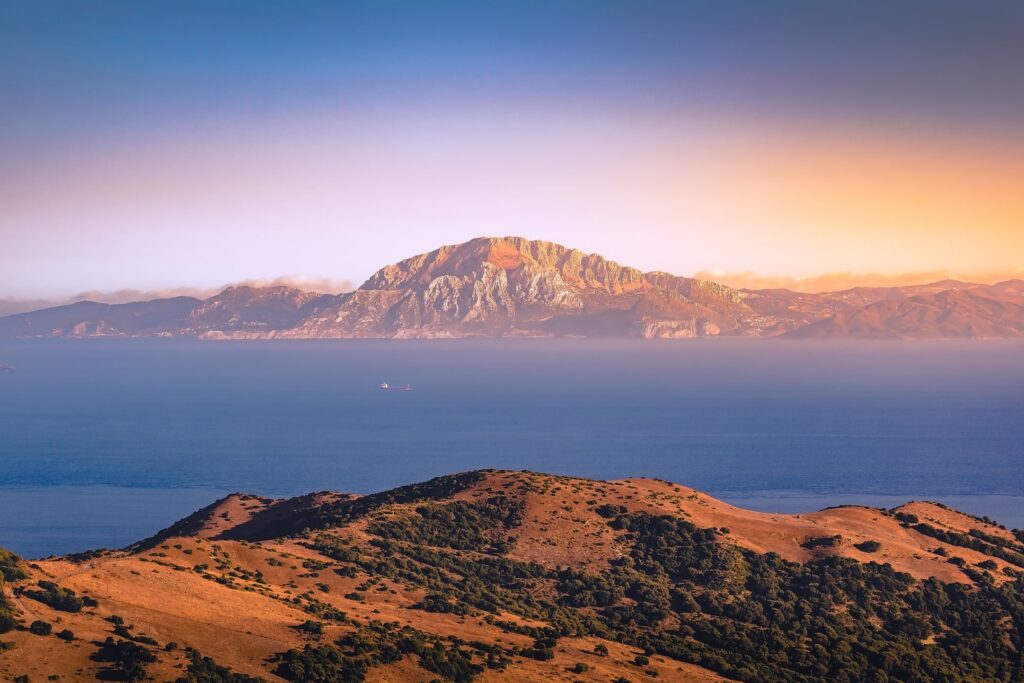
In this context, the relationship between Spain and Morocco is going through one of its most stable and constructive moments in recent decades. At barely fourteen kilometers apart, separated by the Strait of Gibraltar, Spain and Morocco have built one of the most intense, complex, and strategic bilateral relationships in the European and Mediterranean environment. Beyond historical tensions or specific political disagreements, both countries today maintain a interdependence, especially in the economic sphere, which makes them indispensable partners.
A new diplomatic stage
The current phase of understanding has a very specific origin. The turning point occurred with the joint declaration signed on April 7, 2022 following Spain’s support for Morocco’s proposal for autonomy for Western Sahara. That move allowed for the overcoming of one of the deepest diplomatic crises between the two countries and laid the foundations for a new roadmap based on mutual trust, ongoing dialogue, and the commitment to avoid unilateral actions that could affect the relationship. However, the issue of Western Sahara continues to be part of the international diplomatic agenda and remains pending a solution driven within the framework of the United Nations.
Far from being a temporary understanding, the celebration of the High-Level Meeting (RAN) in Rabat in 2023 and the successive visits of political leaders and ministers from both countries have institutionally consolidated this new stage. The result is a more structured cooperation framework, with regular political dialogue mechanisms and a shared willingness to strengthen collaboration.
Spain and Morocco play a fundamental role in the stability of the region and in the articulation of relations between Europe and Africa. The geographical position of both countries gives them a shared responsibility in sensitive areas such as managing migratory flows, maritime security, combating terrorism, and developing trade and energy corridors. In an international context marked by increasing geopolitical competition and the search for new spaces for cooperation between both continents, the ability of Madrid and Rabat to maintain a fluid dialogue and pragmatic collaboration is becoming increasingly relevant for regional stability and for the European projection towards Africa.
In recent years, Spain and Morocco have intensified collaboration between their security forces and competent institutions in areas such as combating jihadist terrorism, organized crime, drug trafficking, and human trafficking networks. This coordination, recognized on numerous occasions by both governments, has become an essential element for the stability of the western Mediterranean and for the protection of the external borders of the European Union.
A priority trading partner
Since 2012, Spain has established itself as the first trading partner of Morocco. In aggregate terms, the trade volume between both countries exceeds 22.5 billion euros annually.
The economic relationship mainly develops under the umbrella of the Euro-Mediterranean Association Agreement between the European Union and Morocco, which establishes an industrial free trade area and constitutes the main regulatory framework for trade exchanges. Morocco is Spain’s first market in Africa. Additionally, there is a particularly relevant element: Spain maintains a favorable trade balance, with a surplus exceeding 3 billion euros.
Beyond trade figures, the presence of Spanish businesses in Morocco constitutes another indicator of the depth of economic ties between both countries. More than 350 Spanish companies currently operate in Moroccan territory, supported by entities such as the Club of Spanish Entrepreneurs in Morocco (CEEM) and the Official Chamber of Commerce of Spain in Casablanca. For many Spanish companies, the Moroccan market is not only a final destination but also a hub for expansion into other emerging markets.
Spanish companies have a prominent presence in strategic sectors such as infrastructure, energy, banking, automotive, water, transportation, and new technologies. Their participation has contributed to the economic modernization process of the Kingdom and to the consolidation of increasingly integrated industrial value chains between both shores of the Strait. The recent financing of railway projects linked to the preparation for the 2030 World Cup is a testament to this growing economic and technological collaboration.
The Moroccan economic context adds a relevant dimension to the relationship. The country is undergoing a phase of structural transformation, with sustained growth rates and a progressive increase in the complexity of its economy. According to international estimates, Morocco maintains a growth rate exceeding 4%, driven by investment in infrastructure, tourism, and an increasingly dynamic export sector. One of the most significant milestones is that the country now generates more income from exporting cars than from phosphates, reflecting its industrial advancement.
Energy: a new strategic dimension
One of the areas that best illustrates the maturity of the bond is energy. In recent years, a geopolitically significant transformation has occurred that has reinforced the interdependence between both countries.
Following the closure in 2021 of the Maghreb-Europe gas pipeline as a supply route for Algerian gas to Spain, Madrid and Rabat agreed to reverse its flow to allow the transport of natural gas purchased in international markets and regasified at Spanish terminals to Morocco. This cooperation is complemented by the two existing underwater electrical interconnections under the Strait of Gibraltar and plans to expand the connection capacity between both countries through a third link. These infrastructures configure a true energy corridor between Europe and Africa.
The pending challenges
Despite the excellent political and economic moment, such an intense relationship is not without pending issues. The normalization of the commercial customs of Ceuta and Melilla continues to advance at a slower pace than expected by the business sectors of both cities. Likewise, the management of migratory flows, fishing cooperation, and coordination in security matters will continue to be essential areas of the bilateral agenda.