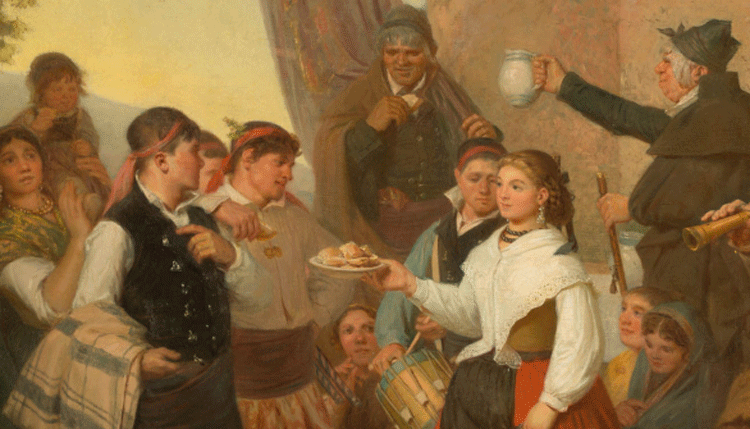
Until next October 4th, the Prado Museum in Madrid hosts the exhibition Valeriano D. Bécquer (1834-1870): The Genre Paintings, which brings together for the first time the eight paintings that, between 1866 and 1867, the Spanish painter and illustrator Valeriano D. Bécquer created as part of a government commission for the now-defunct Museum of the Trinity.
This exhibition presents the public with an exceptional set of works. Although only three provinces were completed –Zaragoza, Soria, and Ávila–, it stands out because the details of the clothing and the description of the types, along with its quality, make it one of the best examples of 19th-century genre painting in Spain.
Valeriano Domínguez Bécquer (1834-1870) was a prominent Spanish painter and draftsman, brother of the famous poet Gustavo Adolfo Bécquer. His work is mainly inscribed in romantic genre painting, with a special focus on scenes of everyday life, popular types, and urban and rural landscapes.
This artist excelled as a draftsman and illustrator, collaborating in magazines and publications of the time, and also created watercolors and oils of great sensitivity. His paintings are characterized by an intimate tone, a careful atmosphere, and an interest in the picturesque and the traditional, moving away from the more rigid academicism. He is currently recognized as a relevant artist of Spanish Romanticism and a valuable visual witness of 19th-century Spain.