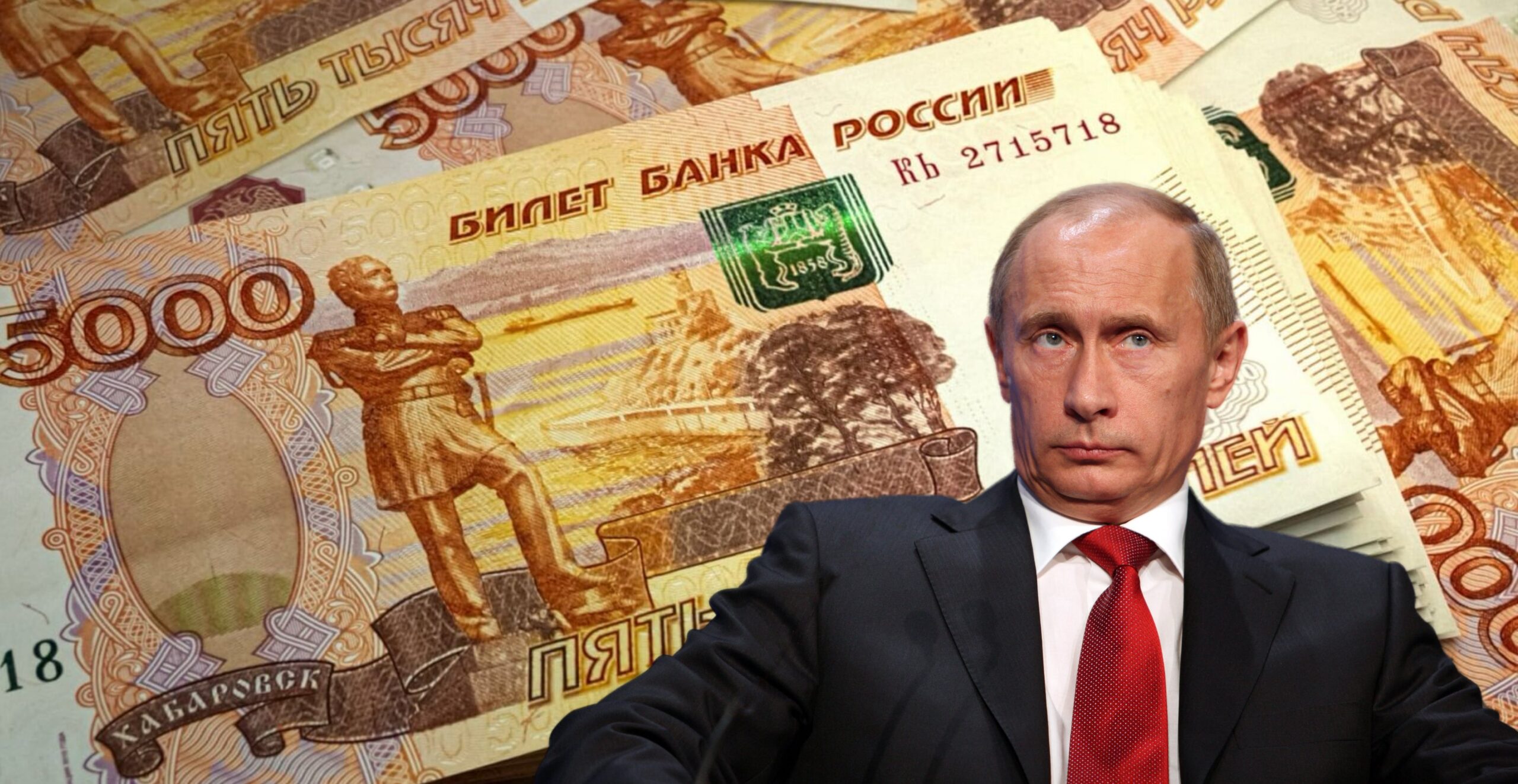
The increase in the Russian military budget to sustain the war against Ukraine supports a 1% growth of its GDP but raises doubts about its economic future.
Four years after starting the invasion of Ukraine, the Russian economy is in a transitional phase characterized by its short-term adaptability and the deep uncertainties that threaten it in the medium and long term.
Sustained by its abundance of natural resources and a strong state presence, the Russian economic structure has faced unprecedented external pressures, exorbitant military spending, rising inflation, and a considerable loss of purchasing power among its population, further diminished by casualties in the war and the departure of nearly a million people.
The war against Ukraine has resulted in a constant increase in the percentage of the Russian GDP allocated to Defense in all areas. Not only in terms strictly related to the war but also, for example, to strengthen its borders with NATO’s eastern flank after Sweden and Finland joined the Alliance.
In 2022, at the start of the war, the Kremlin’s military spending was 6% of its GDP. In 2023 it rose to 6.7% and in 2024 increased to 8.5%. By 2025, that percentage has already reached 10%, which is 250 billion dollars, according to an analysis by the BND. The German intelligence service concludes, however, that the Russian military budget has actually increased by 66% compared to 2022. Figures that the Kremlin significantly downplays as it does not include in its accounts items such as the financing of its military-industrial complex.
Meanwhile, the Gross Domestic Product has not grown at the same level. According to data from the World Bank, in 2023 and 2024 it increased by 4.1% and 4.3%, respectively. Data that highlights how the country’s ‘war economy’ has operated in macro terms, as in 2022 its GDP contracted by 1.4%. That is, military production —in addition to hydrocarbon exports (even though their prices are limited and subject to sanctions)— supports the Russian economy, although it also raises great uncertainty about its future when the war ends.
The paradox that the increase in military spending is driving the Russian economy in the short term raises questions about its sustainability. Growth driven by public spending and the military industry tends to be less efficient and less productive in the long term, in addition to diverting resources from key civilian sectors such as education, innovation, and infrastructure.
President Vladimir Putin acknowledged last December, in a televised address, that the Russian economy would only grow by 1% in 2025, although he clarified that the slowdown in growth was ‘a conscious action of the Government, linked to controlling inflation.’
Putin’s message was aimed at reassuring the population about the stability of the economy, despite the enormous cost of the ‘special military operation’ in Ukraine. Therefore, he insisted that the main objective of his macroeconomic policies is controlling inflation ‘at least up to 6%’ and reducing the public deficit to 1.6% by 2026.
To achieve this, the Russian government is using restrictive monetary policies, capital controls, and a rapid reorientation of foreign trade. The data, in any case, shows an economy that has certainly avoided collapse but depends heavily on factors such as energy prices, public spending, and its new strategic alliances.
The effect of sanctions
The sanctions imposed by the European Union and the United States (not counting the recent decision by Donald Trump to lift restrictions on hydrocarbon exports), along with the reconfiguration of its trade relations, have led to a new Russian economic model, redirected towards Asia and less integrated into the traditional global system. However, this change is not without risks, especially in terms of dependence, innovation, and sustainable growth.
It cannot be said, therefore, that Russia is an economy in immediate decline, but rather a transforming economy, although still uncertain. Its future, according to various analysts, will depend on its ability to balance resilience, adaptation, and modernization in an increasingly complex and fragmented international environment.
The Russian economy faces significant structural challenges. Among them, the decline in foreign direct investment, limited economic diversification, and technological dependence on the outside. Restrictions on access to semiconductors and advanced technologies negatively affect strategic sectors, limiting long-term growth potential. And, no less important, the emigration of skilled workers after the onset of the conflict has generated a brain drain that may have negative long-term effects.
Russia seeks new markets in Asia
Russia is one of the world’s leading energy powers. The hydrocarbon sector accounts for approximately 30% to 40% of the country’s tax revenues, and nearly 60% of its total exports. This dependence makes energy not only an economic engine but also a key geopolitical tool.
Before 2022, around 40% of the gas consumed by the European Union came from Russia, which evidenced a significant interdependence. However, this relationship broke after the imposition of sanctions, forcing Russia to redirect its exports to other markets, mainly in Asia.
China has become Russia’s main trading partner, accounting for approximately 30%–35% of its total trade. Meanwhile, India has significantly increased its imports of Russian oil, taking advantage of discounts of between 20% and 30%.
This process has been accompanied by a reduction in the use of the dollar in international transactions and an increase in the use of local currencies, contributing to a broader trend of partial dedollarization in the global economic system.
However, this reorientation also entails risks, especially the growing dependence on China, which acquires a dominant position in the bilateral relationship, in a transforming international context. Russia has shifted from being a key energy partner of Europe to becoming a central player in an emerging Eurasian axis. This change has significant implications, such as the intensification of geopolitical competition, the reconfiguration of supply chains, and the questioning of the dollar-based economic order.