Mousso / Musó is a term of Mandinga origin that means “woman” and refers to her prominence in society.
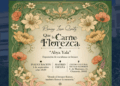
Until April 24, Casa África (Alfonso XIII street, 5, Las Palmas de Gran Canaria) presents the exhibition Exposición Musó. Female Representations in the Pipino Collection, which is the result of the collaboration between Casa África and the Fund for Ethnography and the Development of Canarian Handicrafts (FEDAC) of the Cabildo de Gran Canaria.
Mousso / Musó is a term of Mandinga origin that means “woman.” A term understood across the borders of West Africa that alludes to the prominence of women in African societies and evokes the relevance of their role as guardians of traditions, transmitters of knowledge, and agents of change.
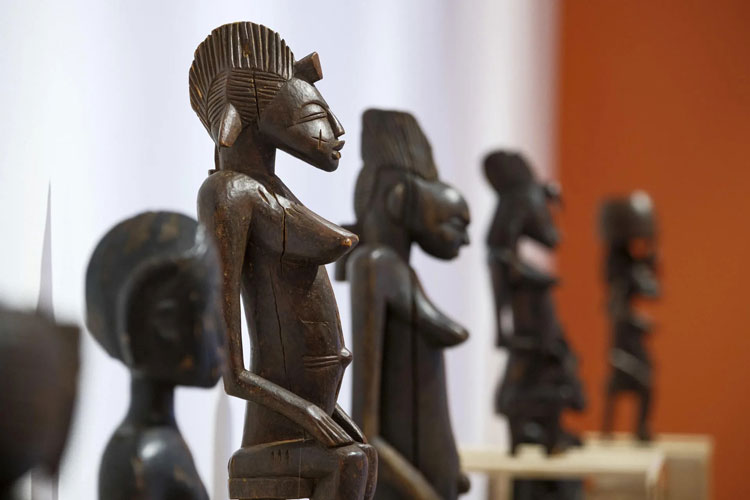
The works displayed here are part of the Pipino collection, belonging to the FEDAC and composed of 450 pieces, mostly sculptures made of wood, stone, and metal. We chose pieces made in the traditional style of the Baule, Senufo, Asante, Akan, Kissi, and Dan peoples and from the Peul areas of West Sahel.
African cultures, histories, and societies are built with the active participation of women. However, the visibility and recognition of female intervention are not always evident. This exhibition aims to be a small tribute to the efforts of women who are part of the past, work for the present, and define the future in Africa.
The exhibition, curated by Idalmy González González, is structured around two different discourses:
The first, Rituals and Ceremonies, exhibits in the Equatorial Guinea Room traditional female sculptural representations created to participate in ceremonies, rituals, or other spiritual and cultural manifestations of different West African peoples. In these contexts, women symbolize prosperity, abundance, fertility, respect for family, and worship of ancestors, embodying the social values of the community.
The second, in the Kilimanjaro Room and called Lives and Customs, presents works inspired by the socioeconomic and cultural reality of different peoples where women play a fundamental role by participating in the predominant economic activities in their region. The public coexists with the private sphere, where they take on domestic tasks and family care. They also reflect an interest in personal care, the preservation of distinctive clothing and hairstyles, and ultimately, the conservation of their ways of life and the cultural richness of each community.