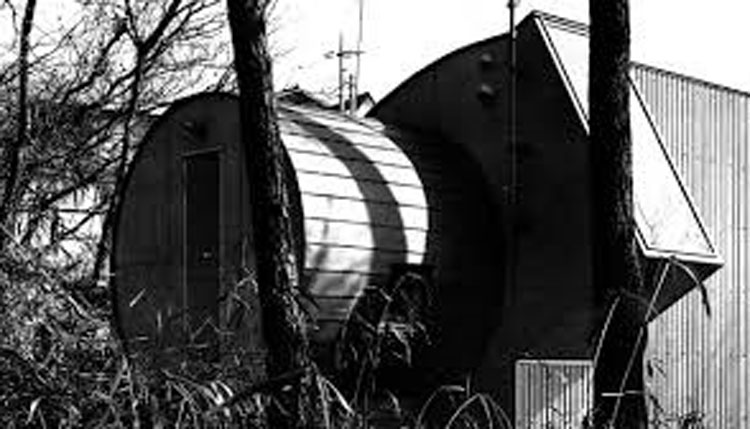
The exhibition, titled The house as a work of art, reflects how the Japanese Shinohara pushed architecture, especially residential design, beyond its conventional limits.
As part of the World Architecture Congress, Casa Asia collaborates with the exhibition The house as a work of art dedicated to the Japanese architect Kazuo Shinohara. The exhibition will be open to the public until May 17 at the Dipòsit del Rei Martí in Barcelona (Carrer de Bellesguard, 14). Free entry until capacity is reached.
This is an introduction to Kazuo Shinohara for an audience that is not familiar with his work and his multiple trajectories, focusing on his residential designs, which are the majority of his projects. It also seeks to stimulate new perspectives on his work beyond the narrative he himself established, understanding it as a process where all elements of his architectural exploration are present from the beginning.
The exhibition aims to reinforce this idea and has been designed like the novel Hopscotch by Julio Cortázar: a recommended route is suggested, but the visitor can create their own itinerary of discovery. The names of the projects have been kept in English, which is the common international usage for Shinohara’s work, who also named his own house in English.
Kazuo Shinohara (Shizuoka Prefecture 1925 – Kawasaki 2006, architect title 1953, first project 1954) was an architect who pushed architecture, especially residential design, beyond its conventional limits. He is possibly the most influential architect of his generation in contemporary Japanese architecture. His influence on teaching, theory, and design has only deepened over time, reinforcing the visionary quality of his work.
This remarkable influence surprisingly comes from a short list of quite small houses and his texts. His architectural reflections focus on the house as a means to evoke emotions and the city as a source of emotional experience, but encompass all aspects in which architecture can function as an instrument for social critique.