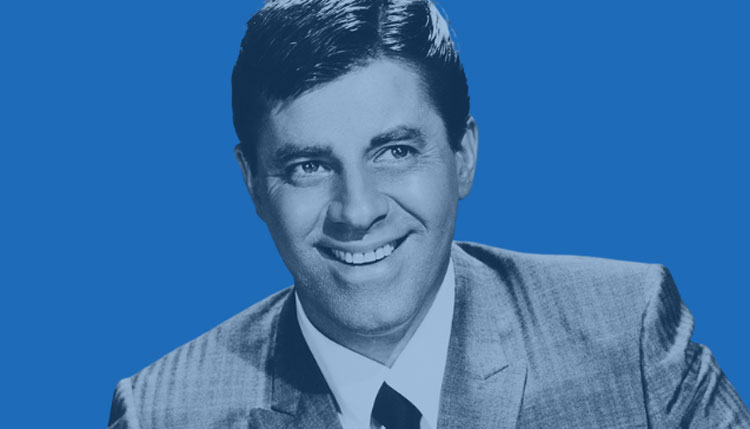
On the occasion of the centenary of Jerry Lewis’s (Joseph Levitch) birth, next Wednesday, April 29 at 6 PM, the Centro Serfarad-Israel (calle Mayor, 69) proposes an approach to one of the most influential and complex figures of 20th-century humor. Free entry until full capacity.
Actor, director, and screenwriter, Lewis redefined the codes of comedy through extreme physicality, innovative visual language, and a unique ability to explore the absurd as a form of cultural critique.
The meeting will address his connection to the tradition of Jewish humor, in dialogue with figures such as the Marx brothers or Mel Brooks, where self-parody, irony, and subversion become tools of identity and resistance. Through audiovisual fragments and contextual analysis, his impact on contemporary comedy will be reviewed, from film to television formats like Saturday Night Live, as well as his uneven reception between the United States and Europe, where he was reclaimed as a cinematic author.
Additionally, a reflection on the limits of humor will be opened based on The Day the Clown Cried (1972), his most controversial and unpublished project for decades. The film, which attempted to address the Holocaust from the perspective of slapstick, raises ethical and aesthetic questions about the representation of trauma and the role of humor in the face of the unspeakable.
The session will feature the participation of filmmaker Alejo Flah, Argentine screenwriter for film and television, whose career combines audiovisual writing with directing. He has participated in projects such as the miniseries Vientos de agua (2005), directed by Juan José Campanella, and is the author of the documentary feature Rerum Novarum (2001). Among his works as a director, El amor y otras historias (2014) and Taxi a Gibraltar (2019) stand out, consolidating a filmography marked by the intersection of genres and interest in contemporary narratives.