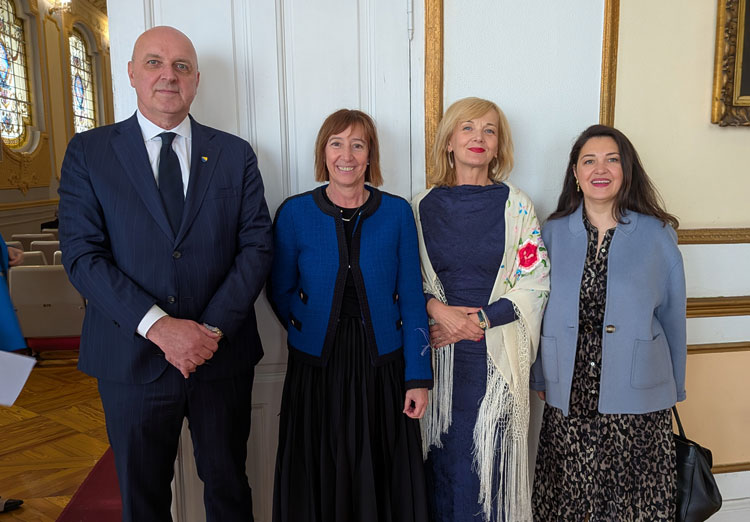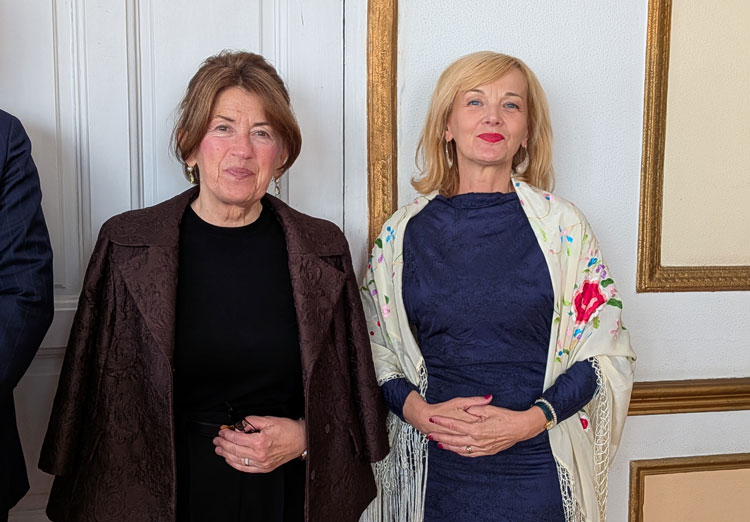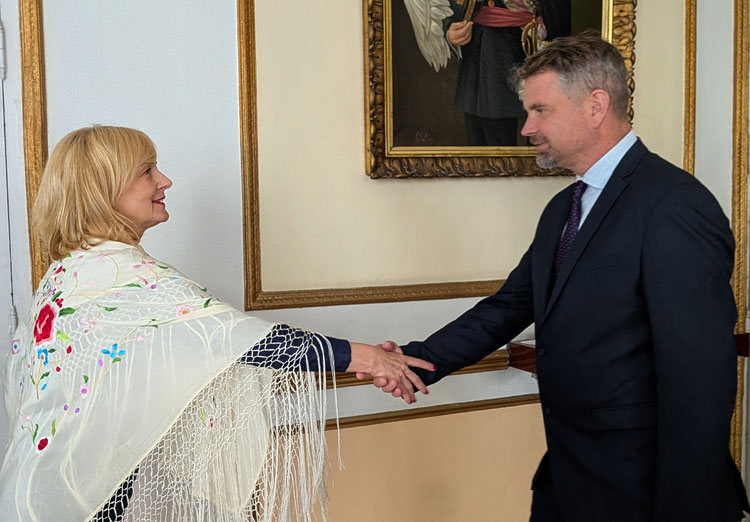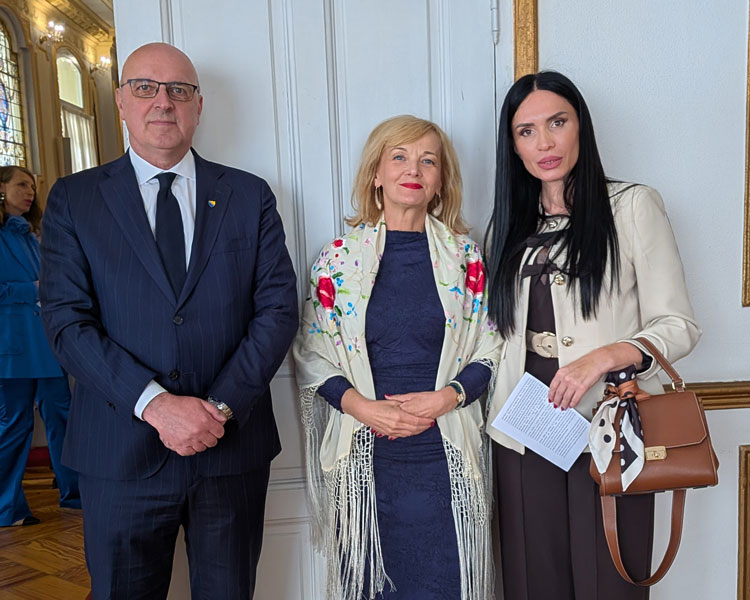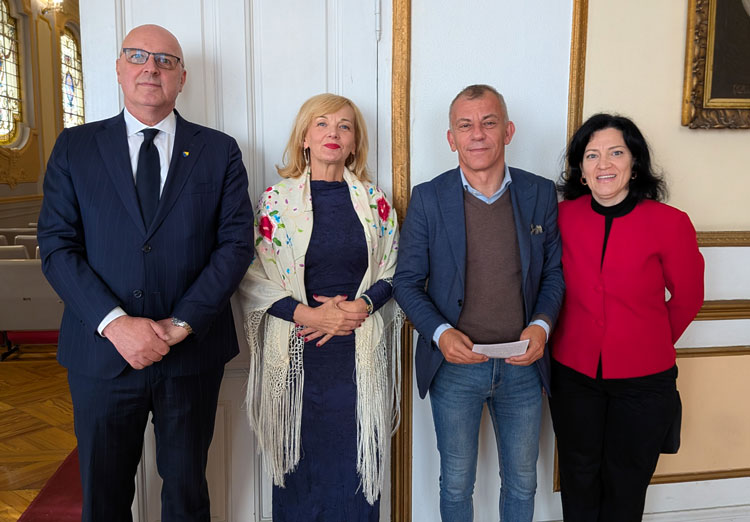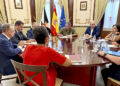
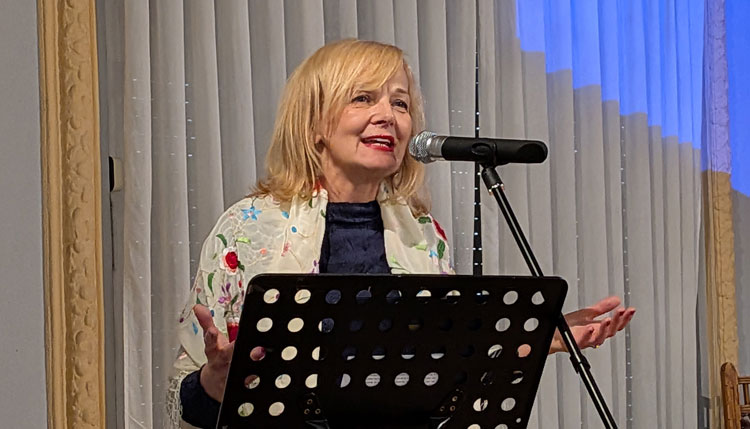
The ambassador of Bosnia and Herzegovina, Vesna Andree Zaimovic, said that Spain is “aware that the stability of the Western Balkans is a prerequisite for the stability of the entire continent,” during the concert her Embassy organized at the Armed Forces Cultural Circle to commemorate Europe’s Day.
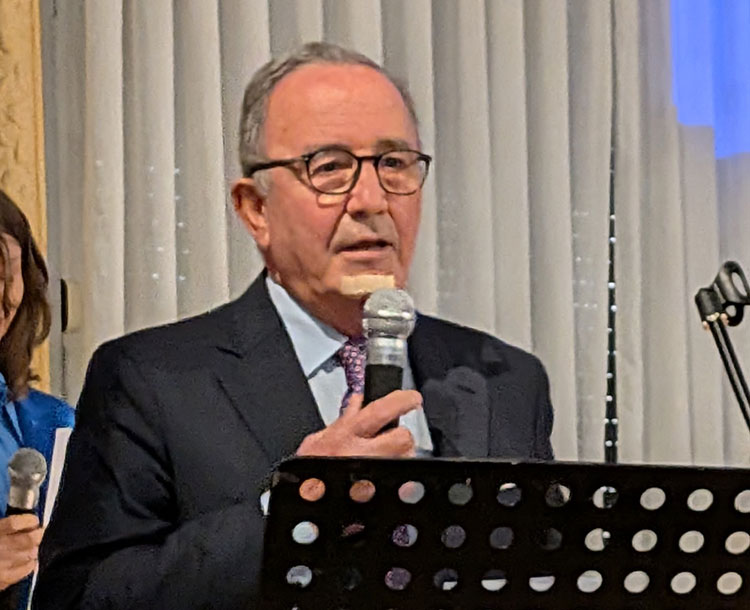
Lieutenant general Juan Gómez de Salazar, president of the Cultural Circle of the Armies and as host of the event, welcomed the attendees and first recalled that when General Luis Carvajal Raggio, who commanded the paratrooper brigade then deployed in Bosnia and Herzegovina, received the distinction of adopted son of the city of Mostar, “he came only to ratify the good relations between the Spanish army and the people of Bosnia and Herzegovina. And with acts like today’s, those bonds of unity that were created then remain very strongly tied today.”
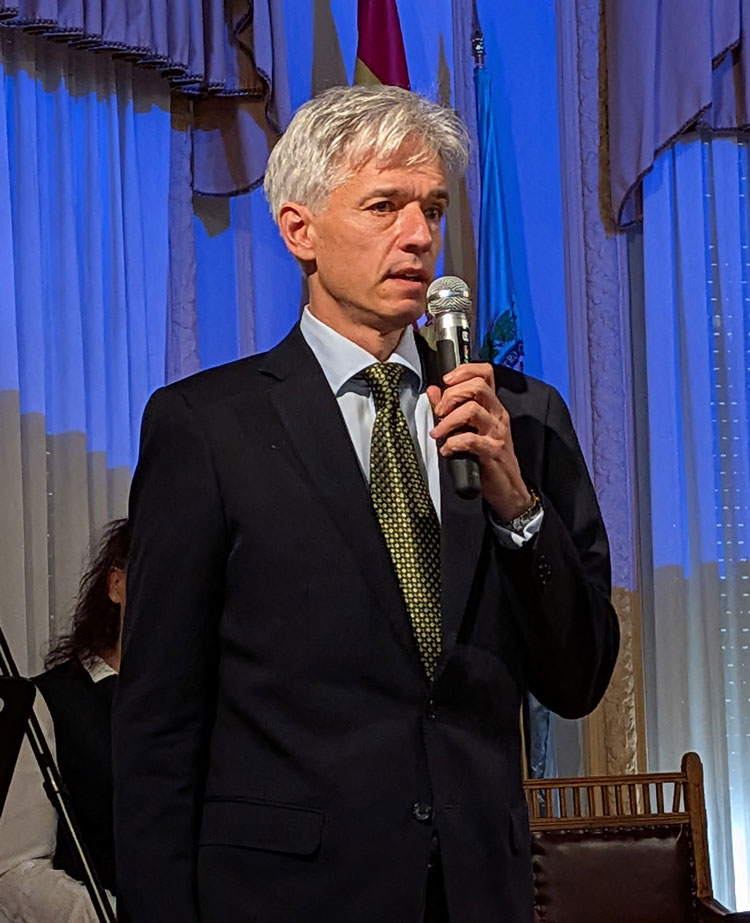
Santiago Velo de Antelo, executive president of the Academy of Diplomacy, who collaborated in the realization of the event alongside the Bosnian Embassy, highlighted the presence of members of the Diplomatic Corps, especially the ambassadors from the Balkan region, “a symbol of the good relations between them.”
Then the Army General Amador Enseñat y Berea, Chief of Staff of the Army, took the floor, noting in his speech that “there can be no better setting than this military casino to commemorate one of Spain’s most relevant contributions to peace and international European security in recent hours. To speak of Bosnia and Herzegovina is to speak of one of the most significant pages of contemporary Spanish foreign action. There in the heart of Europe, Spain demonstrated its commitment to peace, international legality, liberalism, and the defense of human freedom in one of the most painful conflicts our continent has experienced since the end of World War II.”
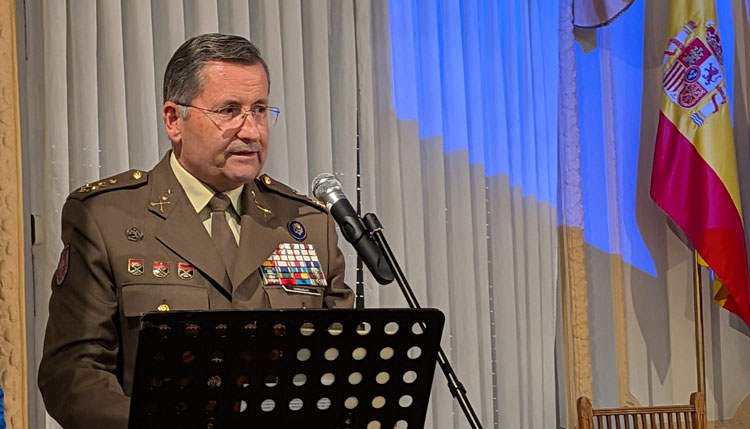
“But it is worth emphasizing from the beginning, the Spanish contribution in Bosnia and Herzegovina was not only military”, continued General Amador Enseñat y Berea, “it was also diplomatic, political, with mandates from United Nations Security Council resolutions, the Spanish military contingents integrated United Nations missions, NATO, and European Union. More than 46,000 Spanish soldiers were successively deployed in those beloved lands, along with other compatriots, diplomats, rulers, police, members of international and non-governmental organizations, and public servants.”
“Together we contributed to creating the necessary conditions for peace to open paths and consolidate into a fair and true solution to the conflict, aware that conflicts can only be definitively resolved through international cooperation, dialogue, political, social, and economic development and the Spanish diplomatic presence in Bosnia and Herzegovina was constant from the very first moments of the conflict,” expressed the general.
After recalling the military and diplomatic personalities who were present during those very difficult moments on the ground, Army General Amador Enseñat y Berea remembered the current ambassador María Molina Álvarez de Toledo, “who reflects”, he emphasized, “the continuity of the Spanish commitment to regional stability and development and the institutional support of Bosnia and Herzegovina in its process of international interaction.”
“Diplomacy and action on the ground are not separate realities, he continued, but complementary. Diplomacy makes agreements possible, security allows them to be consolidated, and both are essential to build military peace. Today, when war has returned once again to Europe with the conflict in Ukraine, the elections in Bosnia and Herzegovina acquire a special urgency.”
The Chief of Staff of the Army concluded by emphasizing that “peace can never be taken for granted and that European security and stability require unity, international cooperation, and the defense of democratic values and international law and a permanent commitment to dialogue and diplomacy. It also taught us that the human consequences of war endure far beyond coordination between peoples and can only be built from trust in legitimate institutions. The memory of those missions remains relevant to understand the security challenges that Europe is once again facing.”
To conclude the event presentation, the ambassador of Bosnia and Herzegovina, Vesna Andree Zaimovic, took the floor, thanking the attendance and participation of those present “for their struggle for peace and prosperity, and the indissoluble ties that, in that effort, my country maintains with the Spanish Army.”
The Bosnian ambassador recalled that “during the destruction of war and the reconstruction of the post-war period, the Spanish military units made a fundamental contribution to maintaining peace. Spain demonstrated its support in the most difficult years: 46,000 soldiers were part of the Peace Forces for 12 years, and 24 of them lost their lives. I want to emphasize that this enormous contribution of Spain to the construction of peace in Bosnia and Herzegovina is a clear sign of the great trust in our people and of unconditional friendship.“
“I often say that some of the most important European values have been cultivated in my country for five centuries, referring mainly to tolerance, solidarity, human dignity, and coexistence. It is not said in vain that Sarajevo is the Jerusalem of Europe, with its multicultural fabric that has endured for centuries, with temples of four monotheistic religions that stand side by side,” commented the ambassador.
In reference to relations with Spain, the Bosnian ambassador emphasized that “Spain recognizes Bosnia and Herzegovina as a partner, a candidate country that it continues to support in the accession negotiation process, aware that the stability of the Western Balkans is a prerequisite for the stability of the entire continent. For us, it is an honor to have you as friends, and for me personally, a continuous responsibility to maintain that friendship.”
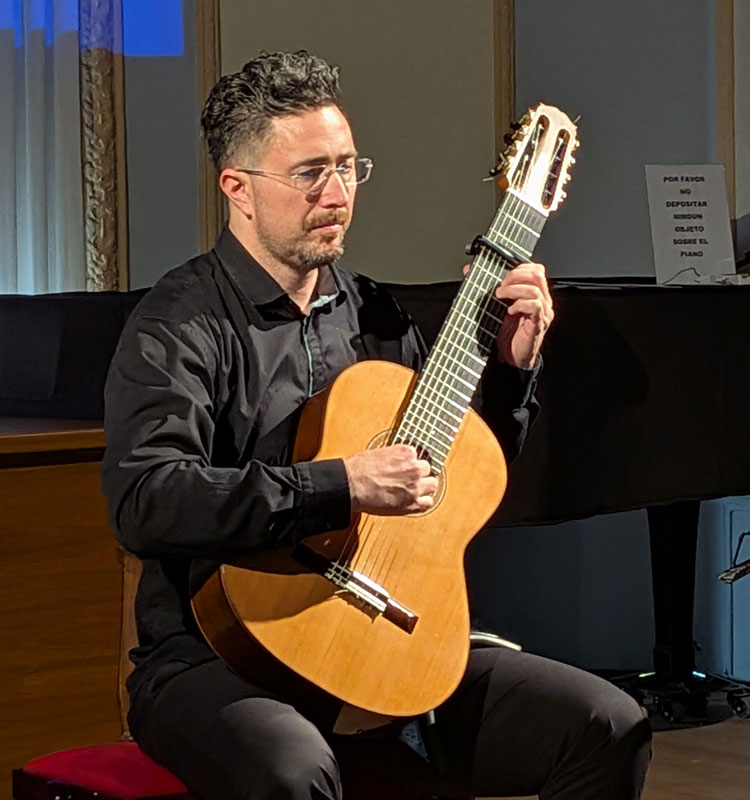
The ambassador Vesna Andree Zaimovic concluded by introducing the musical artist, the professor Đani Šehu, who brought his eight-string guitar for the concert, something very uncommon, the guitar of a luthier from Bosnia and Herzegovina, Zoran Kuvac, with which he showcased his exceptional art to the attendees.
Since 2006, this Bosnian guitarist has been a professor at the Music Academy of the University of Sarajevo. His students have achieved international recognition thanks to their successes in competitions and concerts, both in Bosnia and Herzegovina and abroad. In addition to his active concert career, he participates as a guest in numerous international festivals where he gives master classes and is part of juries.
Đani Šehu is the founder and director of the Sarajevo International Guitar Festival and the SIGF Summer School. For his merits in bringing the Spanish guitar closer to the audience in his country, the Embassy of Spain in Bosnia and Herzegovina awarded him in 2023 the Order of the Cross of Civil Merit granted by King Felipe VI.